‘A Tiled Table’, circa 1985
Quentin Bell
By TDE Editorial Team / 1st October 2026
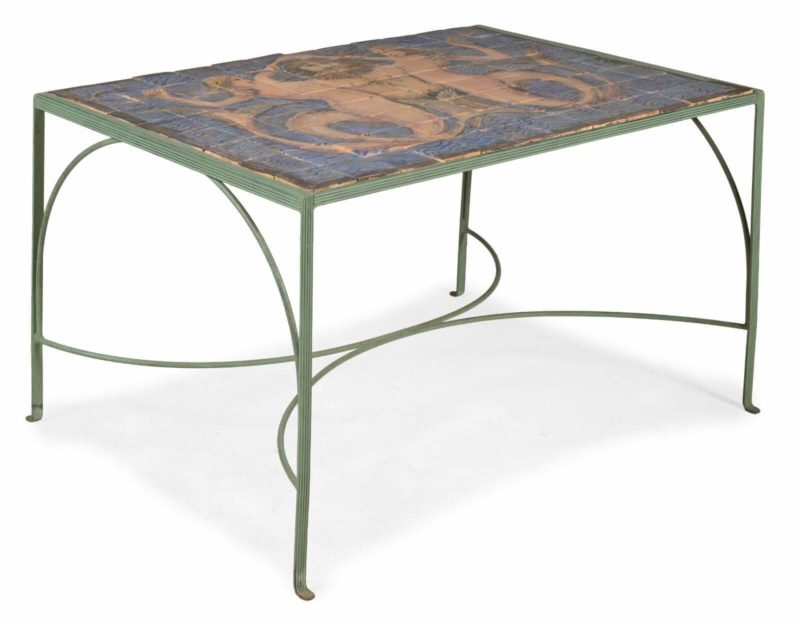
Quentin Bell, ‘A Tiled Table’ side view, 1985
COURTESY: © Dreweatts
IN NOVEMBER, TATE Britain will open its major winter exhibition, Vanessa Bell & Duncan Grant: Inside Bloomsbury (12th November 2026 – 11th April 2027). Part of the story the exhibition will tell is how the unconventional creative and romantic relationship between Vanessa Bell and Duncan Grant not only swept others – Bell’s husband, Clive Bell; her lover, Roger Fry; and Grant’s lover, David Garnett – into a domestic vortex, but encouraged within their sometimes shared home a maelstrom of activity across the arts. This encompassed not just writing, painting, drawing and sculpture but also the decoration and creation of ceramics, textiles and furniture. Charleston in Sussex provided the setting for this radical experiment in living and the exhibition at Tate Britain will recreate the studio there, which is currently undergoing renovation.
Quentin Bell (1910-1996) was the younger son of Vanessa Bell and Clive Bell. An art historian by profession, after retirement in 1975 he increasingly worked as a potter. Making tiled tables was a family tradition: Vanessa Bell and Duncan Grant had experimented extensively with painted and decorated furniture through the ill-fated but influential Omega Workshops, and had later produced tiled tables for private commissions. Although the Workshops, set up by Roger Fry in 1913, collapsed in 1919, the spirit of making was perpetuated within the family home, an inescapable part of the ethos and texture of the place. As a new show dedicated to him at Charleston (until 7th March 2027) explains, from the age of six, when Quentin Bell arrived there, “he dug clay from the pond, built ceramic towers and illustrated a daily family newspaper written by his aunt, Virginia Woolf.”
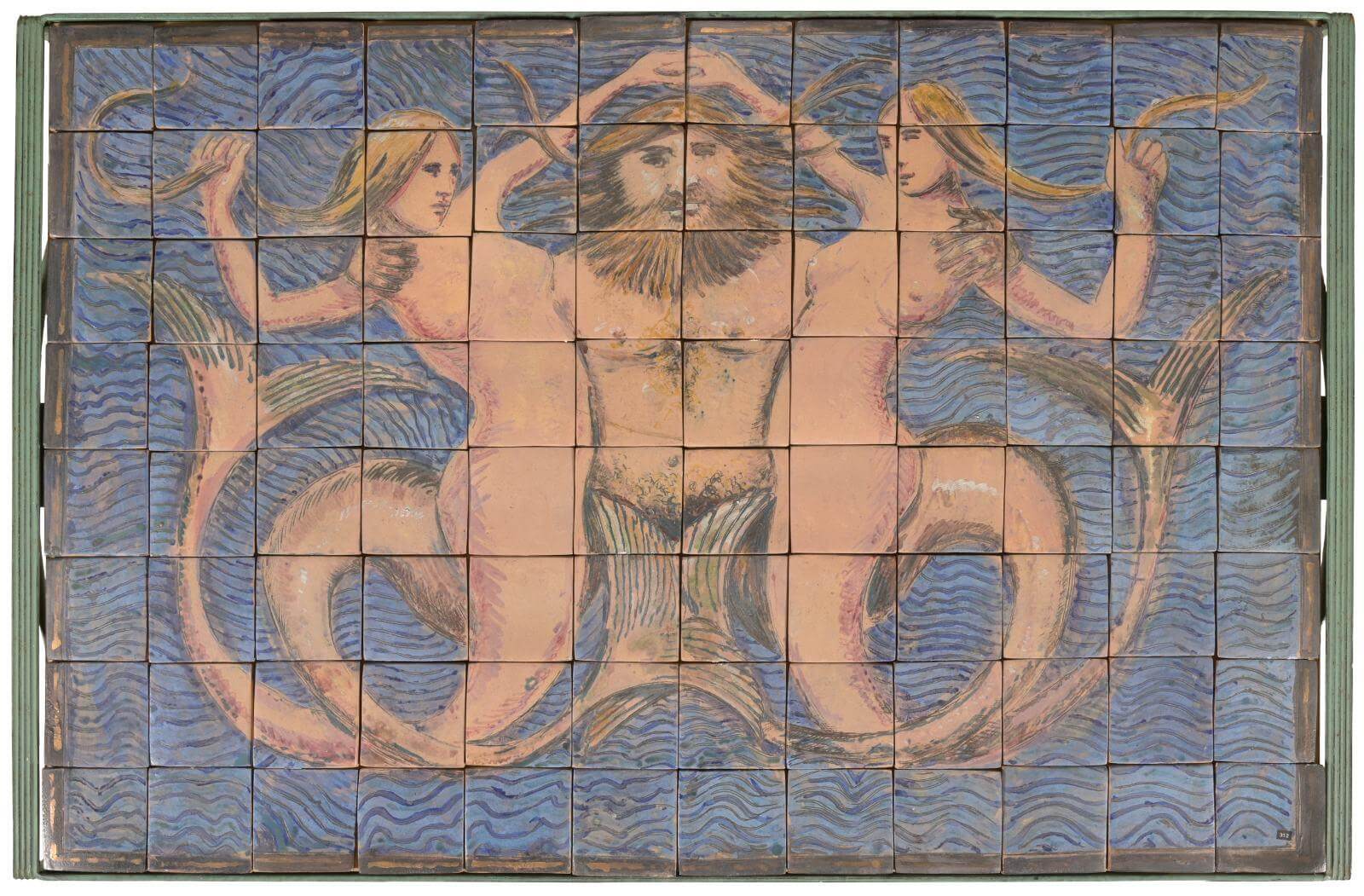
Quentin Bell, ‘A Tiled Table’ top view of merman flanked by two mermaids, 1985
COURTESY: © Dreweatts
It seems that Bell made the tiles for this table himself, working in association with The Fulham Pottery. He incised the design into the surface of the handmade clay tiles with a pen or other pointed implement, creating a strong graphic line. The colour and glaze were then added, with the outer edges of the tiles finished in gold. Once fully fired, the numbers inscribed on their reverse would have helped him to reassemble the composition in the elegant, spare patinated metal frame. The decorative scheme – the interlocking mermaids and merman – reflects his lifelong fascination with mythological and fantastical figures. Mermaids and mermen appear on decorated plates from the same era and in 1983, Bell created a tiled bathroom scheme populated by interlocking merfolk for a private commission. Although his tiled tables are generally formed from more abstract arrangements of shape and colour, this exuberant figurative design, with its cross rhythms of waves and the swooping fluid curves of the figures, is especially beguiling. It is up for sale at Dreweatts in their Modern Design & Decorative Art sale on 7th October, estimate £4,000 – £6,000.
Dreweatts’ Modern Design & Decorative Art auction 7th October
Viewing 3rd October – 6th October Newbury Showroom
Tate Britain
Vanessa Bell & Duncan Grant
Inside Bloomsbury
12th November 2026 – 11th April 2027
Charleston in Firle
Quentin Bell
19th September 2026–7th March 2027