You Stretched Diagonally Across It: Contemporary Tapestry
Contemporary works that embrace the transforming medium of tapestry.
You Stretched Diagonally Across It: Contemporary Tapestry
The Fabric Workshop and Museum
Philadelphia, PA
16th July 2026 – 3rd January 2027
By Adrian Madlener / 31st July 2026
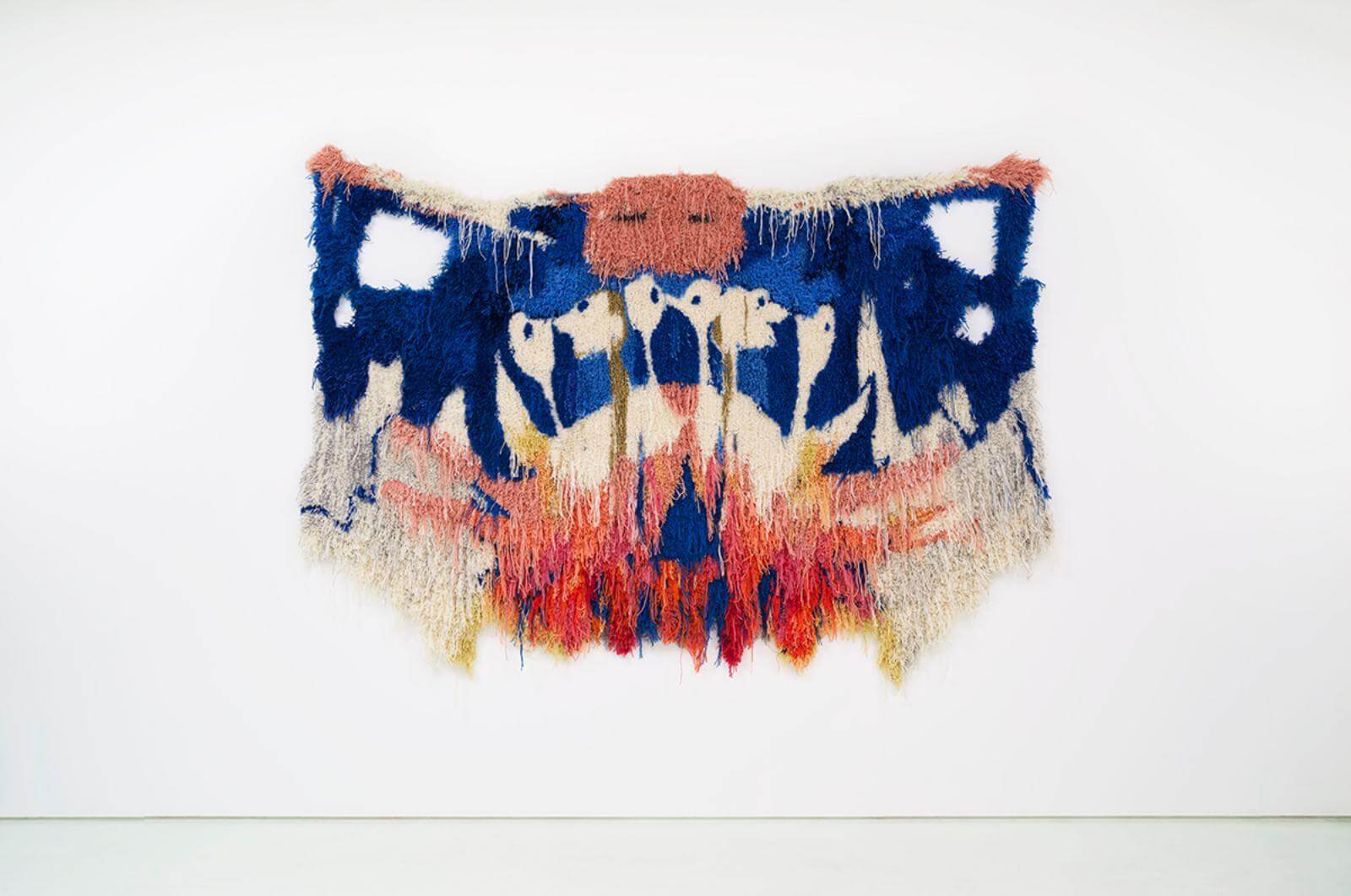
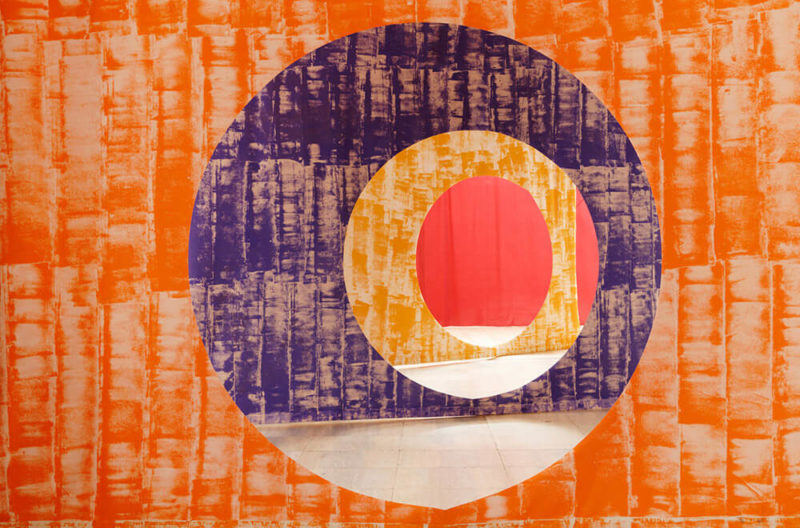
Caroline Achaintre, ‘Seeker’, 2024
COURTESY: © The Artist & Art: Concept, Paris
IN A LETTER written to his father, Czech author Franz Kafka described the potential of one’s presence being so pervasive that it could be woven diagonally across the breadth of the entire planet. It’s this conjured image of geographic entanglement that provides the title for a new exhibition at The Fabric Workshop and Museum (FWN) in Philadelphia: ‘You Stretched Diagonally Across It: Contemporary Tapestry’.
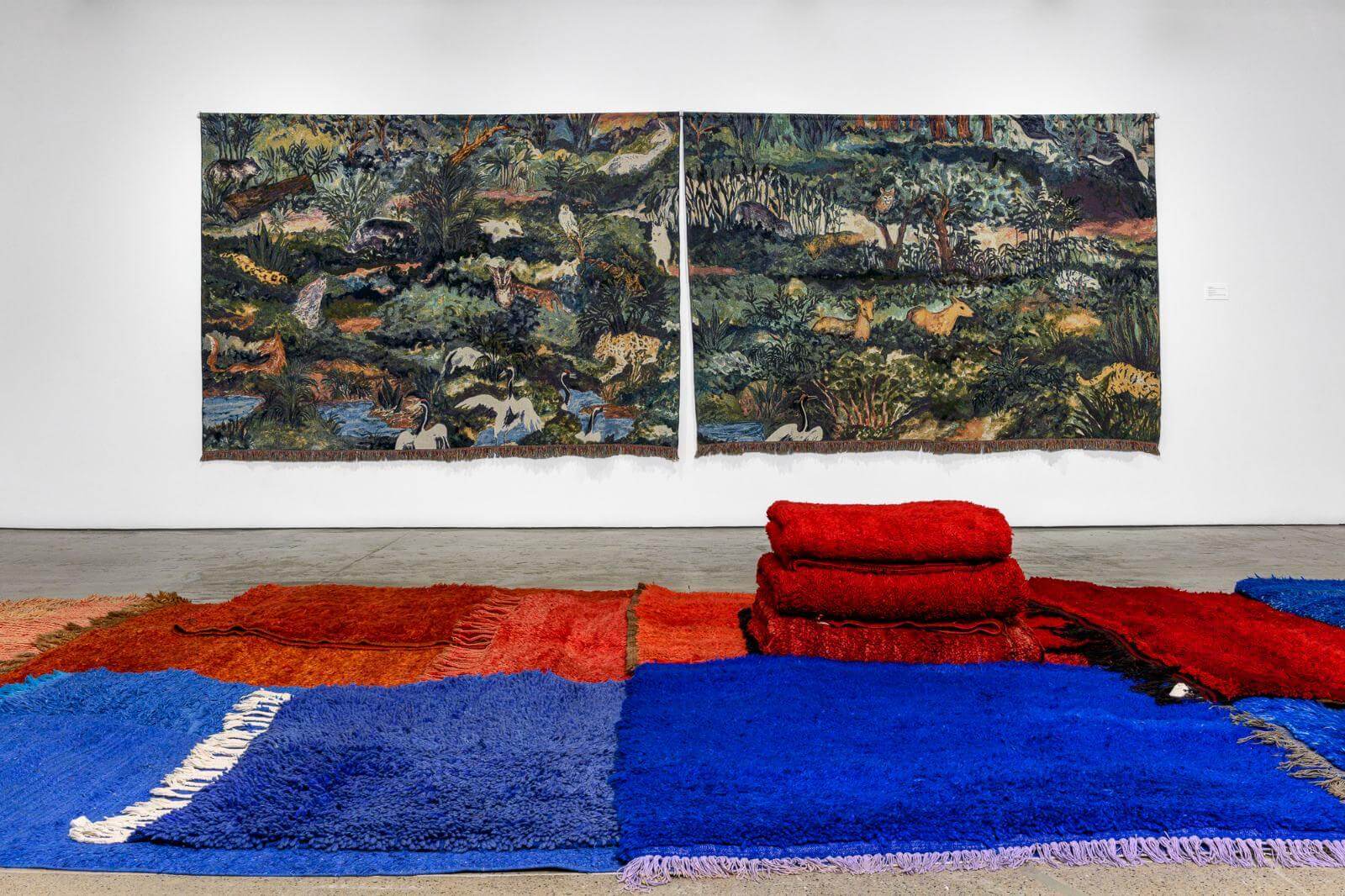
Exhibition view ‘You Stretched Diagonally Across It’ with (foreground) Yto Barrada, ‘Geological Time Scale’, mid-20th century; (background) Candice Lin, ‘Verdant Curtain’, 2020
COURTESY: © The Artist & François
Ghebaly, Los Angeles, New York / PHOTOGRAPH: Constance Mensh
Curated by Mexico City-based writer and historian Su Wu, the travelling exhibition was first mounted at Dallas Contemporary last year, where it probed the shifting boundaries of the loom – demonstrating how today’s fibre talents are unabashedly exploring the interstices of art, craft, design and digital memory.
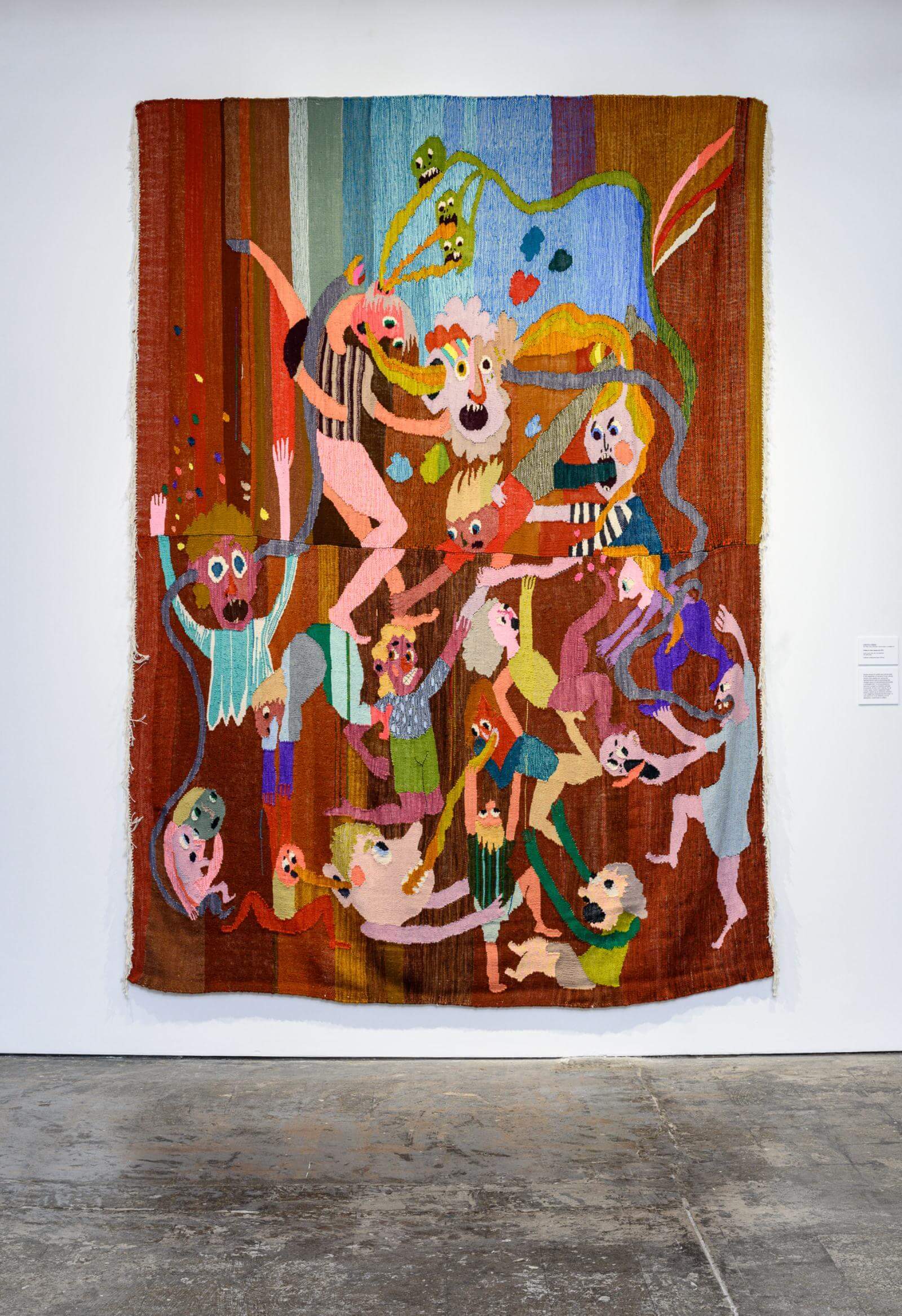
Christina Forrer, ‘Untitled (on brown background)’, 2018
COURTESY: © The Artist & Collection of Marguerite Steed Hoffman / PHOTOGRAPH: Constance Mensh
At FWM, however, the show takes on a deeper resonance. The exhibiting institution and residency platform is entirely dedicated to the ever-expansively interpreted medium. Included in this second showing are key works from its vast and diverse collection: demonstrations of its ongoing commitment to experimentation.
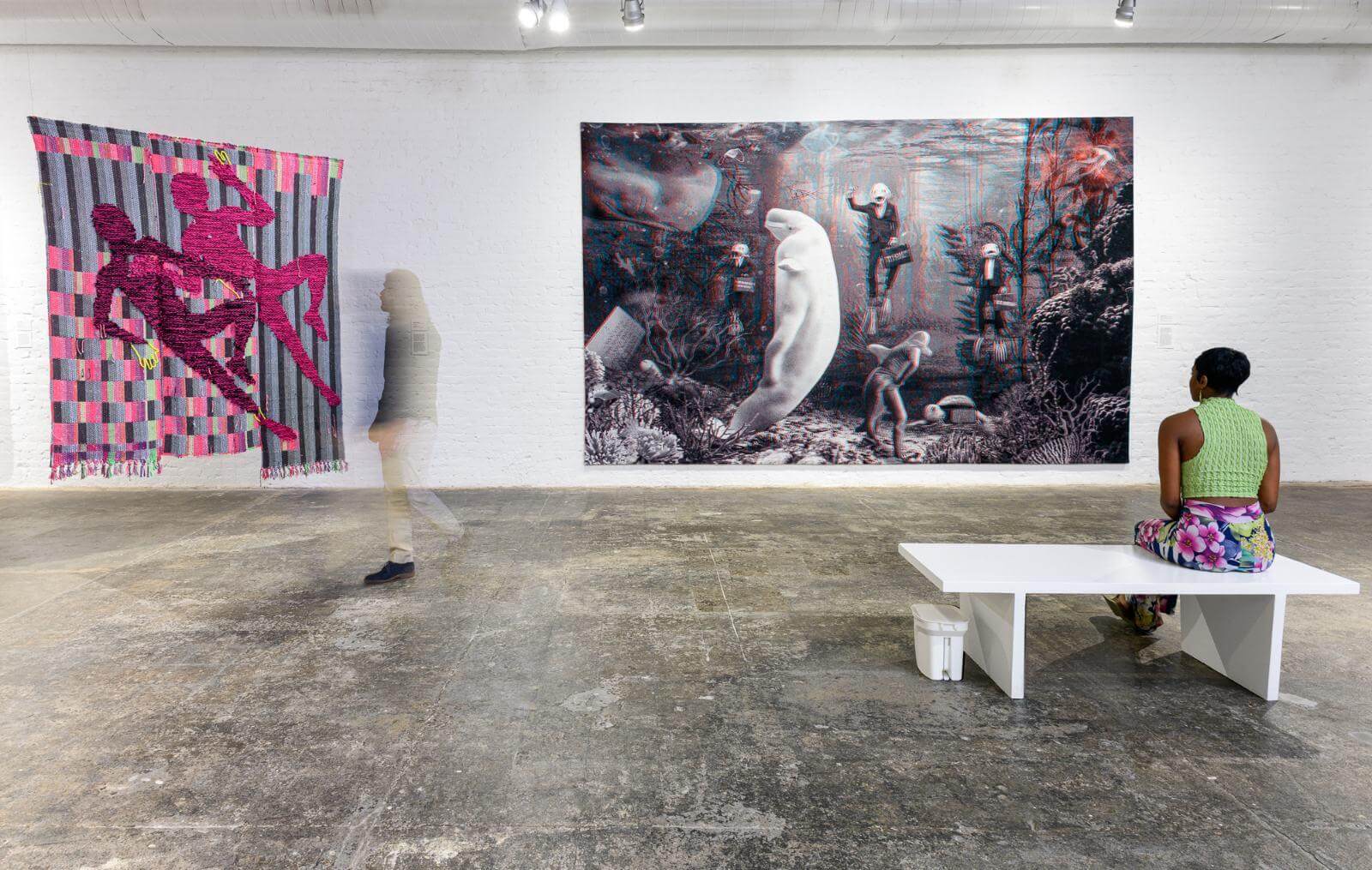
Exhibition view ‘You Stretched Diagonally Across It’ with (right) Goshka Macuga, ‘Who Gave Us a Sponge to Erase the Horizon?’, 2022; (left) Diedrick Brackens, ‘nuclear lovers’, 2020
COURTESY: © The Artists and The Fabric Workshop and Museum / PHOTOGRAPH: Constance Mensh
“Despite a wide resurgence of interest in textiles in the last few years, we wanted to proceed from a simple question: What is a tapestry? What does it do?” Wu notes. In her view, the works assembled argue for the “enduring possibility of the image as a materially substantive manifestation” in an era increasingly defined by digital ephemerality. For Wu, a tapestry is an object where the image and what holds it up – the material – have equal value and are, often, indistinguishable.
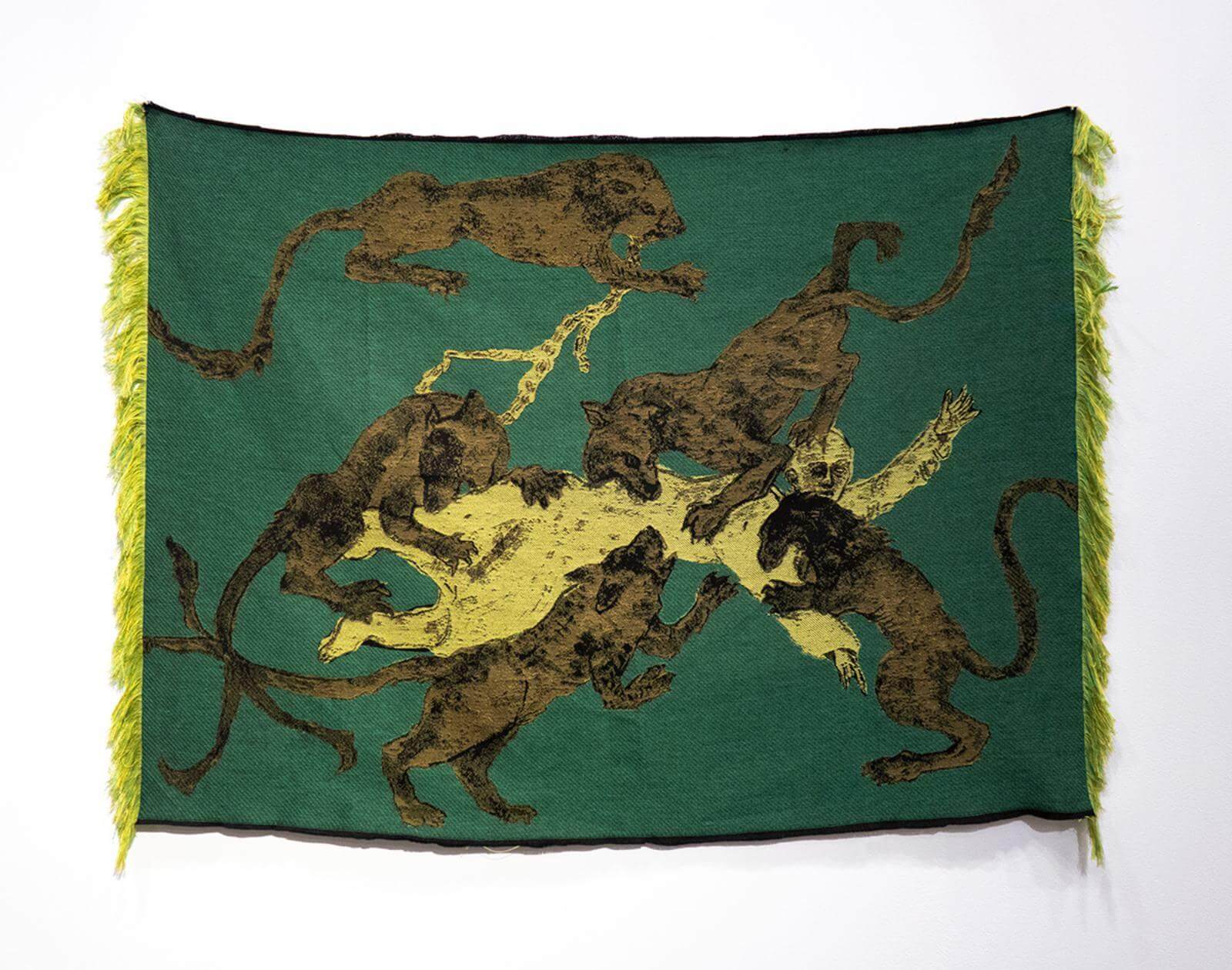
Candice Lin, ‘Papaver somniferum’, 2019
COURTESY: © The Artist, Gwangju
Biennale & François Ghebaly, Los Angeles, New York
The Philadelphia instalment, on view until 3rd January, 2027, occupies two floors of the museum and features works by 25 artists who treat the loom not just as a tool to produce decorative detail but as a site, a budding field, Wu suggests, for “volatile categorical collapse.” FWM’s contributions include seminal pieces by local heavyweights Qualeasha Wood and David Hartt, alongside key works by internationally recognised polymaths Mika Tajima and Ed Ruscha.
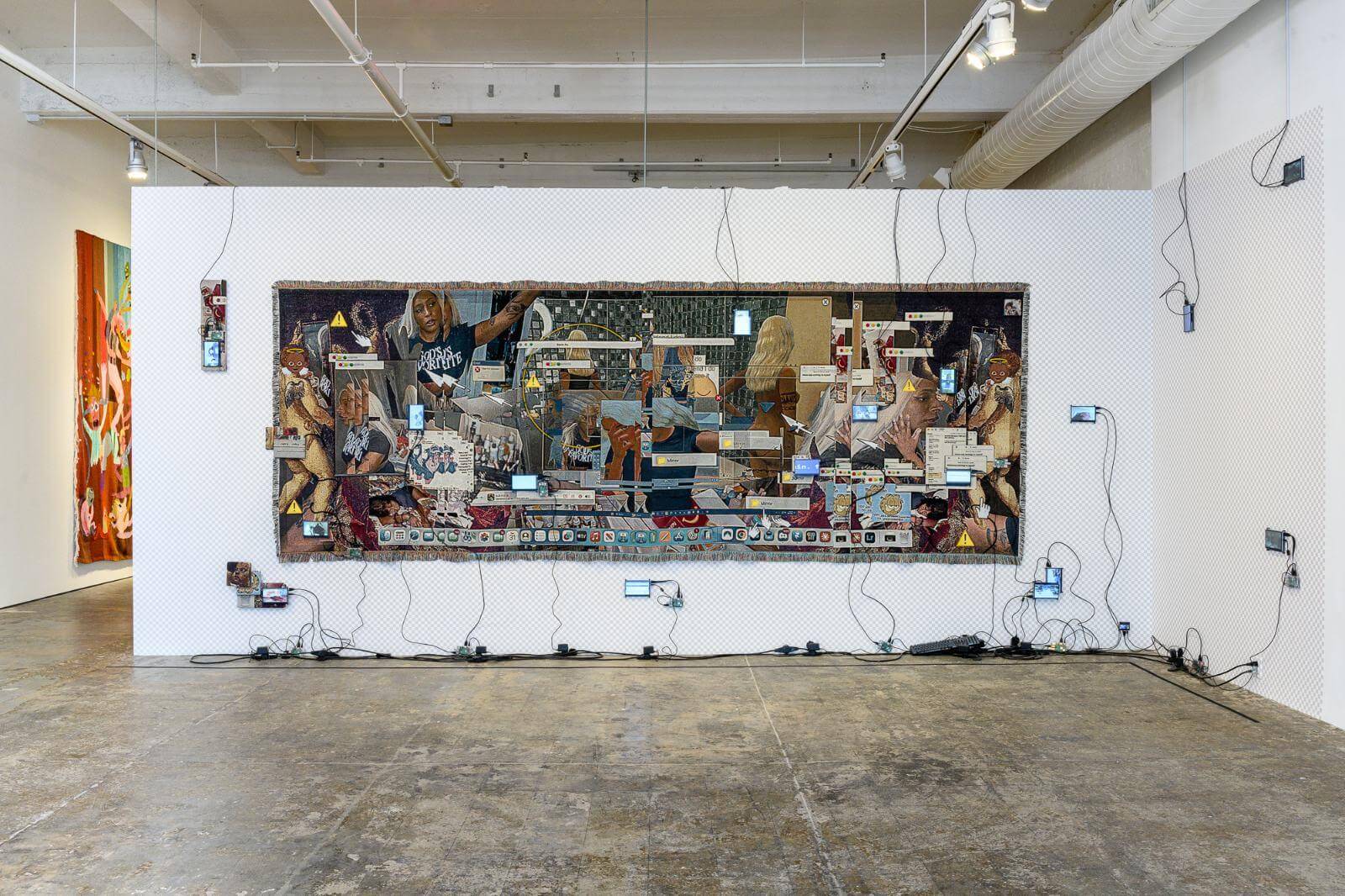
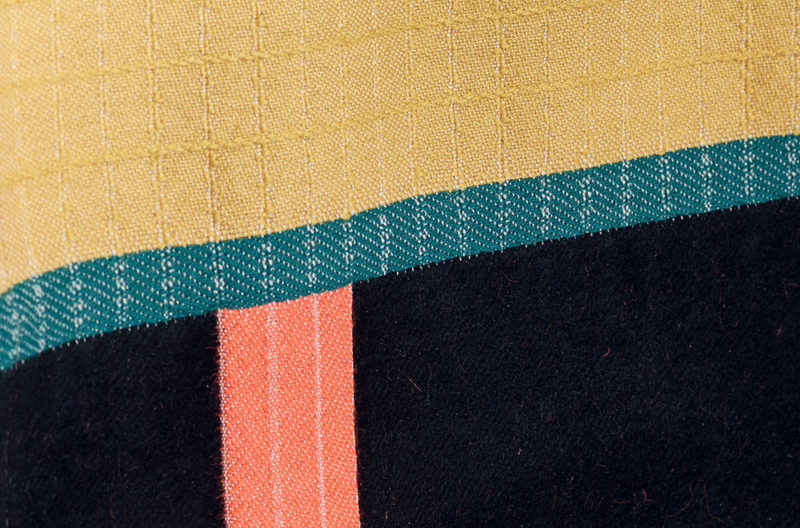
Qualeasha Wood, ‘anywhere! (but here.)’, 2026
COURTESY: © The Artist & The Fabric Workshop and Museum / PHOTOGRAPH: Constance Mensh
Wood’s contribution, ‘anywhere! (but here.)’, is particularly emblematic of the show’s preoccupation with digital mediation. Her Jacquard-woven tapestry incorporates emojis, cursors and avatars from the life-simulator game The Sims, translating the frenetic interface of the computer screen into a labour-intensive textile embellished with very real and visceral glass seed beads. “It’s a masterful negotiation of the Black femme identity within the ambivalent site of escape and capture that is the internet,” Wu notes. Similarly, Mika Tajima’s ‘Negative Entropy’ series visualises sound waves from active Jacquard looms, creating a self-referential loop – where the process of weaving becomes the subject of the weave itself. The spectrograms serve as a bridge between the industrial history of textile production and the binary logic of modern computing.
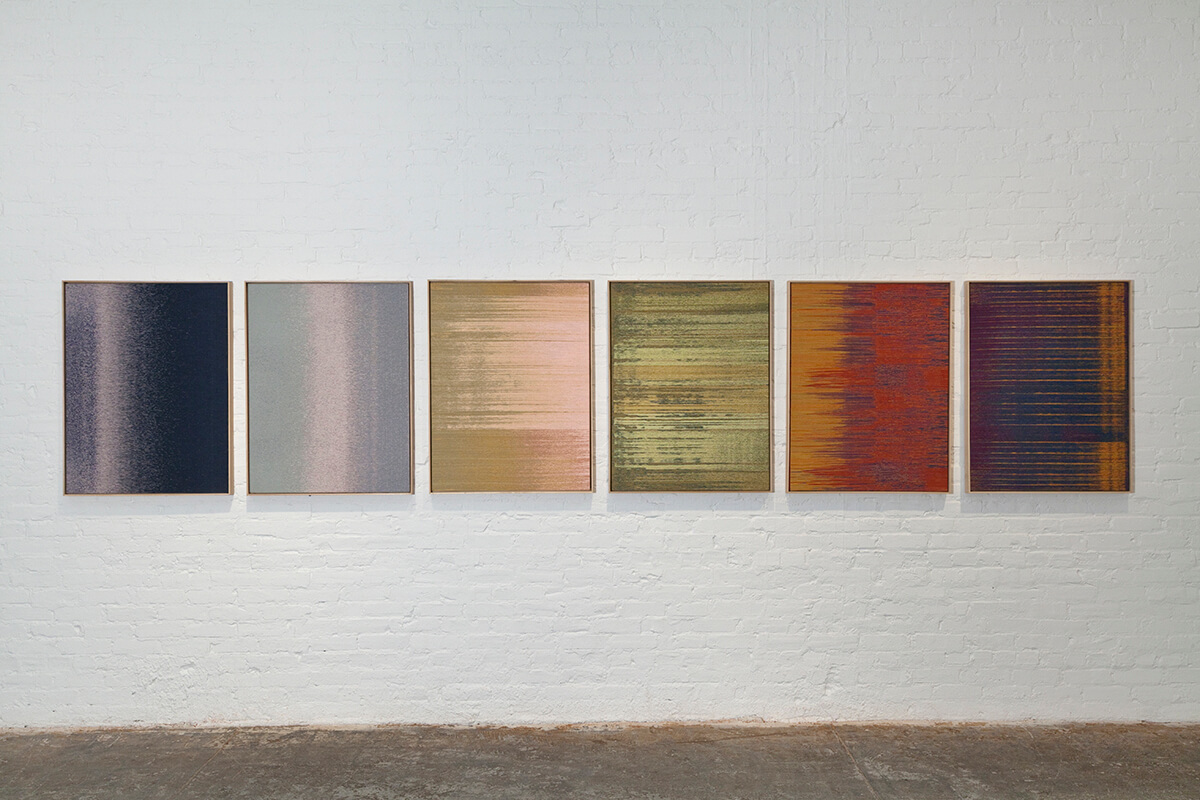
Mika Tajima, ‘Negative Entropy’, 2012
COURTESY: © The Artist & The Fabric Workshop and Museum / PHOTOGRAPH: Carlos Avendaño
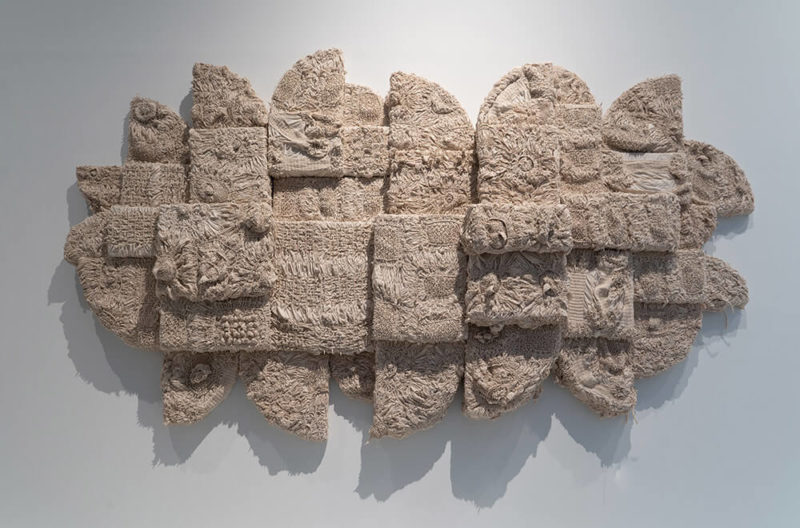
The exhibition also trades in material subversion: woven artworks that challenge common perception and incorporate age-old techniques such as trompe l’oeil, and even the painterly quality of sfumato in order to do so. Kira Dominguez Hultgren’s ‘Our Daily Parenthetical’, meanwhile, utilises everything from mohair and silk to side of the road baskets and loom bars, challenging the viewer’s haptic sense through sculptural distortion.
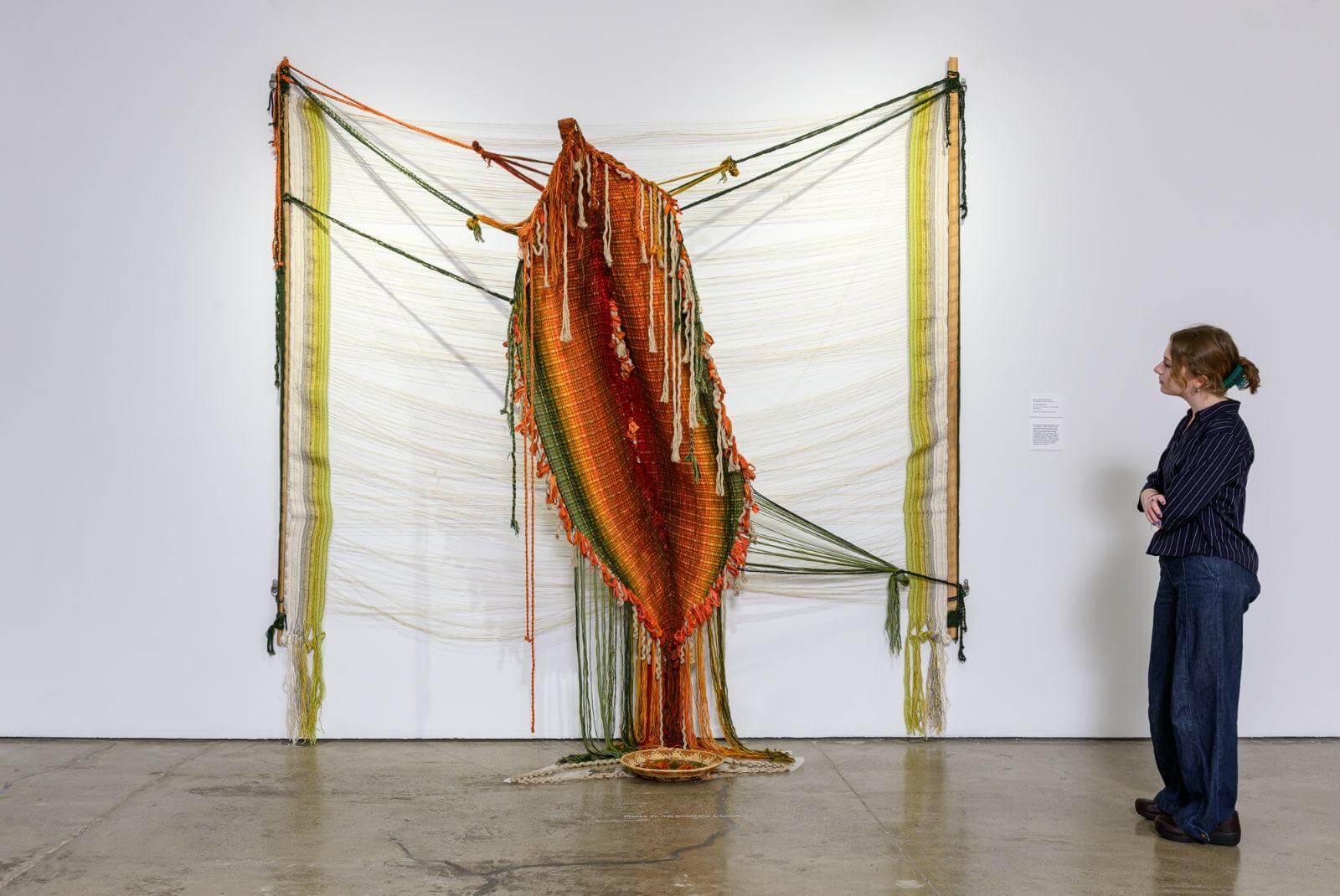
Kira Dominguez, ‘Our Daily Parenthetical’, 2025
COURTESY: © The Artist & Eleanor Harwood Gallery / PHOTOGRAPH: Constance Mensh
Sarah Rosalena’s ‘Spiral Pine Red’ further complicates this narrative by employing cochineal-dyed pine needles and cotton yarn, literally and figuratively weaving together indigenous material history with contemporary form. Other exhibiting artists include Diedrick Brackens, Christy Matson, and Kiki Smith.
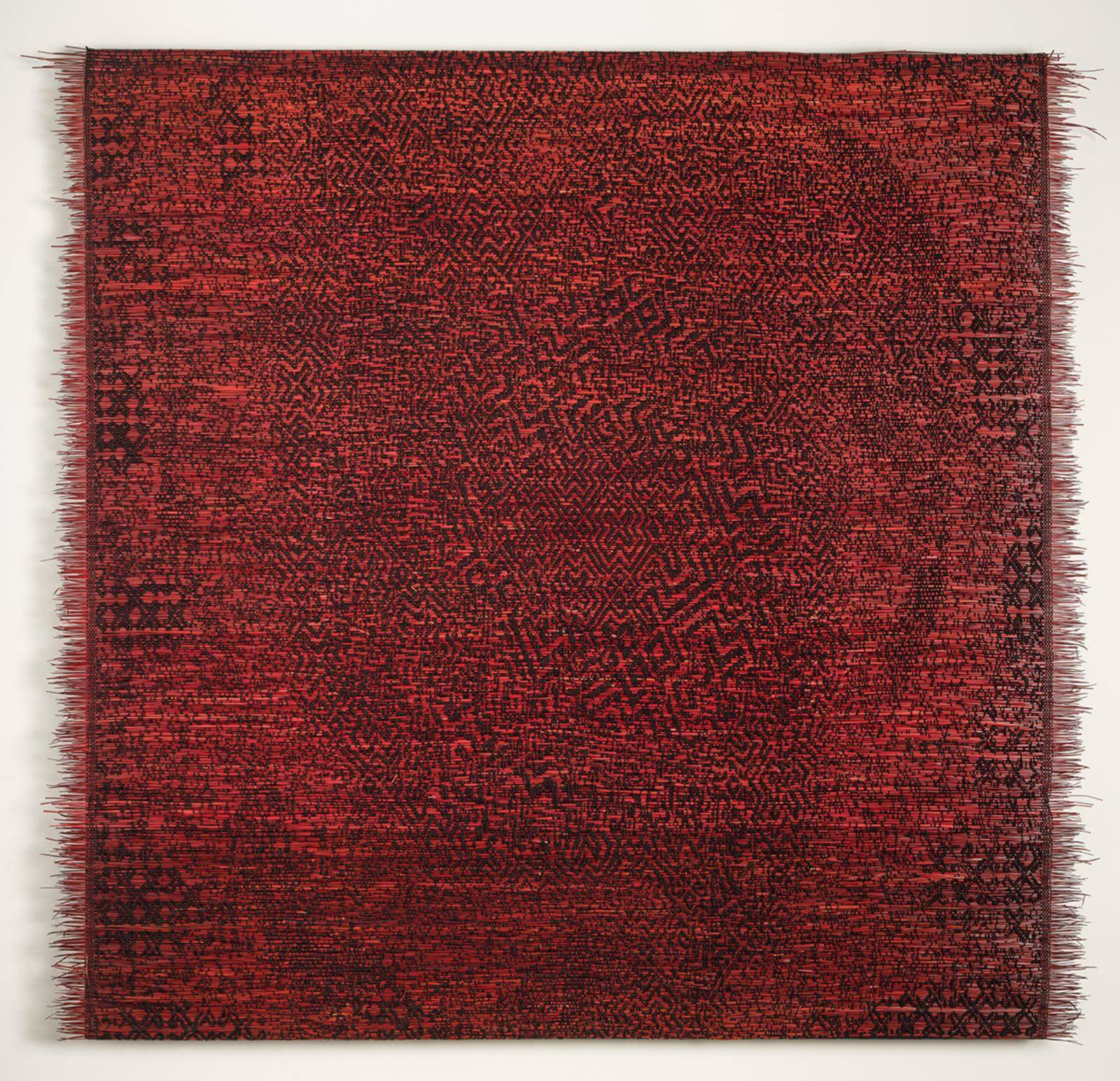
Sarah Rosalena (Wixárika), ‘Spiral Pine Red’, 2024
COURTESY: © The Artist
As suggested by Kelly Shindler, FWM’s Executive and Artistic Director, the exhibition serves to “literally cloak and soften” the galleries in the complex fables and migratory patterns of our era. Whether it is the monumental, distorted graphic language of Ed Ruscha’s ‘Industrial Strength Sleep’, or the precise Navajo-influenced geometries of Melissa Cody’s weaving, the works in this exhibition demand a slow, contemplative engagement; one that draws the viewers away from their phones.
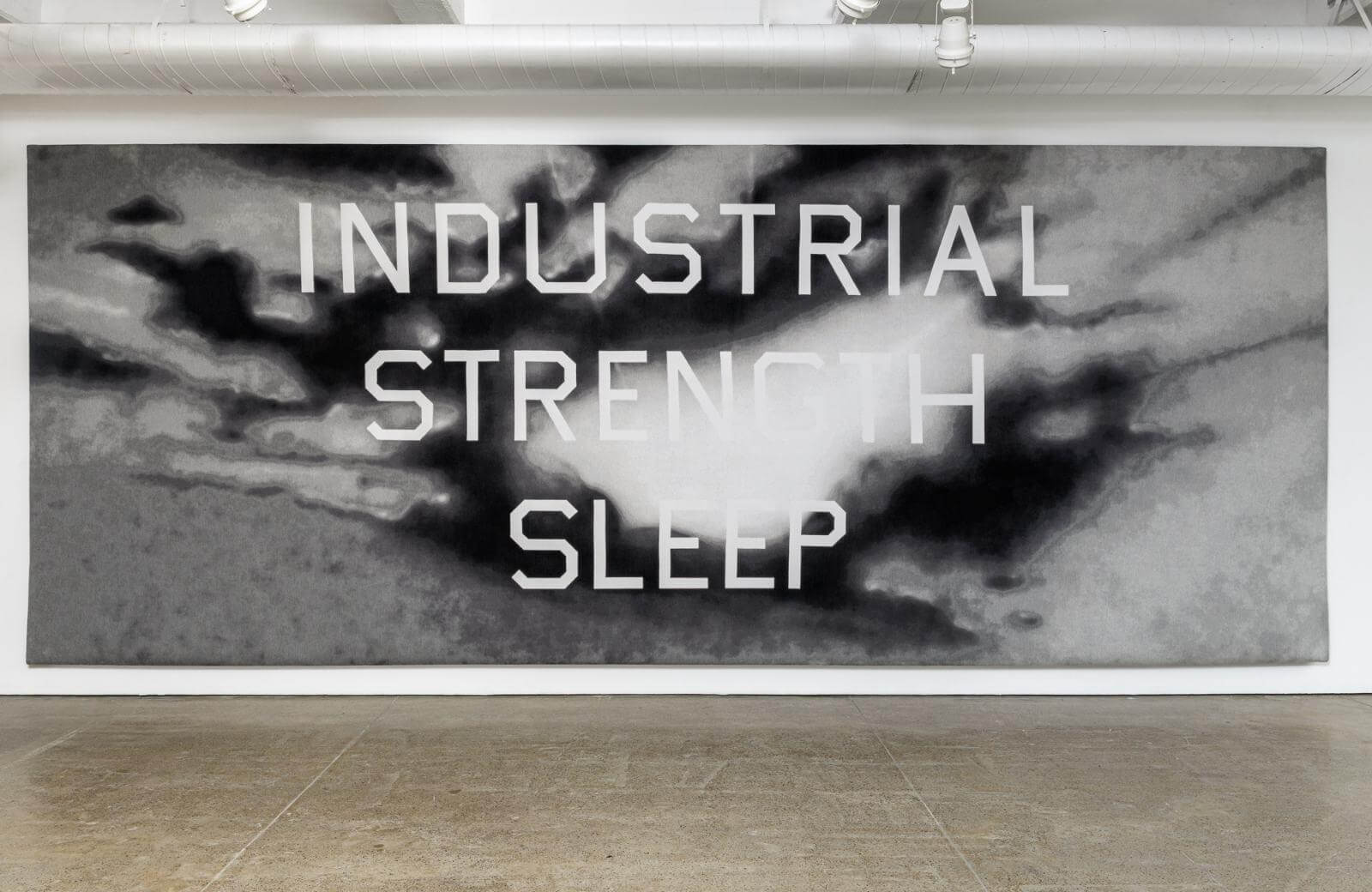
Ed Ruscha, ‘Industrial Strength Sleep’, 2007
COURTESY: © The Artist & The Fabric Workshop and Museum / PHOTOGRAPH: Constance Mensh
In this “digitally mediated moment”, as Wu puts it, tapestry offers a vital reconsideration of what the images that define our everyday are actually made of. By highlighting the disciplinary transcendence of the medium and matter, the exhibition proves that the age-old artform of woven figuration remains a vital aspect of cultural storytelling. It’s a reminder that even in a world of pixels, 15-second videos and sound bites, the most profound narratives are often those we can touch. Away from that noise, tapestry can be harnessed as a world-building tool, implemented to create vast and varied landscapes in which one can get lost.
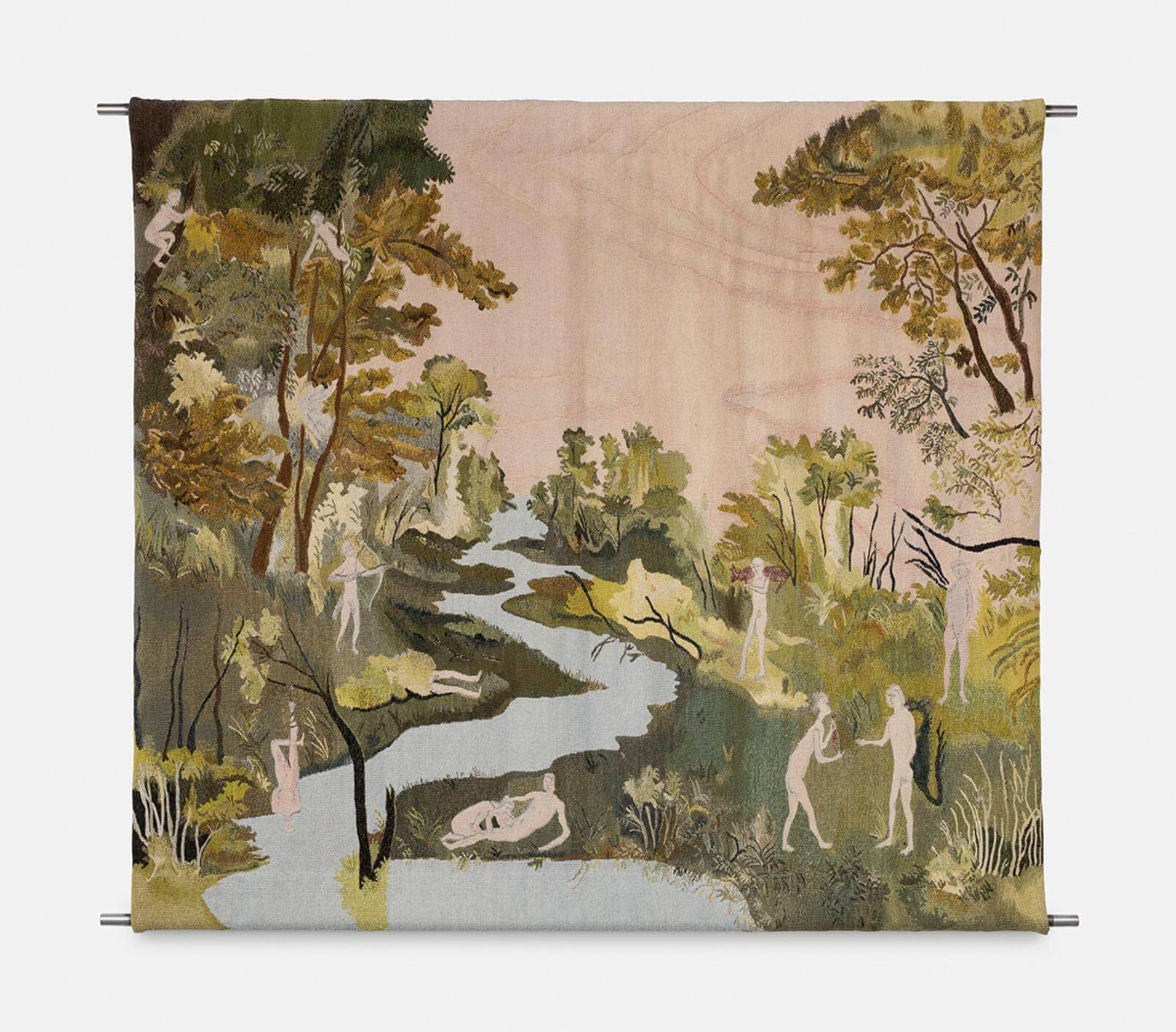
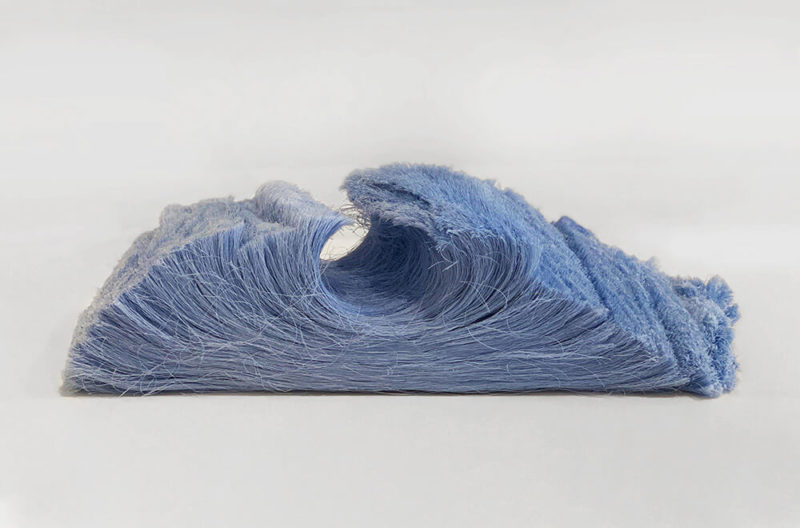
Sanam Khatibi, ‘You Taste Like Me’, 2021
COURTESY: © The Artist & Mendes
Wood DM, São Paulo, Brussels, Paris, New York
Adrian Madlener is a Brussels-born, New York-based writer covering a wide range of design-related topics.
View all articles by Adrian Madlener