‘Teapot’, circa 1879
Christopher Dresser
By TDE Editorial Team / 9th October 2026
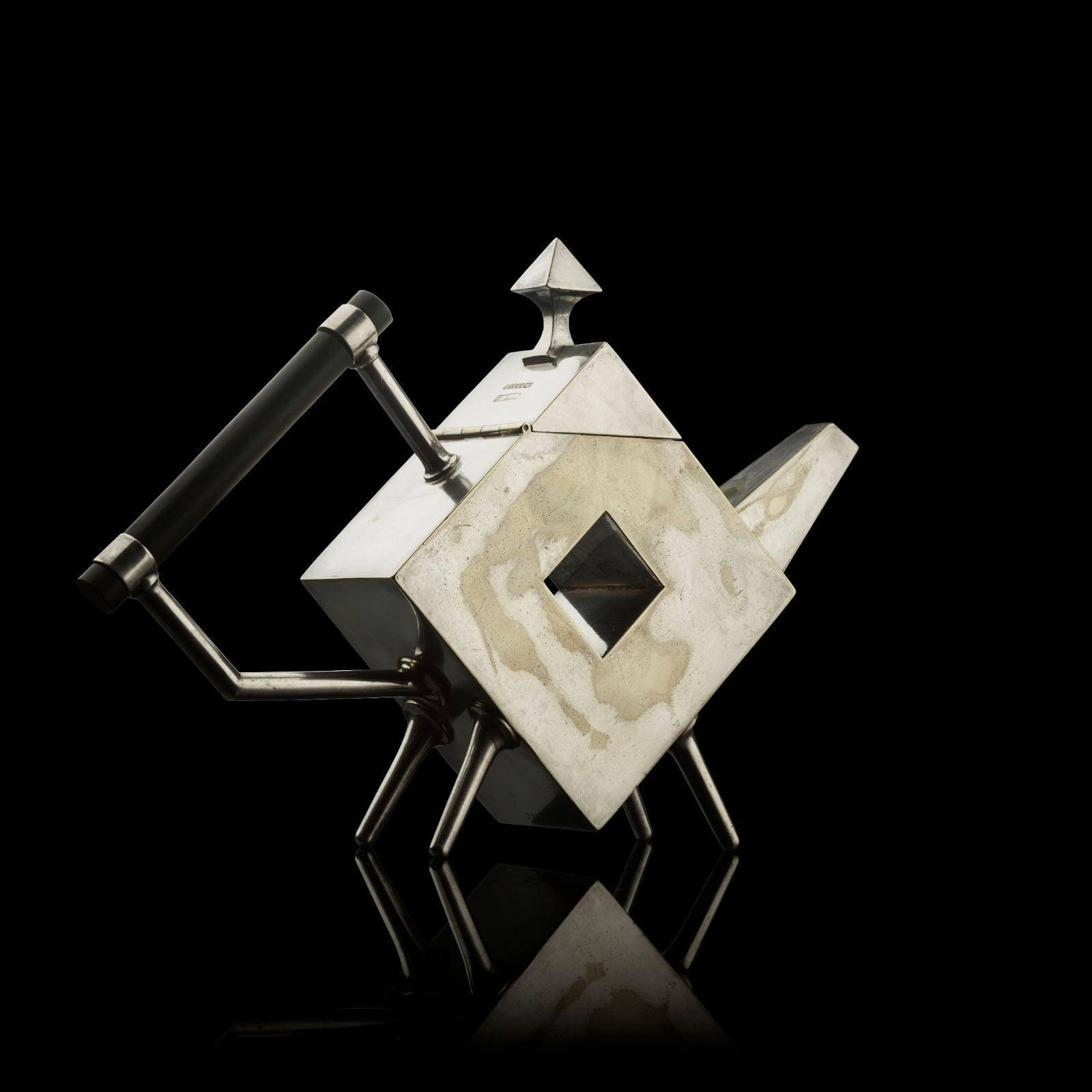
Christopher Dresser, ‘Teapot’, circa 1879
COURTESY: © The Artist & Lyon & Turnbull
IN 1876, TWELVE years after Japan had been forced to open its doors to the West, an English gentleman set out to explore the country. Christopher Dresser, born in Glasgow in 1834 to English parents, had already made a name for himself as perhaps the first ever independent commercial designer. Trained from the age of thirteen at the Government School of Design (founded in London in 1837), by his early forties he was designing for multiple industrial manufacturers. His creations ranged across many media – including carpets, ceramics, furniture, glass, graphics, wallpapers, metalwork (including silver and electroplate), and textiles printed and woven.
Meanwhile, his morally inflected philosophy of design, articulated in a series of books, had become hugely influential. He argued that truth, beauty and power, in design, should be pursued through radically new forms of ornament, abstracted from nature according to scientific principles. At the same time, he took inspiration from a wide range of earlier Western and non-Western sources including Peruvian, Egyptian, Persian, Mexican, Moroccan and Fijian objects, many of which he might have seen in the British Museum and the South Kensington Museum.
It was at the International Exhibition in London in 1862 that Dresser encountered a large number of Japanese art objects for the first time. His four month trip to Japan, in 1876, only confirmed his admiration for the simplicity of form, truth to materials and functionality of Japanese design.
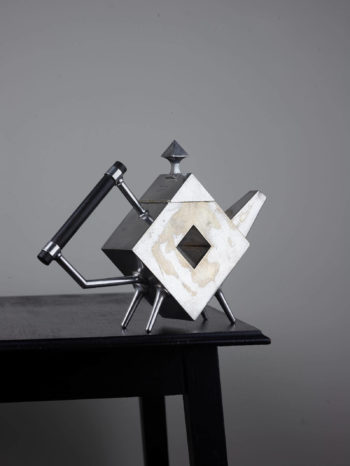
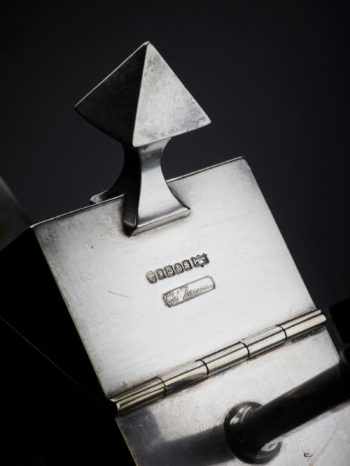
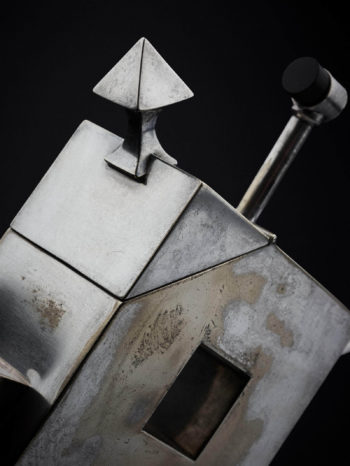
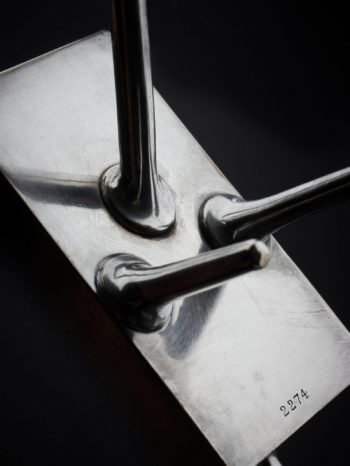
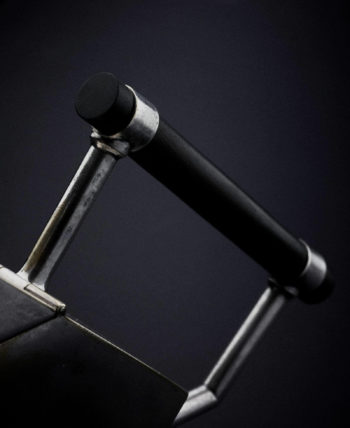
Dresser’s radical teapot designs (largely created between 1878 and 1883) reflect the impact of that visit. They demonstrate daring formal invention, with this spare angular design especially playful, as well as sharp attention to the four-way marriage of material, form, surface and manufacturing techniques. Indeed, this particular design, which appears in the 1879 costing book of his client, James Dixon & Sons, in Sheffield, as design no. 2274, is described as “English Japanese”, underlining the Japanese influence. It exists in only three known examples: one in the Victoria and Albert Museum in London, another in the collection of the Montreal Museum of Fine Arts, and this one, which goes up for sale at Lyon & Turnbull in Edinburgh next week (estimate £30,000-£50,000).
While it has become iconic, a proto-modern masterpiece that seems to anticipate the Bauhaus and Art Deco aesthetic by decades, it may have been one of the approximately 80 designs that Dresser produced for James Dixon & Sons that never went into full production, owing either to the cost of manufacture, or to its being so in advance of the tastes of the day.
-

-
Christopher Dresser, ‘Teapot’, circa 1879
COURTESY: © The Artist & Lyon & Turnbull
-
-
Christopher Dresser, ‘Teapot’, circa 1879 (detail)
COURTESY: © The Artist & Lyon & Turnbull
-
-
Christopher Dresser, ‘Teapot’, circa 1879 (detail)
COURTESY: © The Artist & Lyon & Turnbull
-
-
Christopher Dresser, ‘Teapot’, circa 1879 (detail)
COURTESY: © The Artist & Lyon & Turnbull
-

-
Christopher Dresser, ‘Teapot’, circa 1879 (detail)
COURTESY: © The Artist & Lyon & Turnbull
Lyon & Turnbull: Design since 1860
33 Broughton Place, Edinburgh
Viewing:11th– 15th October 2026
Auction:14th & 15th October 2026 from 10:00 BST (Live from Edinburgh & Online)