Galerie nationale du design
The new jewel in the crown of Saint-Étienne’s design district.
‘Design in hand: From language to object’
June 11th 2026 – 7th March 2027
By Dominic Lutyens / 25th June 2026
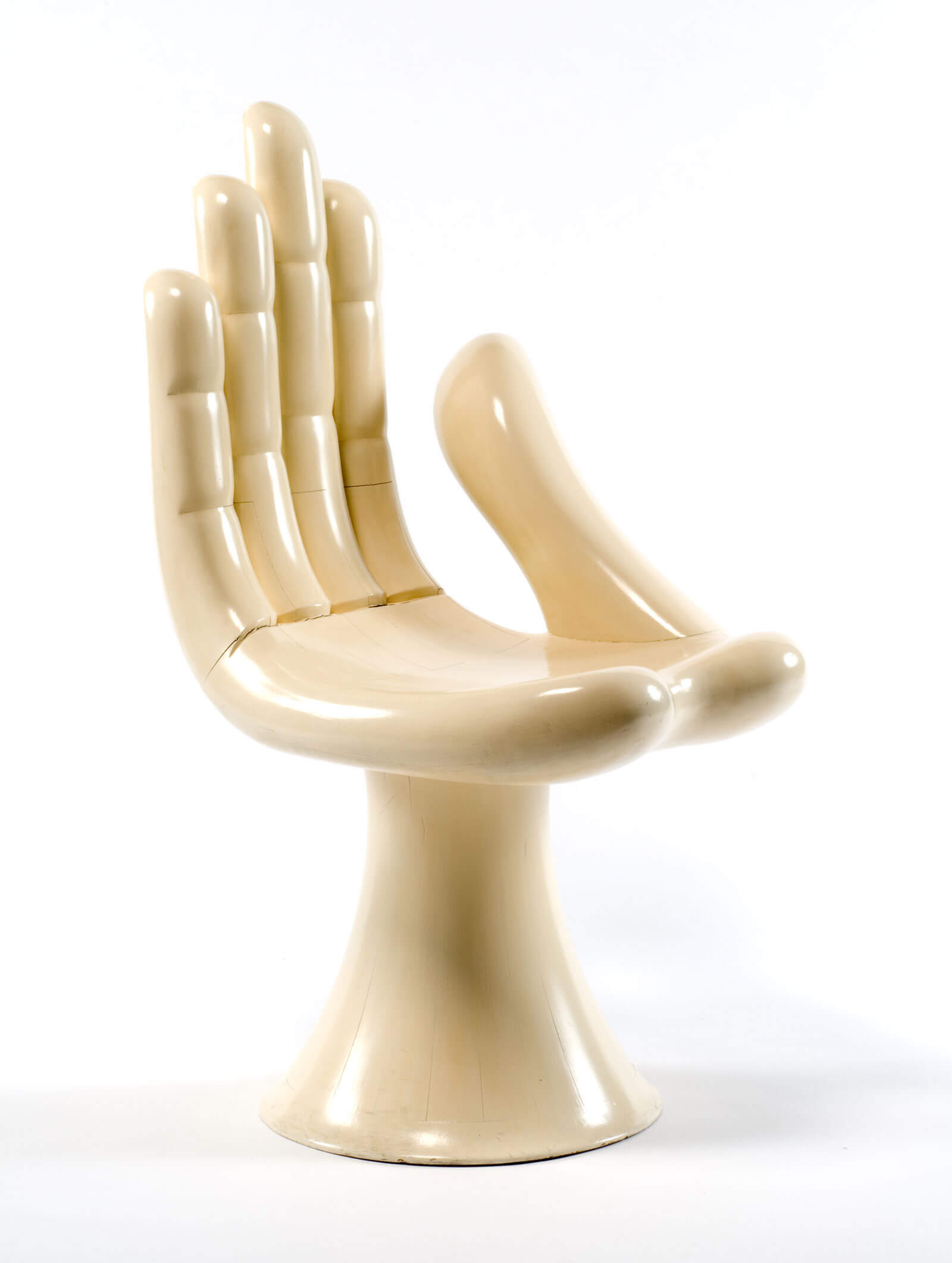
Pedro Friedeberg, ‘Hand Chair’, 1961
COURTESY: FNAC 1954 Collection du Centre national des arts plastiques © droits réservés / Cnap / PHOTOGRAPH: © Béatrice Hatala / Les Arts Décoratifs
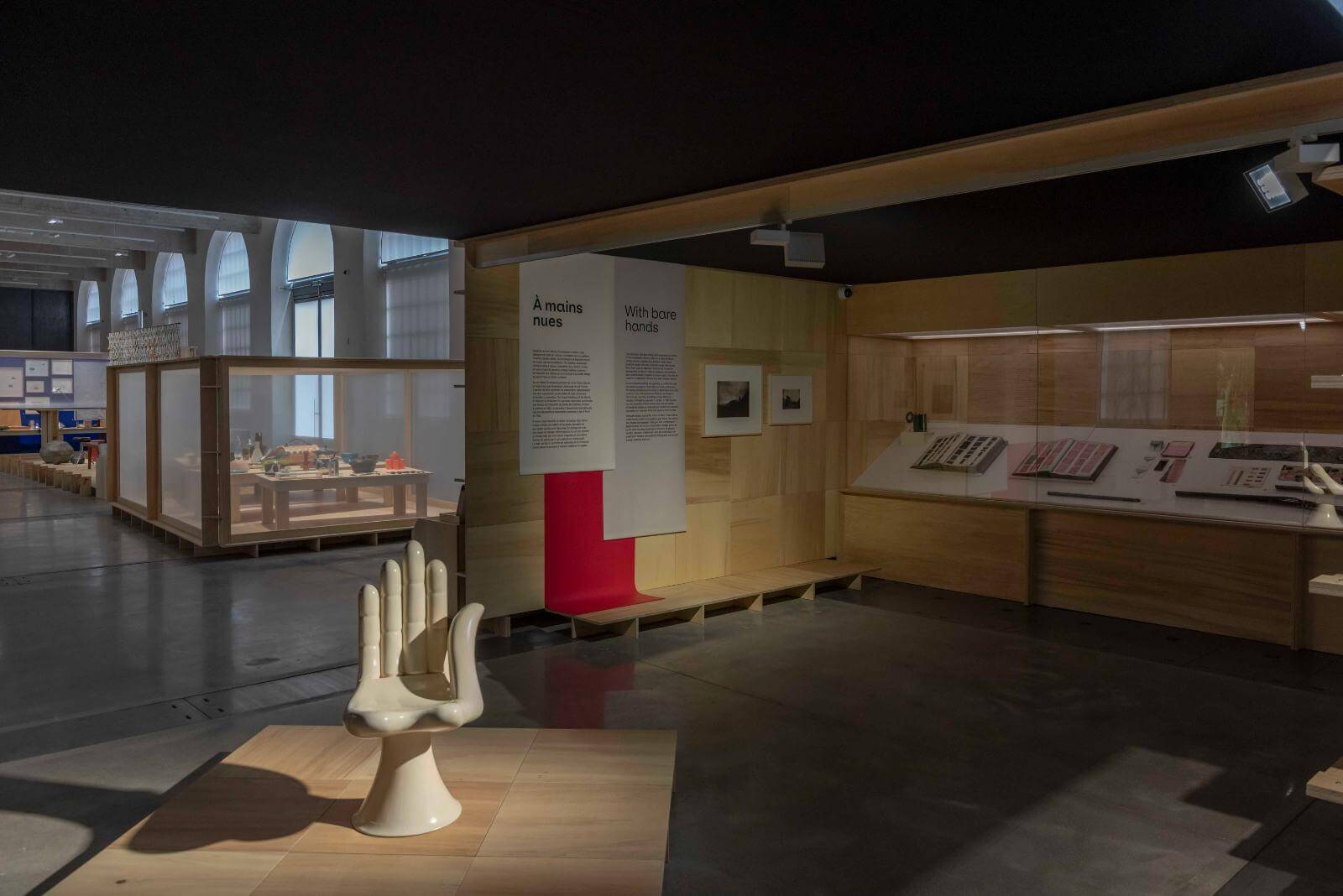
A CHAIR SHAPED like a hand, standing just under 3ft high, stands at the entrance to the inaugural exhibition of the newly opened Galerie nationale du design in Saint-Étienne, France. The arresting surreo-pop piece – part chair, part fantastical sculpture – is open to interpretation. Is it greeting visitors, ushering them in, or making a supplicant gesture? Created in 1961 by Italian-born, Mexico-based artist Pedro Friedeberg, part of a group of Surrealists which also included Leonora Carrington, it makes an appropriately enigmatic introduction to the show, ‘Design in hand: From language to object’.
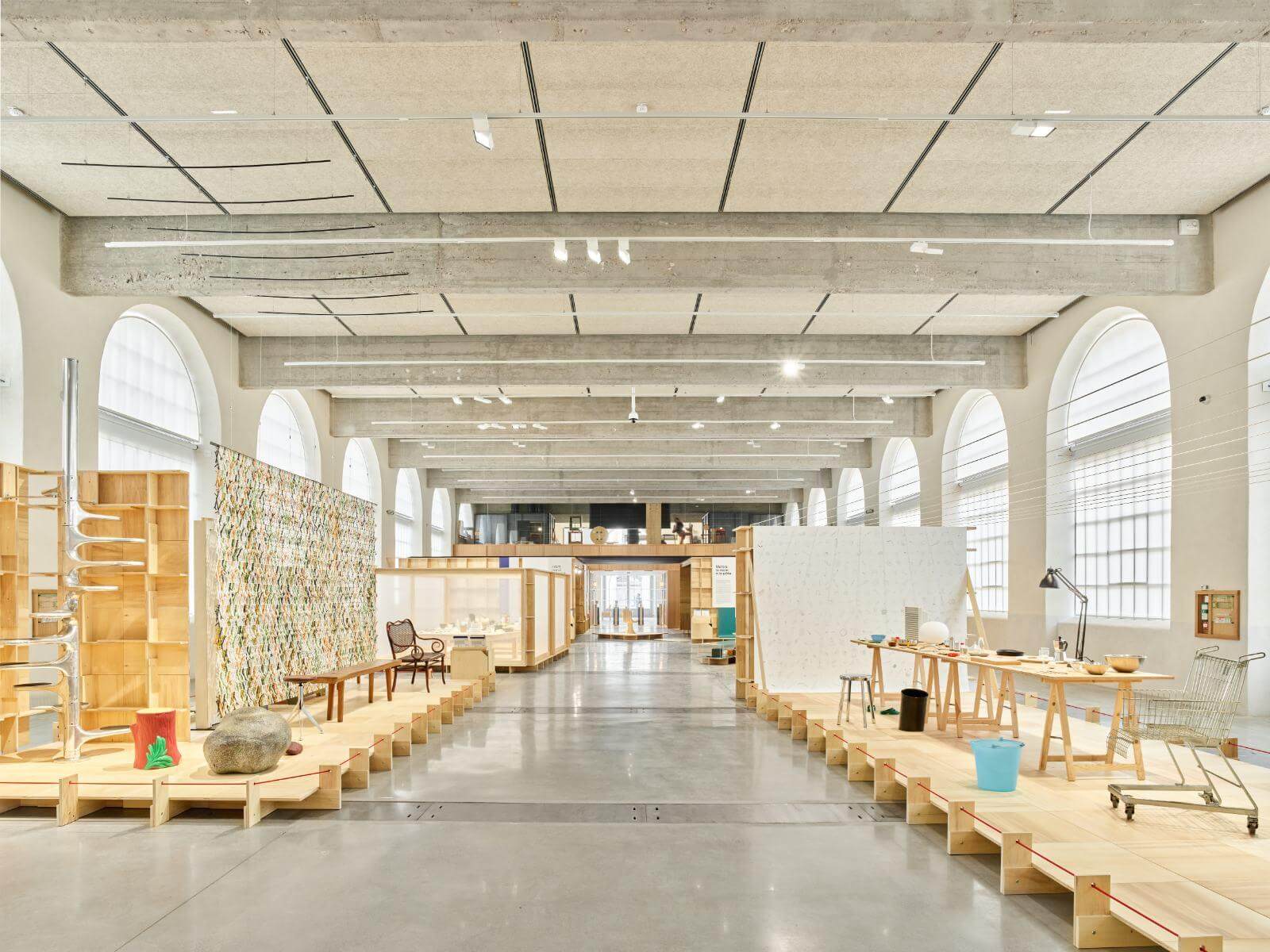
Exhibition view, ‘Design in hand’
COURTESY: © Galerie nationale du design
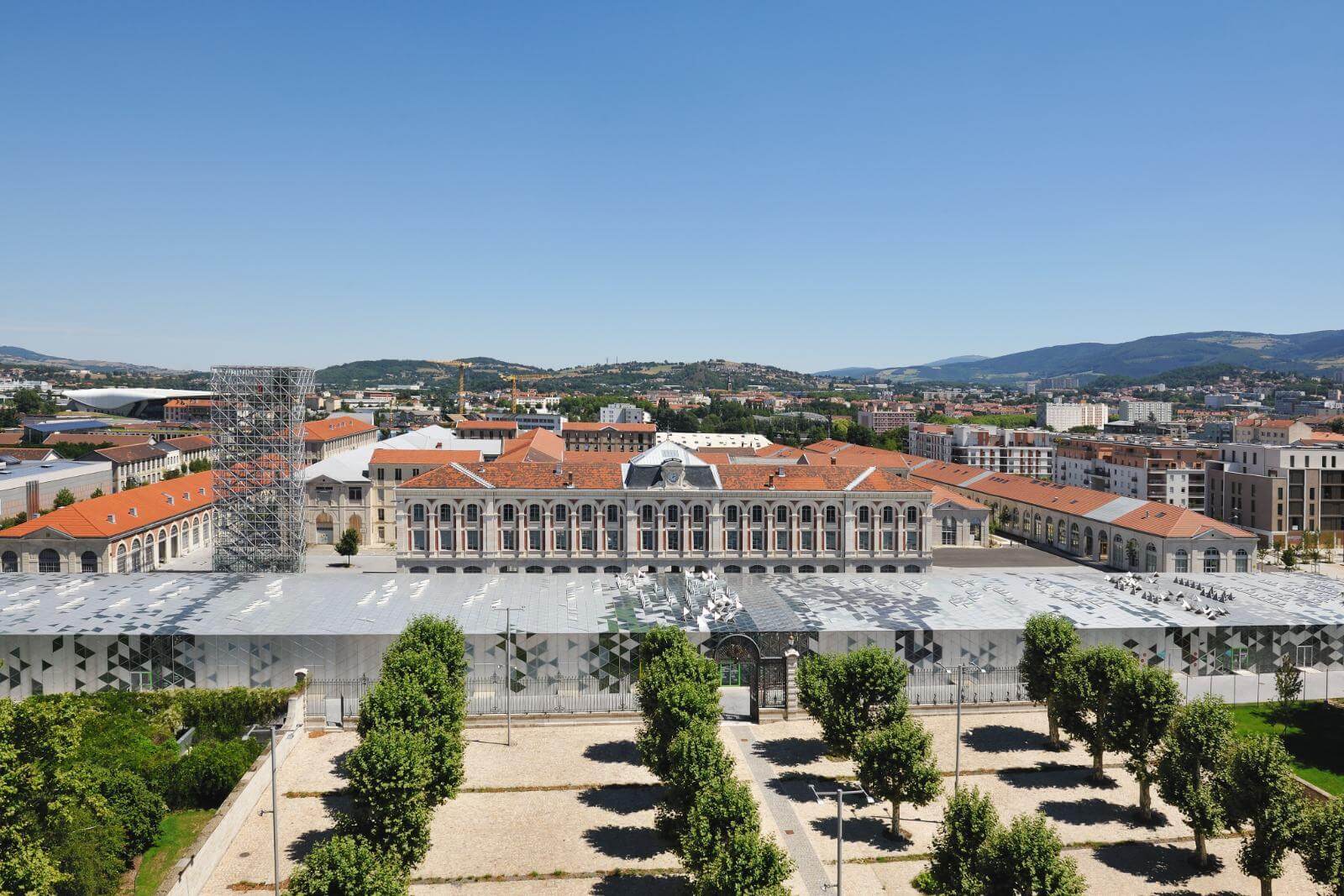
The new museum in Saint-Étienne, located 60 km southwest of Lyon, occupies the former, state-owned factory of the Manufacture d’armes de Saint-Étienne, which ceased producing weapons in 2004. The city has long been an important industrial centre, known also for producing bicycles and, since the 16th century, for fabricating ribbons. It’s closely associated with Lyon, famously a silk-weaving centre.
Galerie nationale du design
COURTESY: © Galerie nationale du design
The former factory the museum occupies has been meticulously restored with sensitivity to its historical use. “We wanted to retain the former factory’s industrial character,” says Aurélie Voltz, the museum’s director. The building is more stately than utilitarian: its classical façade with arched windows recalls a painting by de Chirico. Its imposing scale contrasts, however, with the determinedly understated new elements in its interior, which are designed to minimise impact on the building’s original fabric. The entrance is informally called Le Seuil, meaning threshold. It suggests a space you casually step inside, not a grandiose entrance. This reflects the museum’s stated aim to be inclusive, appealing to anyone curious to learn more about design, as well as to design connoisseurs.
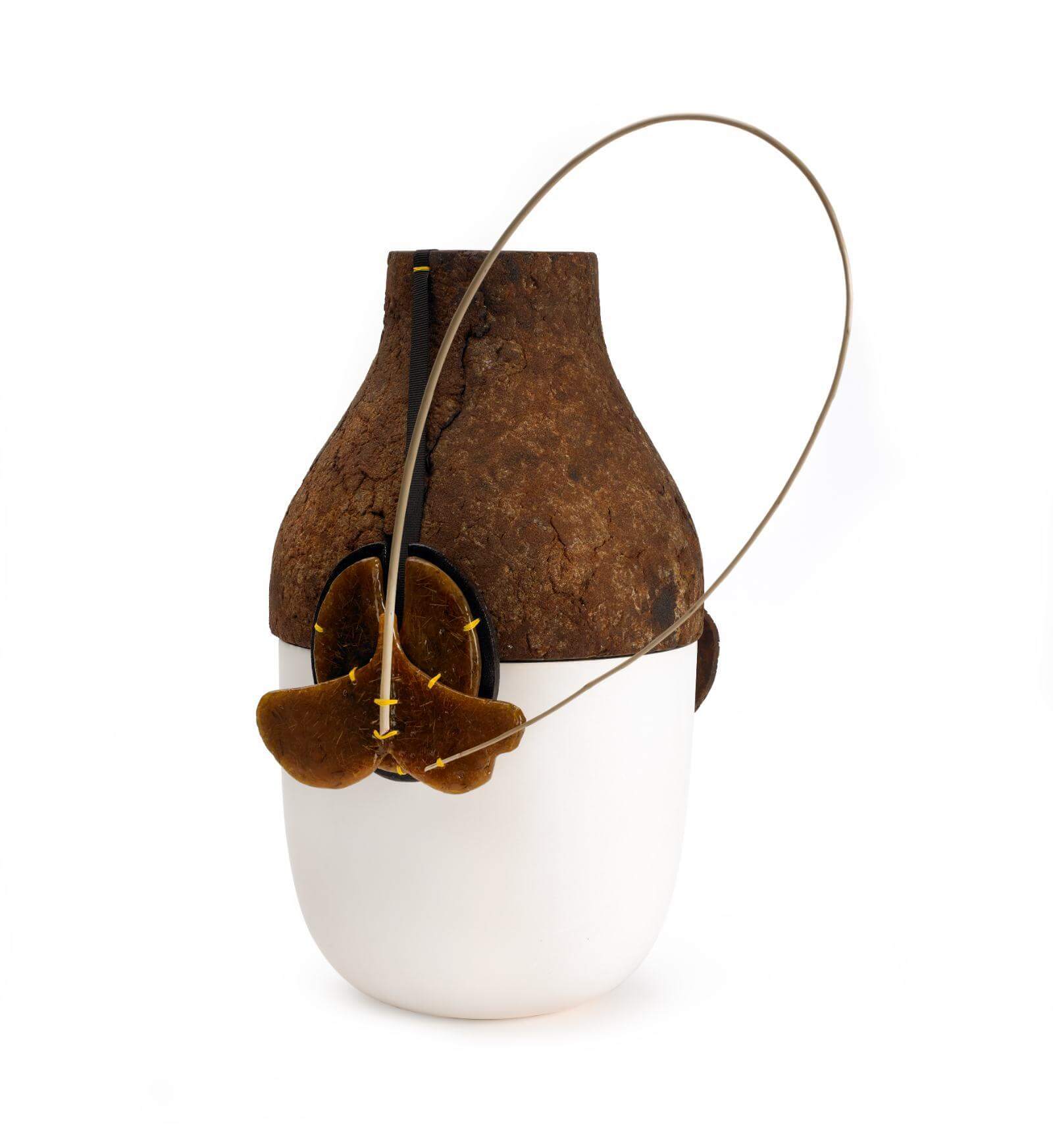
Studio Formafantasma, ‘Vase Botanica 12’, 2011
COURTESY: © The Artist & Collection du Centre national des arts plastiques / PHOTOGRAPH: Yves Chenot
The museum is part of the Cité du design district, established in 2009, a symbiotic complex of venues – all promoting design. These include the École supérieure d’art et design de Saint-Étienne, as well a gleaming glass structure called La Platine that holds exhibitions of work by students and established designers alike.
Voltz believes Saint-Étienne is a natural home for a national design museum given its long-standing commitment to culture: “In 1804 one of the first schools of drawing in France opened here and Saint-Étienne is the only French city designated a UNESCO Design City.” Moreover, Saint-Étienne has engaged with art for over forty years with the opening of the Musée d’art moderne et contemporaine de Saint-Étienne Métropole (MAMC+) in 1987, followed by the Biennale Internationale Design Saint-Étienne a decade later. In the late 1990s, Voltz explains, Jacques Beauffet, a curator at MAMC+, broadened the perception of what constituted design in France: “He took a great interest in Saint-Étienne’s industrial heritage, and started collecting pieces by Marcel Breuer, Josef Hoffmann, Thonet, Charlotte Perriand and Le Corbusier. He later collected electrical appliances.”
Exhibition view, ‘Design in hand’
COURTESY: © Galerie nationale du design
Instead of housing a permanent collection, the museum, which opened in June, has partnered with around ten major cultural institutions from all over France, chief among them MAMC+, Centre national des arts plastiques (CNAP) and Centre Pompidou – Musée national d’art moderne. At the Galerie nationale du design, pieces from these collections can be shown together for the first time. The museum will mount temporary shows on an annual basis, inviting guest curators from different countries to explore themes of personal interest.
Michele De Lucchi, ‘Lampe Treforchette’,1997
COURTESY: © The Artist & Centre Pompidou, MNAM-CCI/Bertrand Prévost/Dist. GrandPalaisRmn
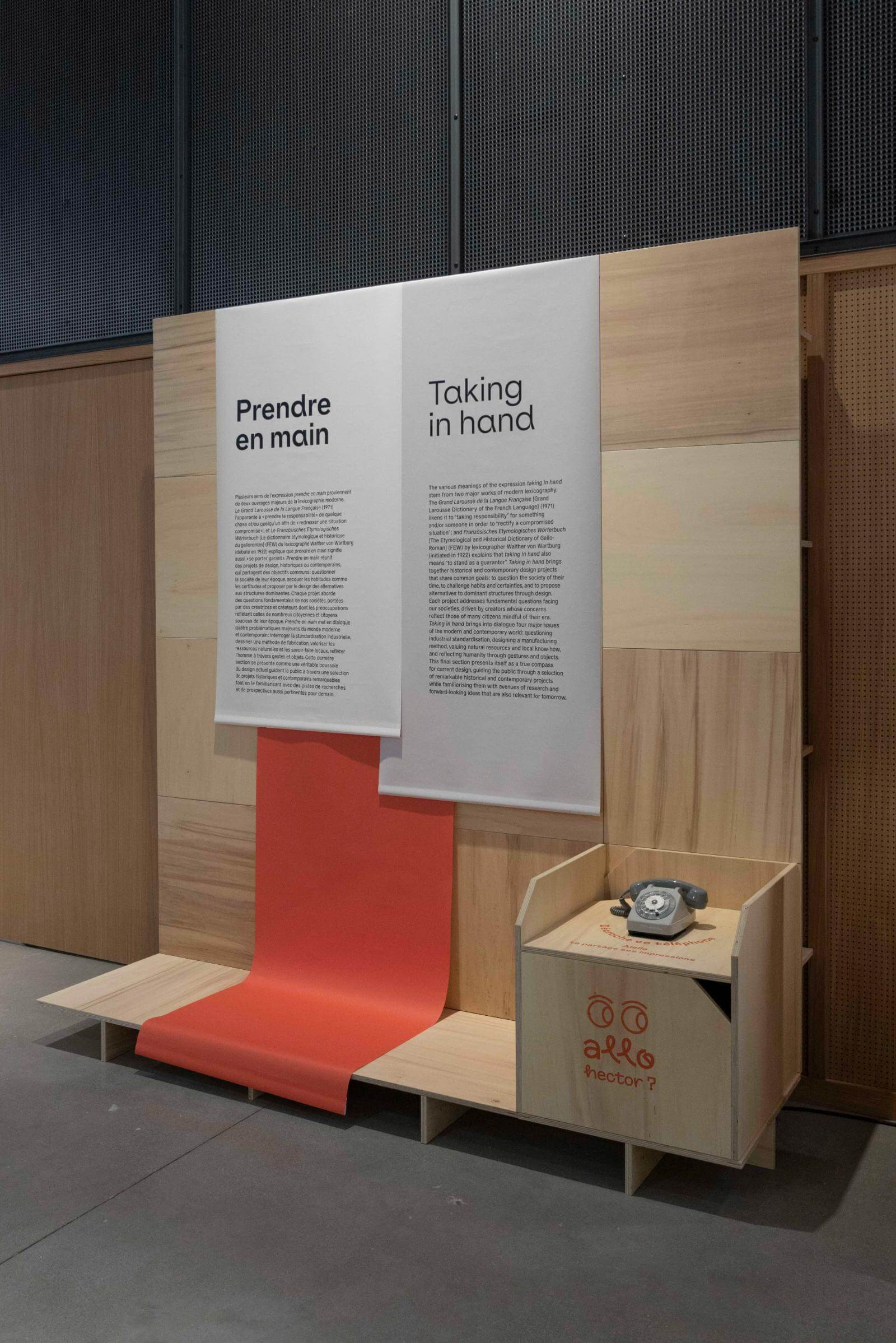
“The museum gave me carte blanche,” says Laurence Mauderli, curator of ‘Design in hand’. “The idea for the show unfolded from a linguistic and historic approach, looking at the word ‘hand’ [main] in the French word ‘manufacture’.” In French, “manufacture” refers at once to hand-made and industrial manufacture. This semantic sleight has allowed Mauderli to show a mix of hand-crafted and mass-produced pieces (almost 400 in all) in the museum’s plentiful expanse of over 1,000 m2. For this inaugural exhibition, she chose to engage with the industrial history of Saint-Étienne, selecting works from the Musée d’Art et d’Industrie de Saint-Étienne and MAMC+, then connecting these with products and projects by internationally renowned designers.
Exhibition view, ‘Design in hand’
COURTESY: © Galerie nationale du design
“In France, there’s a marked hierarchy in art and design with fine arts at the top and design somehow lower,” Mauderli suggests. The new museum, however, has a clear mission to show that everyday, functionalist design can be as deserving of people’s attention as haut bourgeois items of luxury, which French museums traditionally see as the acme of design. Friedeberg’s ‘Hand Chair’ plays with these hierarchies. Looking as if it’s made glossy fibreglass, it is in fact made of wood and painted. He employed master carpenter José González to carve the original one from mahogany.
Exhibition view, ‘Design in hand’ with Pedro Friedeberg, ‘Hand Chair’, 1961
COURTESY: © Galerie nationale du design
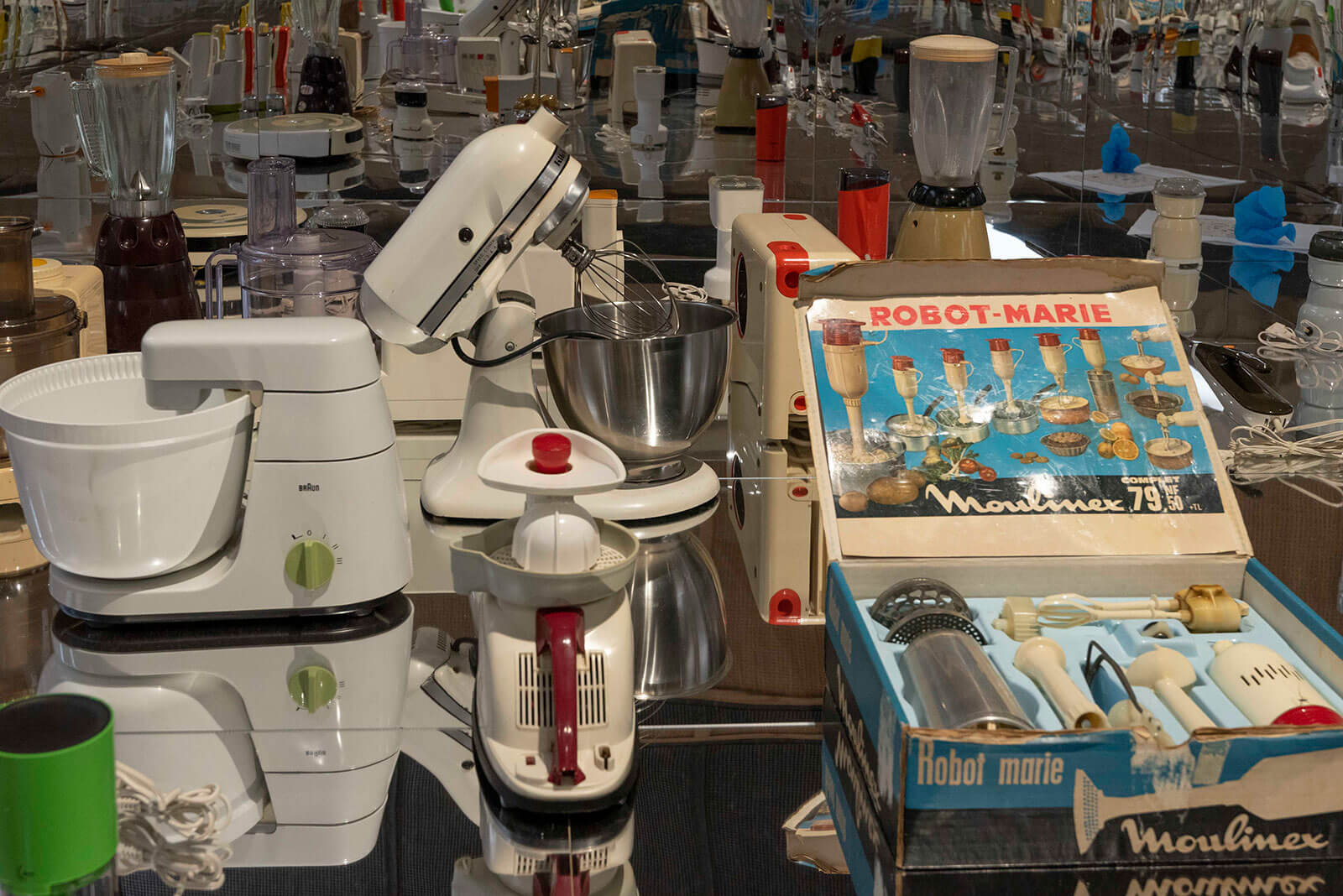
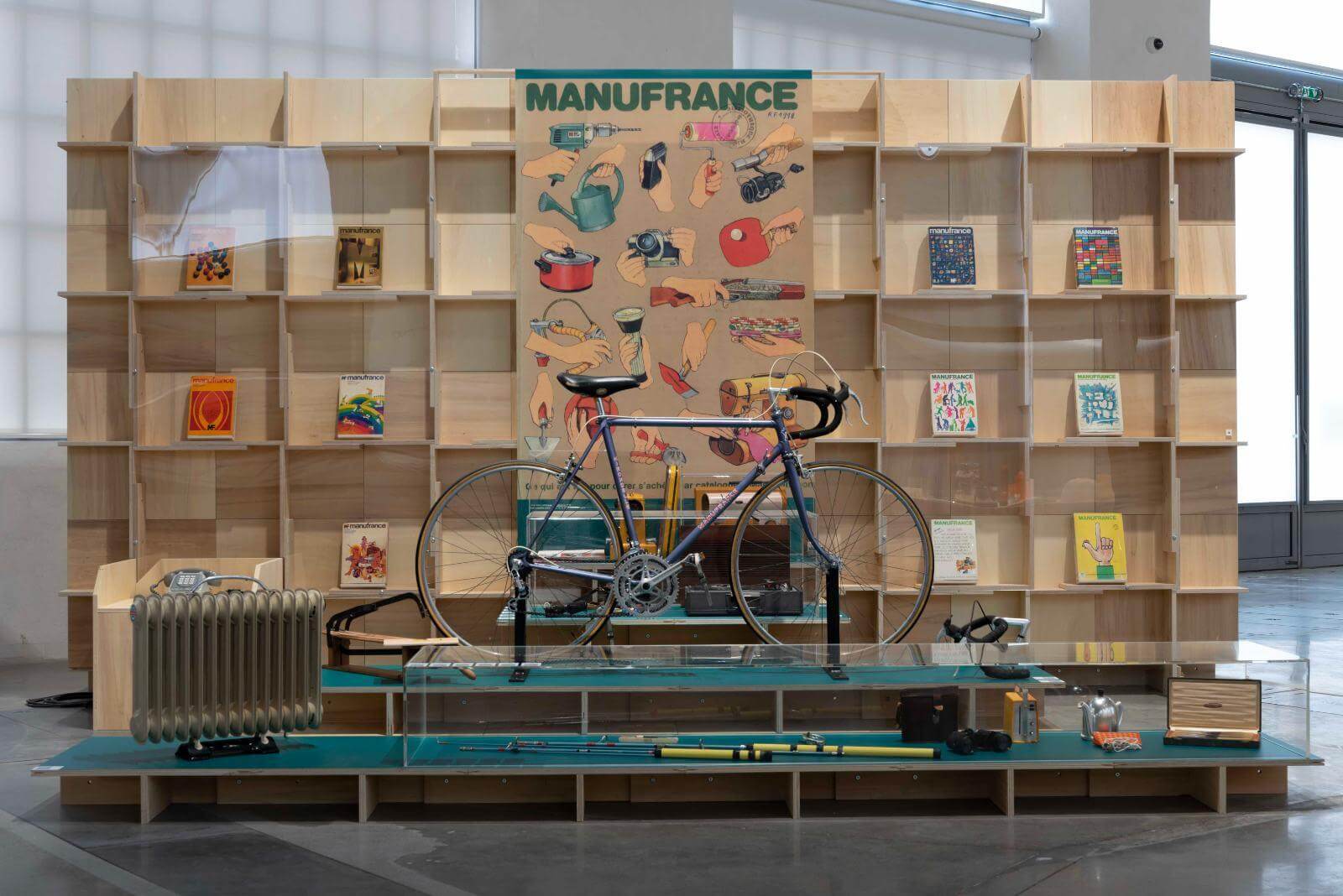
Further inside, visitors are immersed in a section about Saint-Étienne’s industrial history with photographs of smoke-belching factories. Some technologies were transferable: on display is a rifle with a metal barrel formed from a strip of closely coiled metal, clearly inspired by ribbon-manufacturing. A selection of electric appliances, meanwhile, are displayed inside a huge open-topped box lined with a silver material, their multiple reflections designed to suggest mass-production. One huge panel tells the story of France’s first mail-order firm, Manufrance, which was launched in 1890 and touted practical, covetable consumer goods – everything from bicycles to camping equipment. Alongside, catalogues from the 1970s with enticingly colourful covers feature ultra-pop illustrations in the style of Peter Max and Heinz Edelmann.
Exhibition view, ‘Design in hand’
COURTESY: © Galerie nationale du design
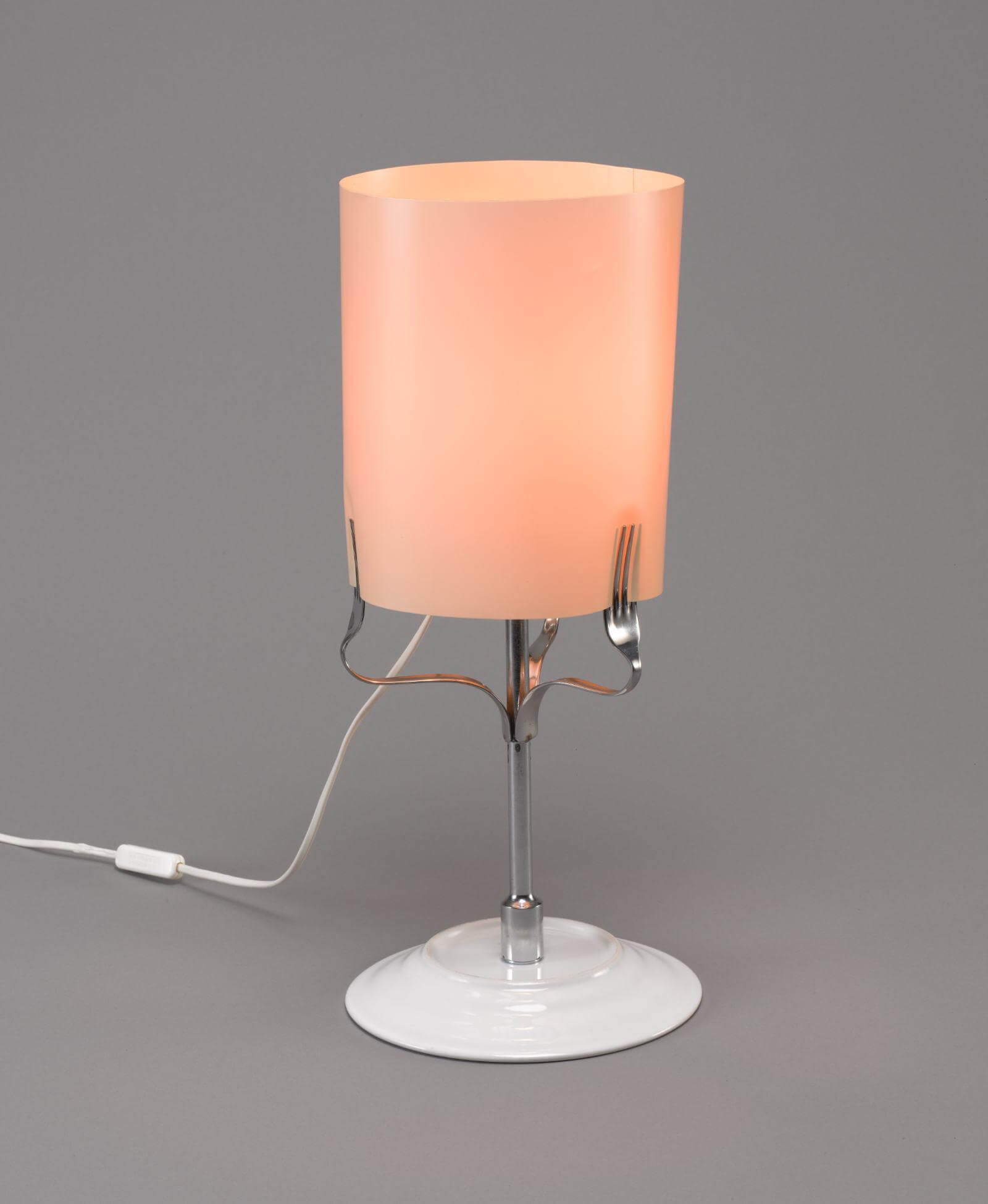
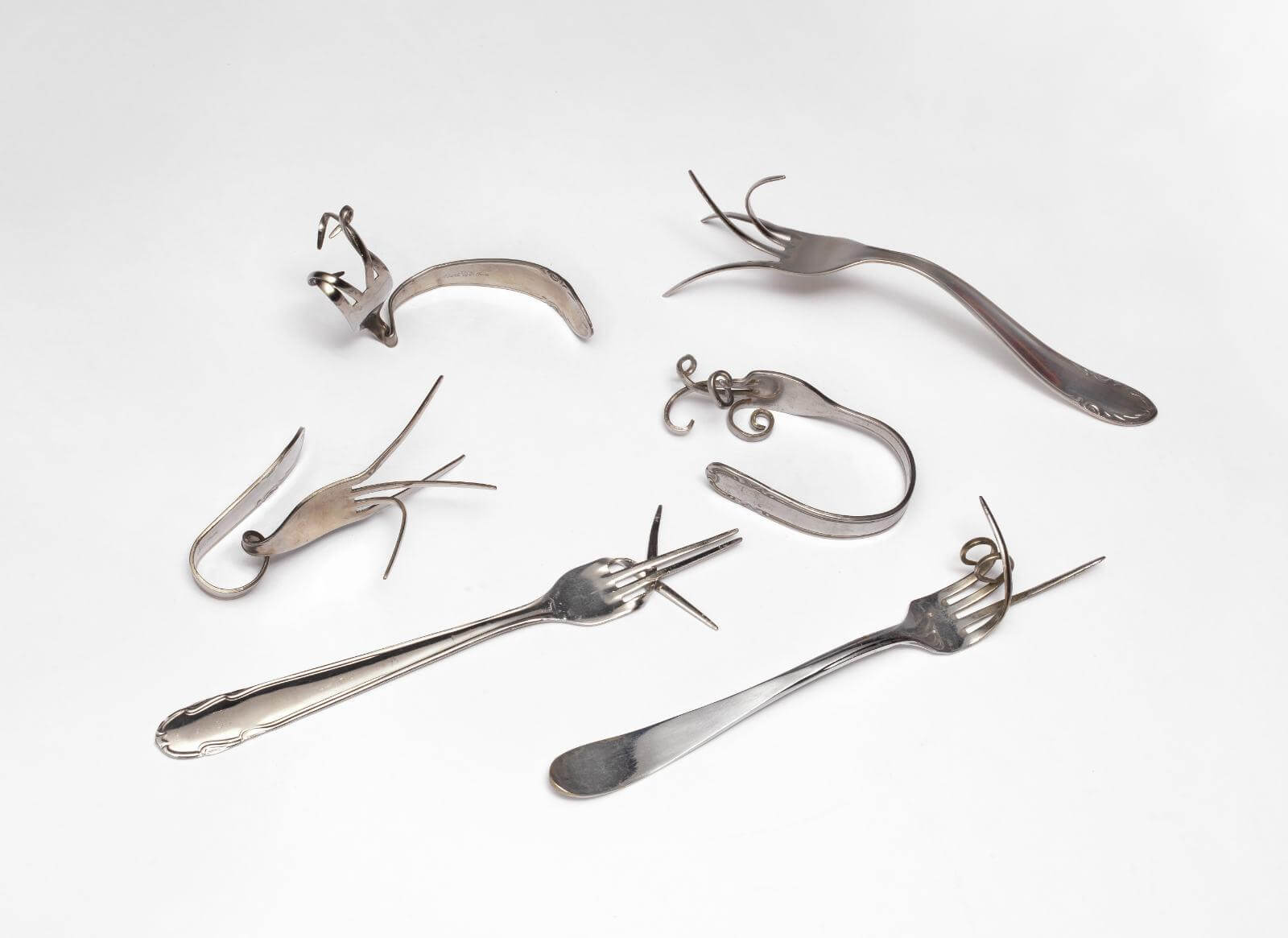
Some pieces depart radically from mass-produced design, such as a vase from Italian duo Formafantasma’s ‘Botanica’ collection, commissioned by Italian foundation Plart, dedicated to preserving plastic works of art and design. This collection of vases and bowls arose from experiments in making plastic using natural materials, such as resin, rubber, shellac and wood, combined with ceramic and metal. Hand-crafted pieces, meanwhile, include Bruno Munari’s humorous, expressive, anthropomorphic silver ‘Forchette Parlanti’ (talking forks), whose twisting, apparently gesticulating tines flout functionalism.
Bruno Munari, ‘Forchette parlanti’, 1958
COURTESY: © The Artist & Corraini Edizioni & Centre Pompidou, MNAM-CCI/Georges Meguerditchian/Dist. GrandPalaisRmn
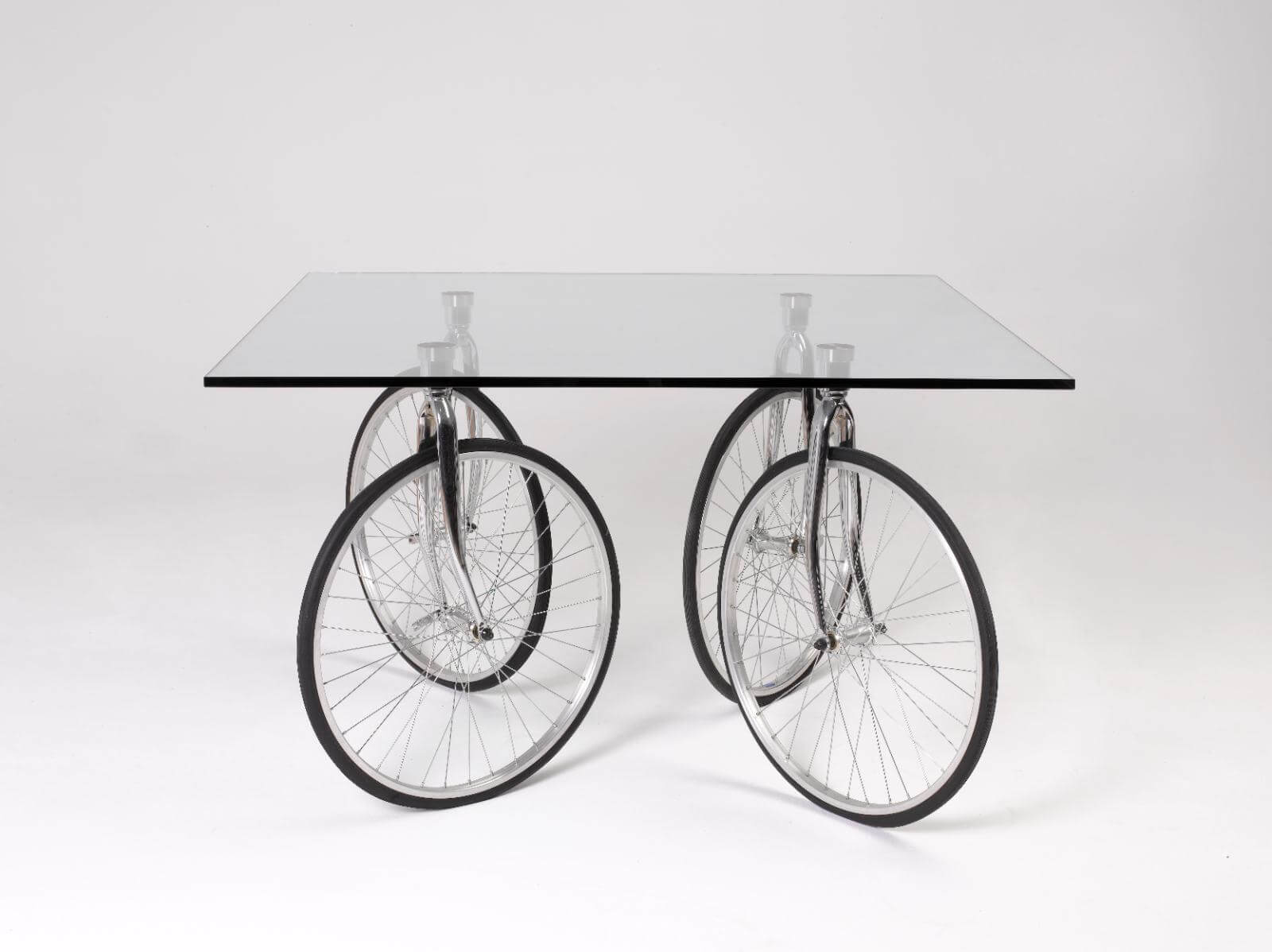
Another piece, ‘Table Tour’, designed by Gae Aulenti in 1993, is a moveable dining table with a glass top resting on bicycle wheels, which references artist Marcel Duchamp’s 1913 ready-made ‘Bicycle Wheel’. Like Duchamp, Aulenti chose to incorporate real, prefabricated bicycle wheels, which, in the context of the museum, inevitably nods to Saint-Étienne’s bicycle-manufacturing history.
Gae Aulenti, ‘Table Tour’, 1993
COURTESY: © The Artist & Centre Pompidou, MNAM-CCI/Philippe Migeat/Dist. GrandPalaisRmn
With its unprecedented access to the design collections of France’s major cultural establishments and freedom to show pieces from these together in surprising combinations in its expansive exhibition space, the Galerie nationale du design has the potential to be a great national and regional cultural asset.

Dominic Lutyens is a London-based arts journalist, who also writes for The Financial Times, BBC Designed and Elle Decoration.
View all articles by Dominic Lutyens