Preview / Treasure House Fair 2026
Fourteen design highlights to look out for this year.
The Treasure House Fair
Royal Hospital Chelsea
24th-30th June 2026
By Charlotte Abrahams / 10th June 2026
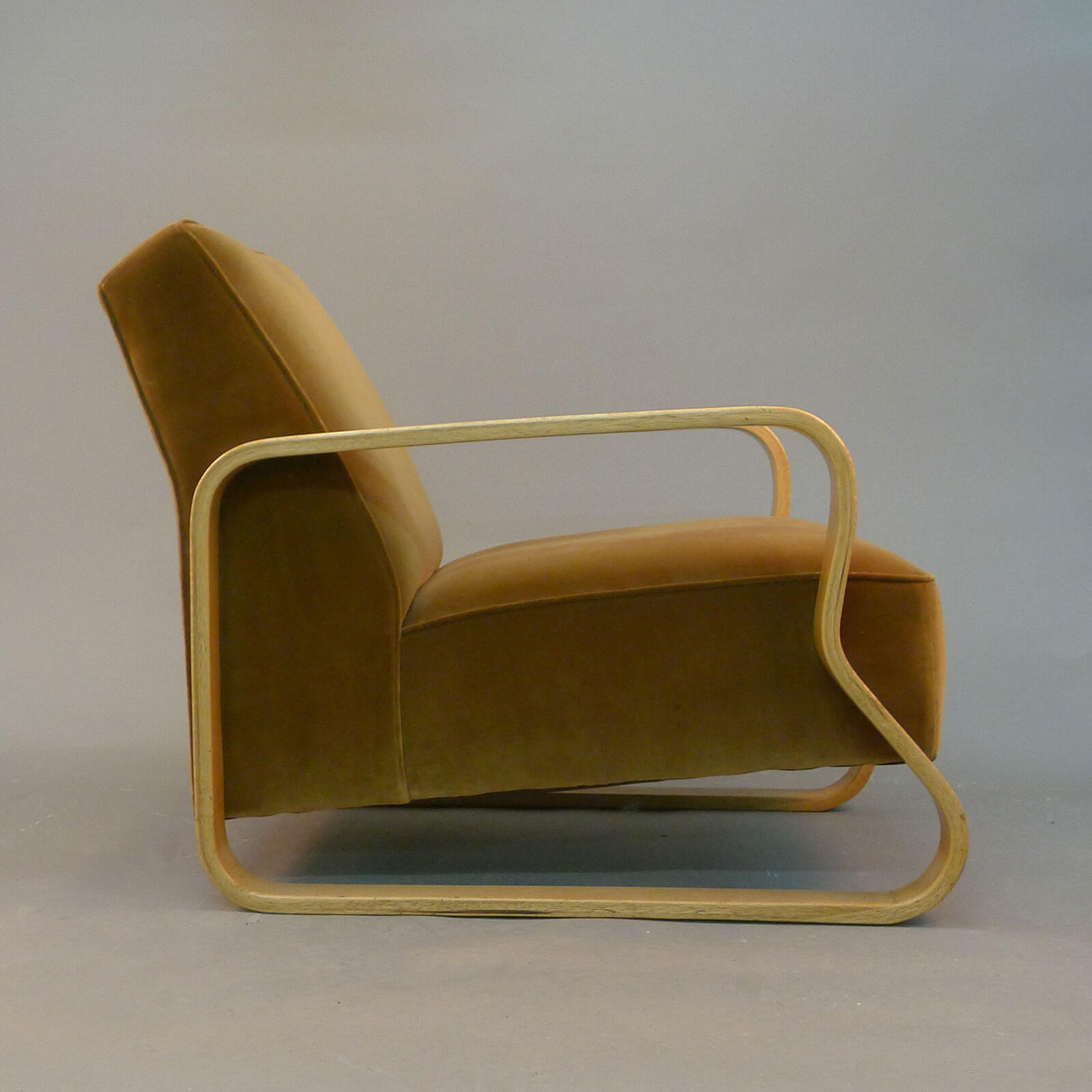
Alvar Aalto, ‘Upholstered Armchair model 44’, circa 1930 COURTESY: © Zig Zag Gallery, London
A TROVE OF the rare and the beautiful, the historic and the cutting-edge from antiquity to today is the alluring promise of the Treasure House Fair. Founded in 2023 by Thomas Woodham-Smith and Harry van der Hoorn (the duo behind Masterpiece), this interdisciplinary art fair has become a fixture of London’s summer season. For this year’s edition, 60 international galleries will present an independently selected curation of enticing discoveries and truly curious curiosities.
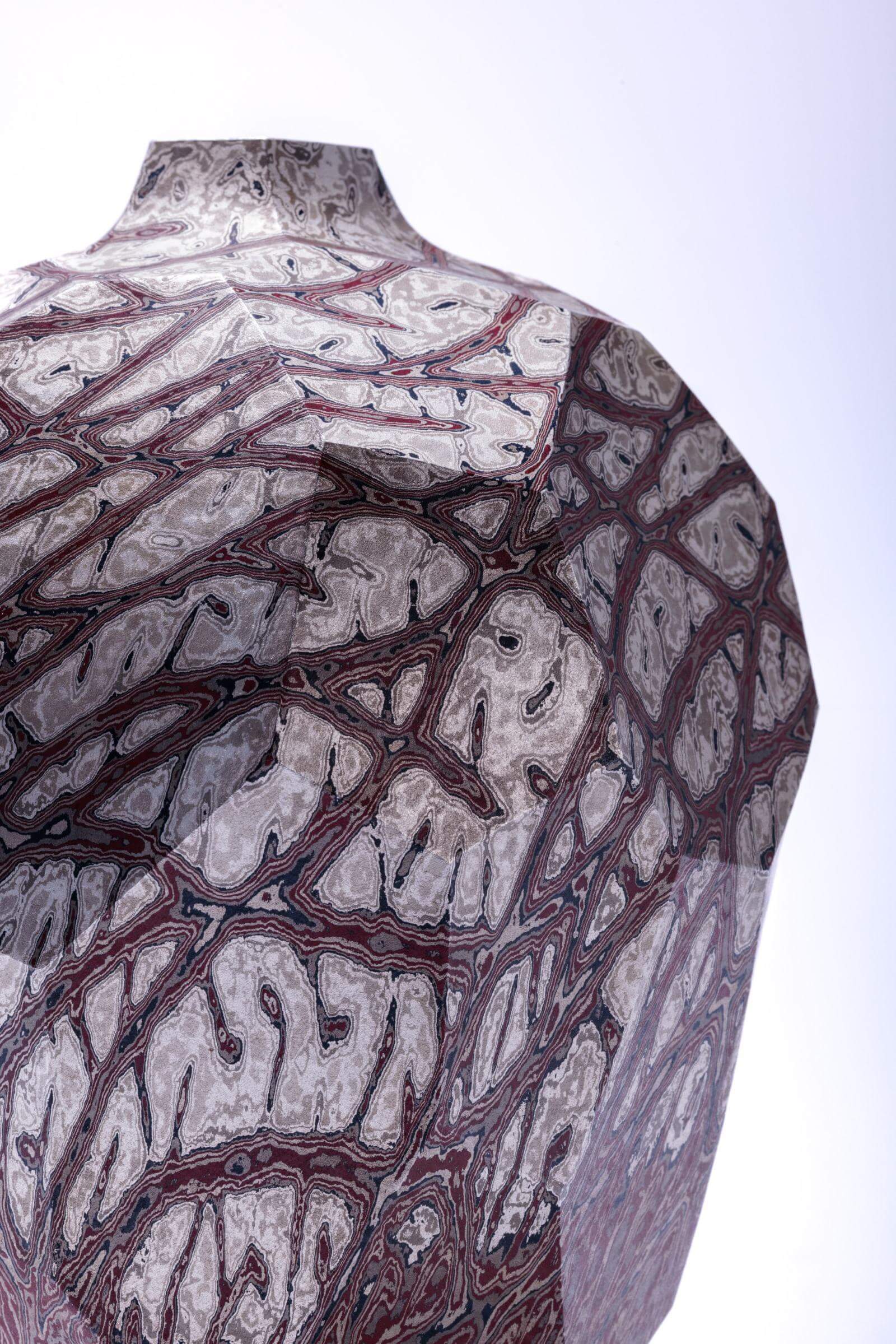
Ryuhei Sako, ‘Titan’, 2026 (detail)
COURTESY: © The Artist & A Lighthouse Called Kanata, Tokyo
There is something here for everyone, from a prehistoric woolly mammoth head to a monumental new sculpture by British artist Alex Chinneck. But if twentieth and twenty-first century design is your focus, either to buy or simply swoon over, here are our highlights.
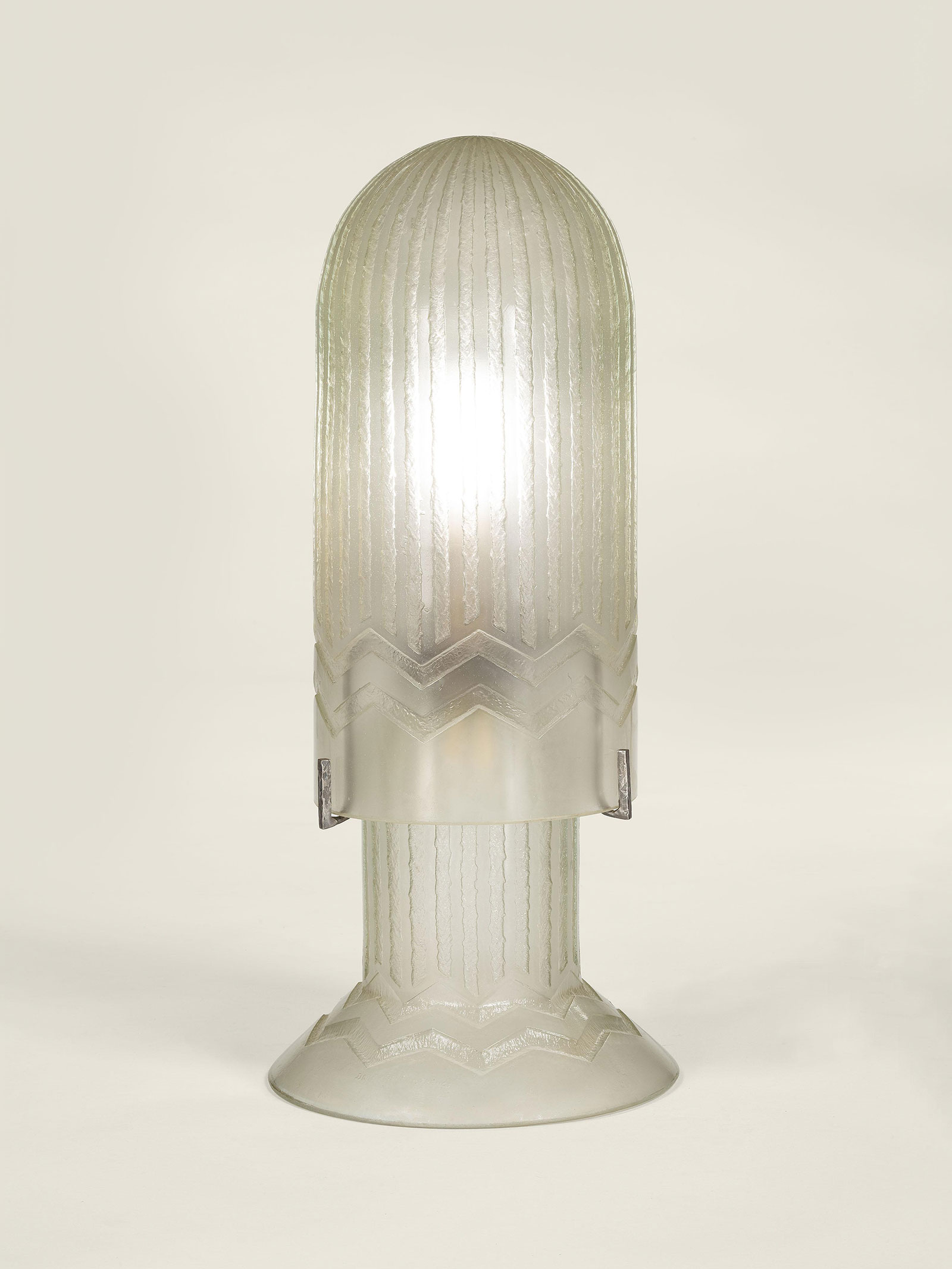
Daum, ‘Large Art Deco Table Lamp reference no. 4991’, circa 1925
COURTESY: © The Artist & Rose Uinacke
Florian Kolhammer, Vienna
The impressive free-standing ‘Jugendstil’ desk is attributed to Karl Bräuer, a student and close collaborator of Josef Hoffmann, co-founder of the Wiener Werkstätte. As the gallery’s eponymous founder explains: “What makes it so fascinating is the way it brings together different aspects of Viennese design around 1900. The clear, modern structure reflects the spirit of the Secession and the Wiener Werkstätte, while the almost baroque seahorses [detailing on a fold-out letter tray] add a more traditional, decorative note. This balance between innovation, elegance and craftsmanship is what makes Viennese Jugendstil so remarkable.”
‘Jugendstil desk’, circa 1910. Karl Bräuer attr. school Josef Hoffmann Wiener Werkstätte. €27,000.
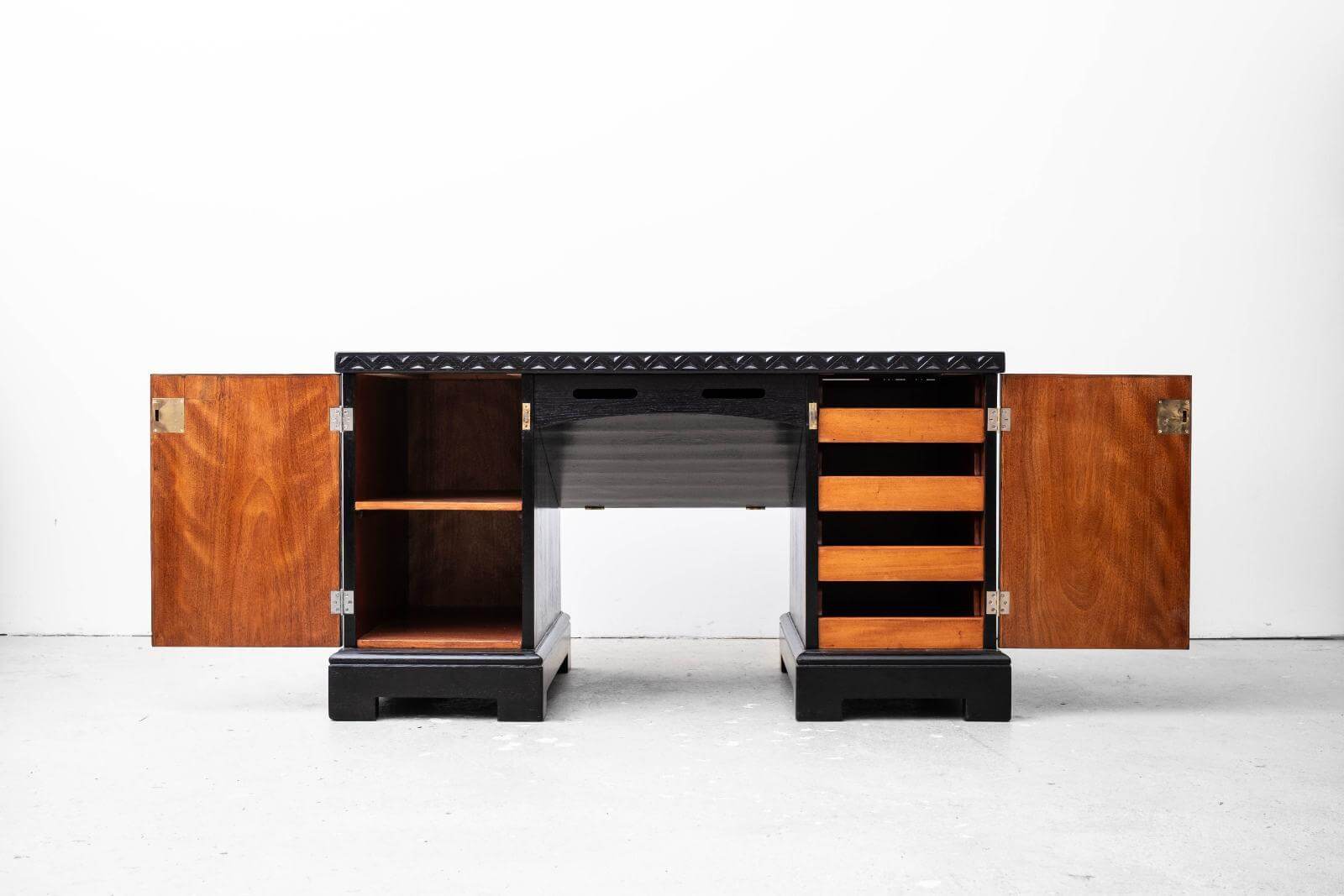
Karl Bräuer attr. school Josef Hoffmann Wiener Werkstätte, ‘Jugendstil desk’, circa 1910
COURTESY: © The Artist & Florian Kolhammer, Vienna
Gallery BR, Tetbury, UK
Gino Sarfatti was one of the greats of mid-century lighting design. As the creative engine behind Arteluce, the Milan lighting company he founded in 1939, in the course of his career he developed more than 700 luminaires. They were groundbreaking in their exploration of new product typologies and lighting technologies, as well as in their embrace of innovative materials and production techniques.This ‘1055/s’ model lamp is flat packed and totally adjustable – the three rods interlock into various formations, anchored by the cast iron base – exemplifying his highly functional yet experimental approach. Examples are rare today as, despite winning awards, it was a commercial failure.
‘Lamp model 1055/s’, circa 1953 by Gino Sarfatti. Enamelled Metal, fibreglass, cast iron, aluminium. Price on request.
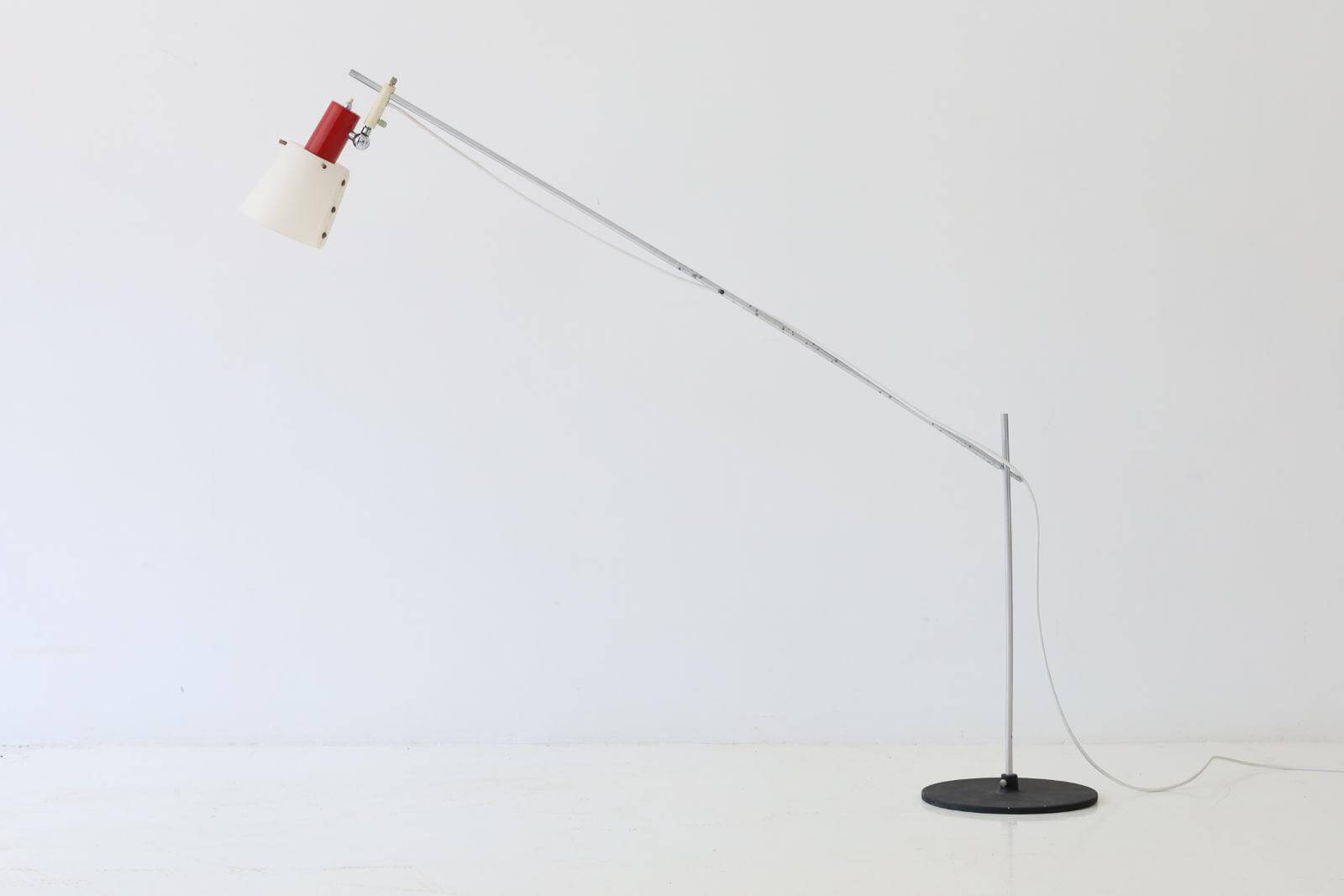
Gino Sarfatti, ‘Lamp Model 1055s’, circa 1953
COURTESY: © The Artist & Gallery BR
Opera London
A new work by British designer Ron Arad, whose services to art and design have just been recognised with a CBE, is always an event. ‘New Page’ is a recent addition to his ‘Cut and Roll’ collection of limited edition sculptural furniture pieces exploring movement, balance and material transformation. Shaped from a single, continuous ribbon of stainless steel, the polished surface folds against a darker, patinated back evoking a page in the act of being turned.
‘New Page’, 2026 by Ron Arad. Polished stainless steel (front) and patinated stainless steel (back), 141 × 129 × 147cm. Price on request.
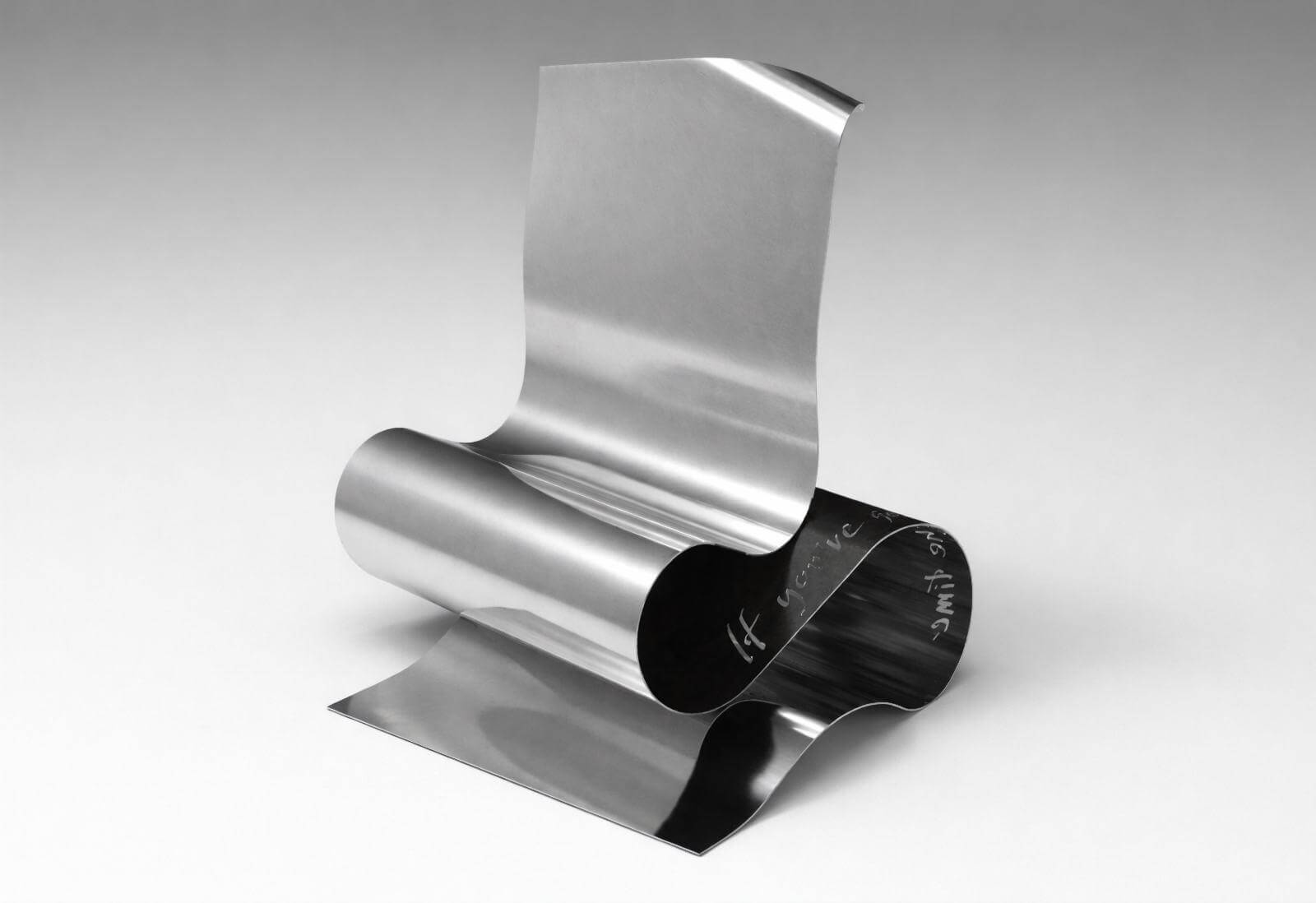
Ron Arad, ‘New Page’, 2026
COURTESY: © The Artist & Opera Gallery, London
Long-Sharp Gallery, Indianapolis, USA
British-Jordanian artist and designer Julia Ibbini works in collaboration with her husband, Stéphane Noyer, a French computer scientist, as the award-winning practice, Studio Ibbini. Together, they use algorithms and digital fabrication to extend what the hand can do, resulting in exquisitely intricate pieces that intersect art, design and engineering.
‘Kŷma | Vessel’ is a series of unique sculptural vases inspired by the pattern formations of ancient cyma (or ‘kŷma’ meaning wave in ancient Greek) curves. “I sought to break into the pattern, allowing underlying structures to be exposed, extending the curving lines so that they undulate across the surface of the piece, appearing almost like threads,” explains Ibbini. Composed of 84 laser cut paper layers and assembled entirely by hand, before being enhanced with ink and gold leaf, this vessel will make its London debut at the fair.
‘Kŷma | Vessel’, 2026 by Julia Ibbini. Paper, ink, cotton, gold leaf. 44.5 x 27cm. US$10,500.
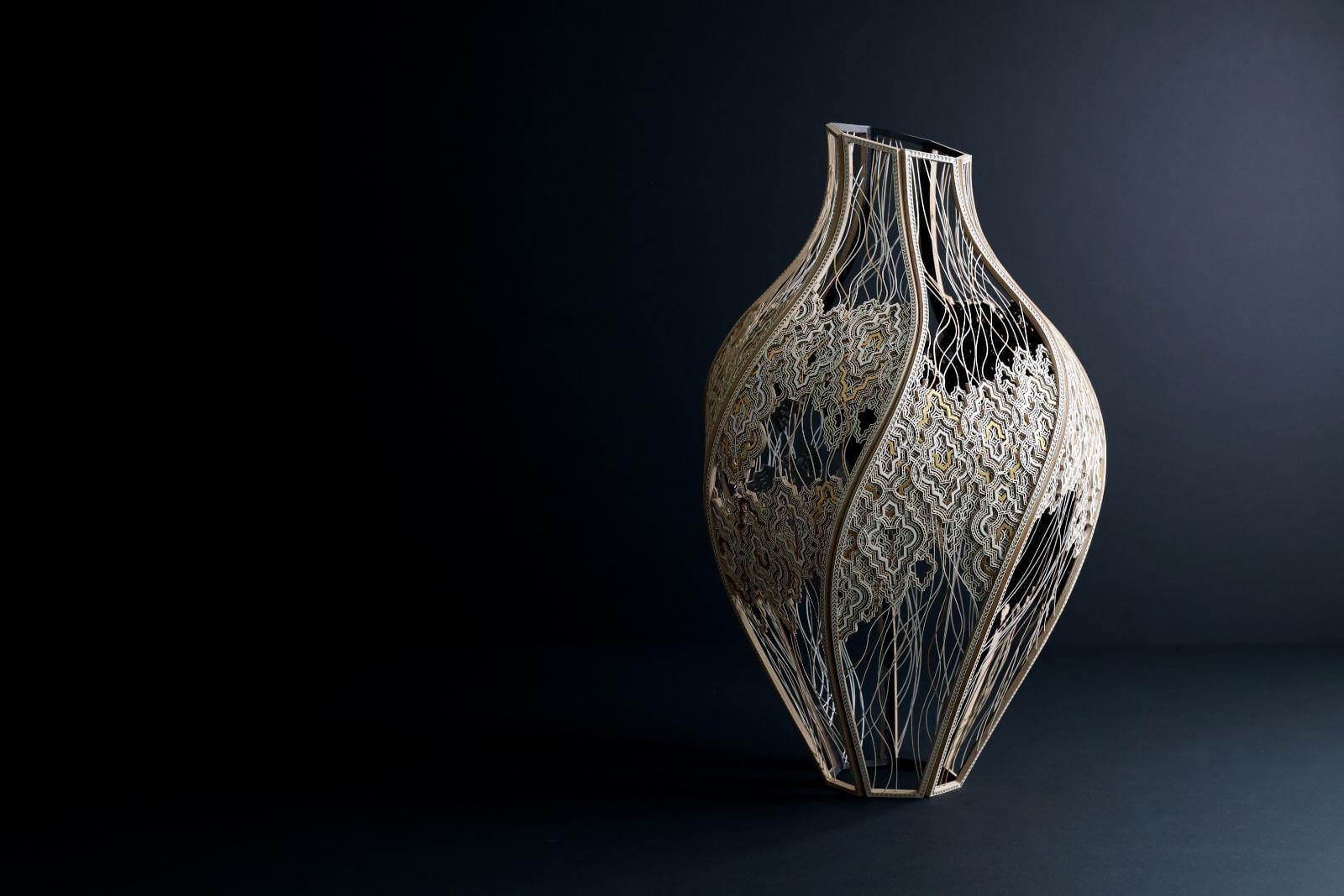
Julia Ibbini, ‘Kŷma | Vessel’, 2026
COURTESY: © The Artist & Long Sharp Gallery
Rose Uniacke, London
The interior designer and gallerist, Rose Uniacke, shows her flair as much through the curation of disparate objects as through the hunting-down of inherently interesting pieces.
Simone Prouvé, who died in 2024, daughter of renowned French industrial designer Jean Prouvé, was a hand weaver who often worked in collaboration with architects. From 1991, she began introducing industrial materials such as fire-resistant yarns, glass fibres, as well as flexible and stiff stainless steel and polyethylene, into her tapestries, wall hangings, and partitions, partly to prevent her work from ageing. ‘Panneau 030517’ is an unusual visual experiment in which swirling threads of woven fibreglass combine with strips of polished copper.
Hans Wegner, born in 1914 in what is now southern Denmark, was a prolific furniture designer but this ‘AT 303 Sawhorse’ (or ‘Sawbuck’) desk, was never made for the mass market, so examples are hard to come by. Rarer still is this ultra pared-back model in which the two drawers are suspended from the underside of the tabletop.
French crystal studio Daum was a leading name in Art Nouveau glassware. With its cylindrical foot resting on a truncated cone-shaped base, this ‘Large Art Deco Lamp’ is a classic – and unusually tall – example of the company’s work from the period.
‘Panneau 030517’, unique, 2017 by Simone Prouvé. Fiberglass, copper, stainless steel. Signed S. PROUVÉ and dated on the reverse. H142 x W102cm. £38,000.
‘Sawhorse Desk Model AT303’ by Hans Wegner. Manufactured and marked by Andreas Tuck, Odense Literature: Andreas Tuck / Salesco catalog 1959. Teak top and solid oak cross pin (or Sawhorse) frame with brass stretcher and two drawers. H72 x W160 x D86cm. £28,000.
‘Large Art Deco Table Lamp’, circa 1925 by Daum. Glass, wrought-iron shade support. Base and lampshade each signed DAUM Nancy France à la Croix de Lorraine Provenance. H55cm. £24,000.
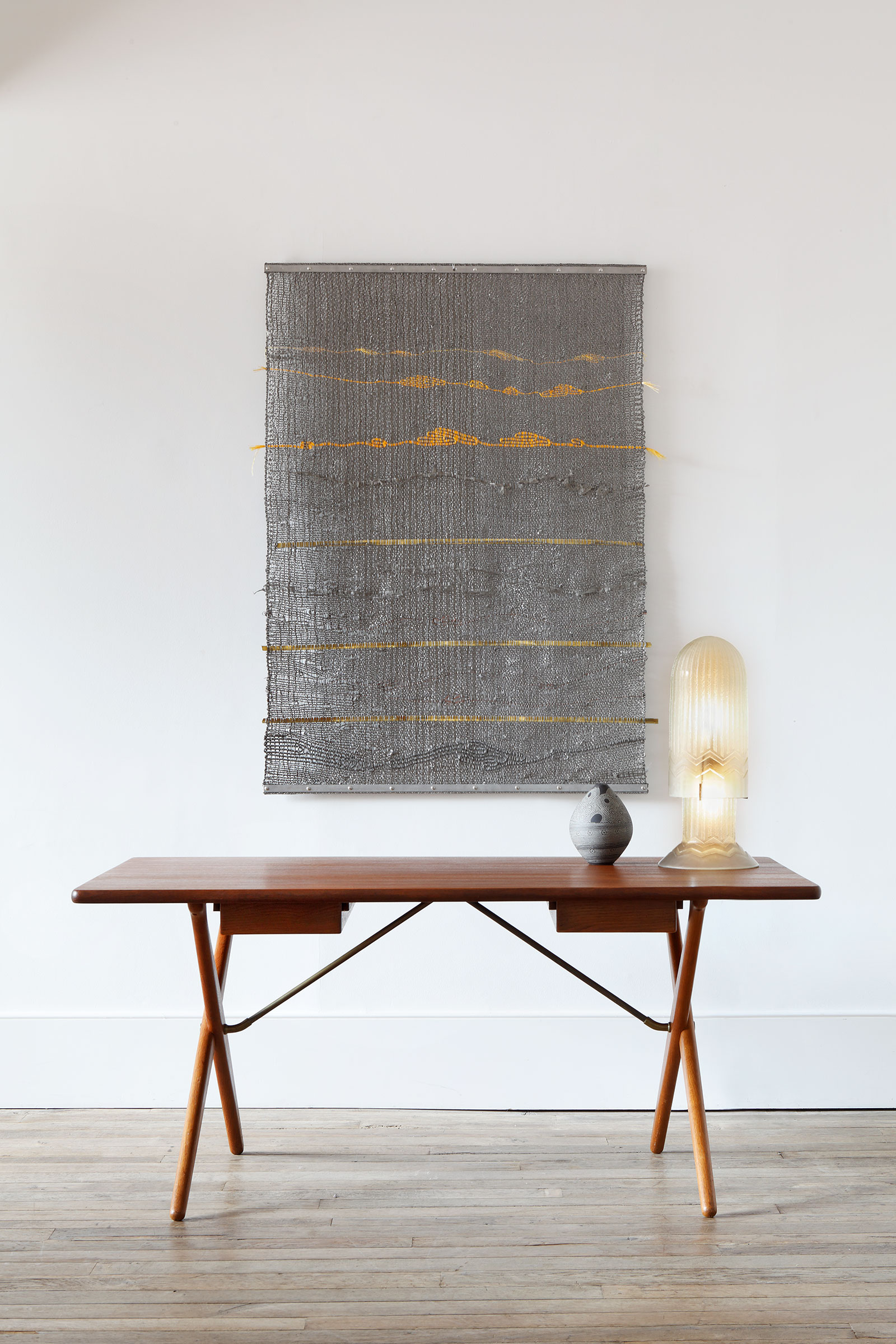
Simone Prouvé, ‘Panneau 030517’, 2017; Hans Wegner, ‘Sawhorse Desk Model AT 303’, 1959; Daum, ‘Large Art Deco Table Lamp reference no. 4991’, circa 1925
COURTESY: © The Artists & Rose Uinacke
Frank Partridge, London
Pierre Chareau (1883-1950) was the most sought after designer in Paris during the interwar years. His innovative furniture, veneered in rare woods and detailed with exotic materials, had clean profiles and movable parts that appealed to the sensibilities of the progressive bourgeoise. While there is no paperwork to prove that Chareau designed this armchair, it does bear all of his hallmarks and, as Frank Patridge says, “if you’re after something beautifully designed, beautifully made and extremely comfortable, this is it.”
‘Art Deco Amboyna and Gilt Armchair’, circa 1930. Attributed to Pierre Chareau. 60 x 52 x H112 cm. £18,500 for the pair.
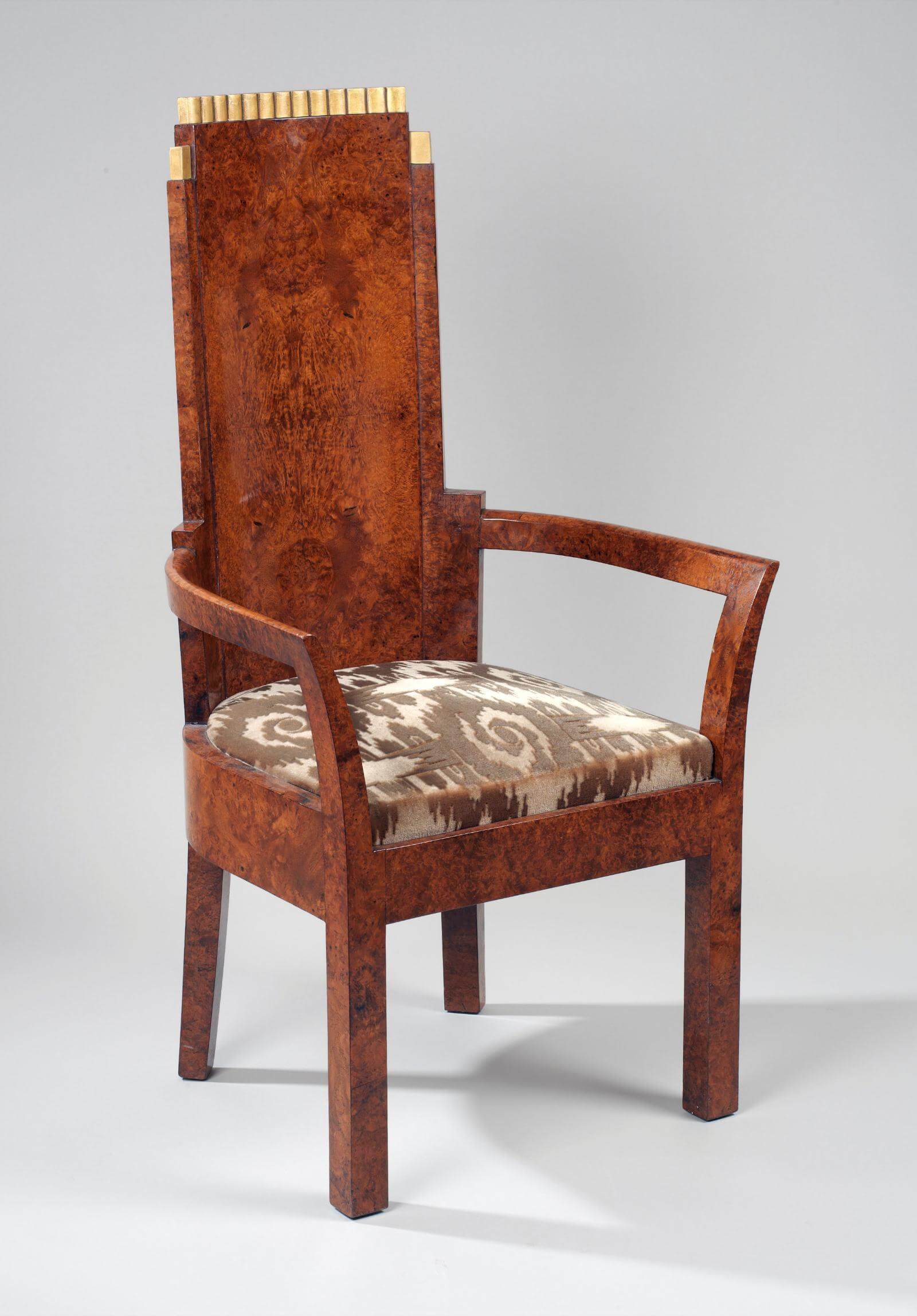
Pierre Chareau, ‘Art Deco Amboyna and Gilt Armchair’, circa 1930
COURTESY: © The Artist & Frank Partridge, London
ZigZag Modern, Wargrave, UK
ZigZag Modern have put together for Teasure House Fair a group of classic modernist pieces – reflecting common themes of truth to materials and simplicity of design, in the service of function
Hans Wegner’s ‘JH502 Swivel Chair’ is strikingly contemporary. Zigzag is showing an early example featuring a four-part braced central leg, a feature that was altered in later editions.
‘”Rolling” (or “Swivel”) office chair, model JH502’, 1955 by Hans Wegner. Teak backrest with feature joints, seat upholstered in cognac leather. Manufactured in 1950s by Johannes Hansen, Denmark. H73 x W74 x D56cm. Price on request.
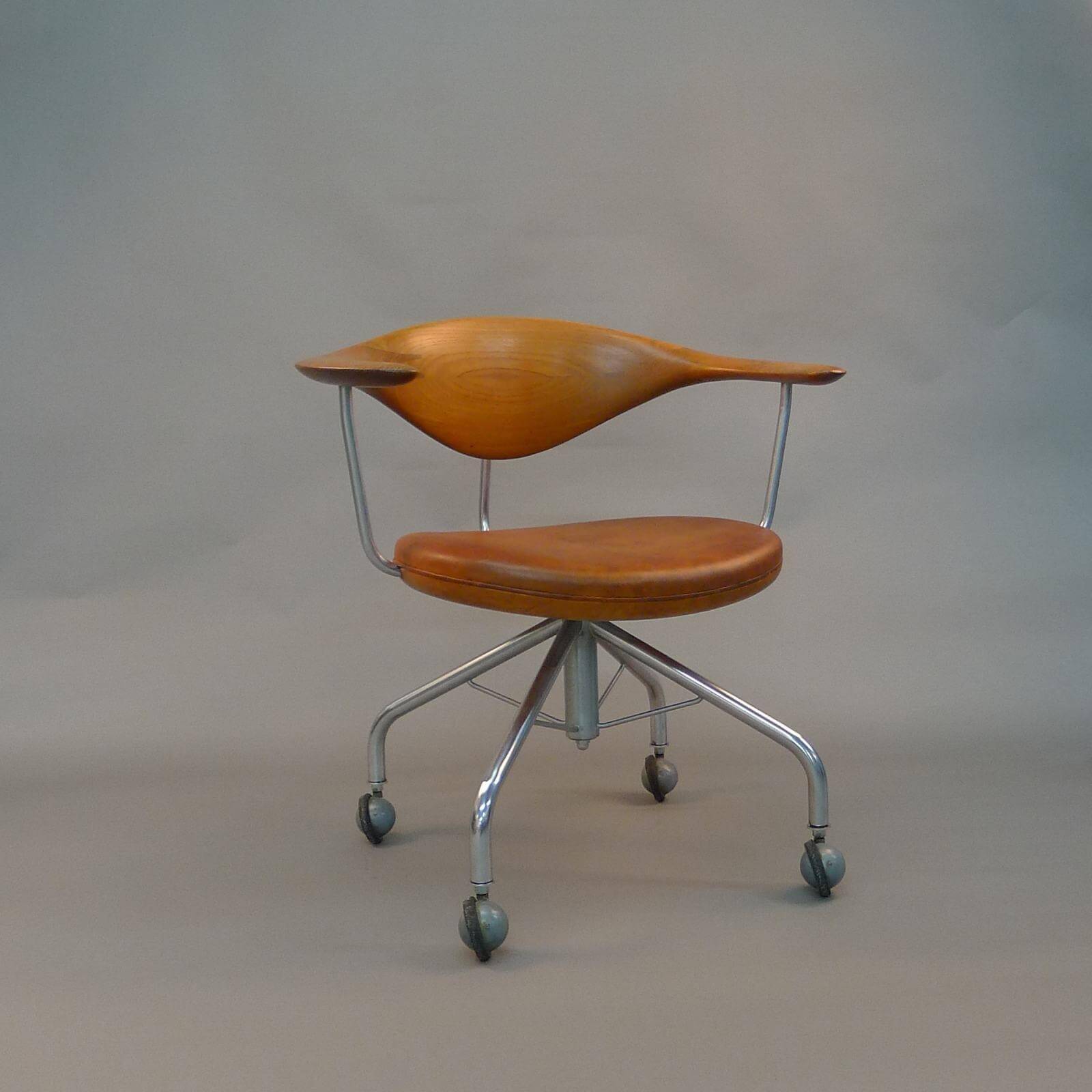
Hans Wegner, ‘“Rolling” or “Swivel” Office Chair, Model JH502’, 1955
COURTESY: © The Artist & Zig Zag Gallery, London
Alvar Aalto made several versions of his now iconic – and much imitated – serving trolley ‘Model 98/901’. The one on view here is an early original example and bears the label of the wholesale company, Finmar Ltd, founded to market the Finnish architect and designer’s plywood furniture in the UK. The gallery will also show a very rare and highly prized early example of Aalto’s modernist lounge chair, ‘Upholstered Armchair model 44’, circa 1930, made in Karelian birch.
‘Model 98/901 Serving Trolley’, circa 1935 by Alvar Aalto. Birch plywood with black painted wheels. Price on request.
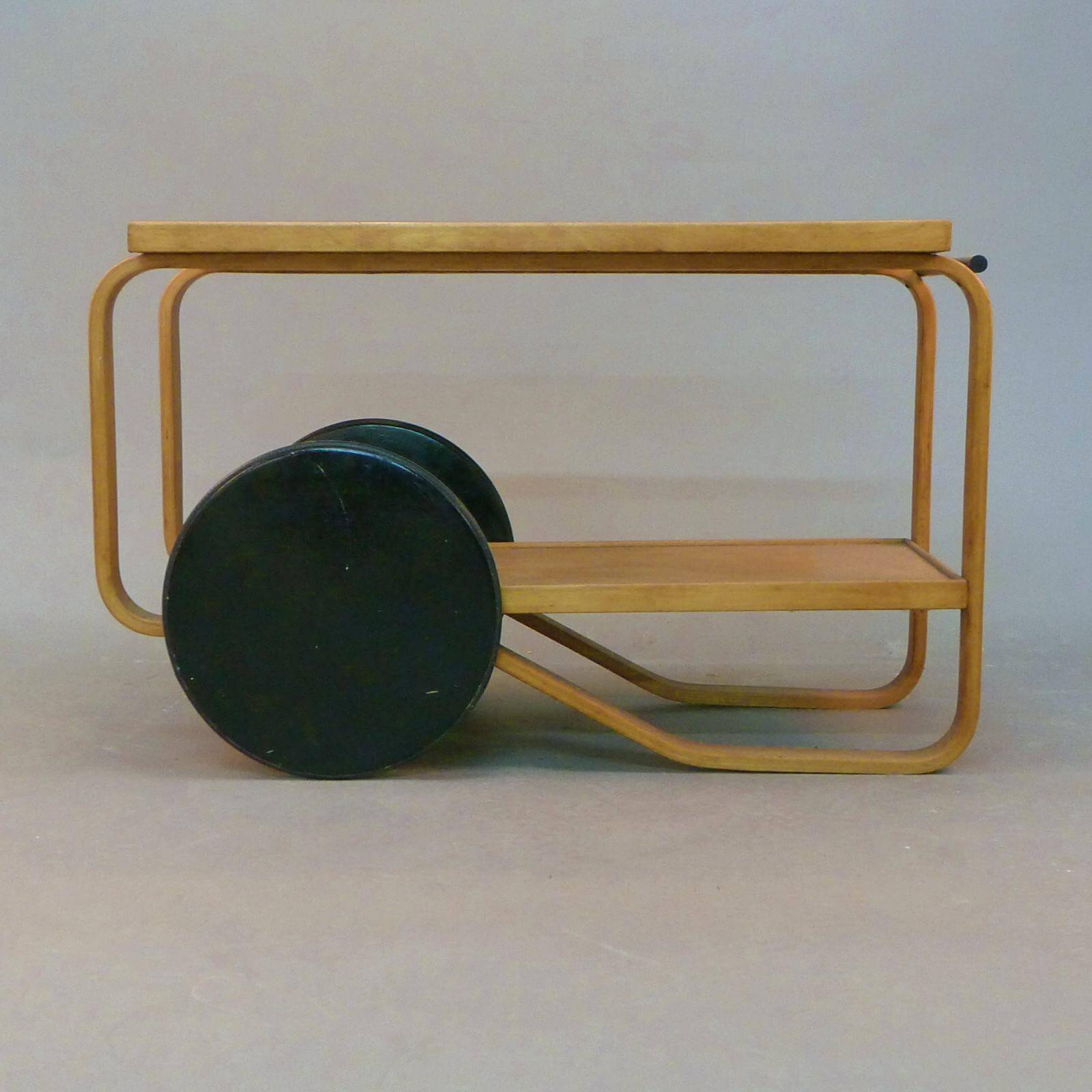
Alvar Aalto, ‘Model 98/901 Serving Trolley’, circa 1935
COURTESY: © Zig Zag Gallery, London
George Nakashima, born in 1905, was a renowned American woodworker and furniture designer known for his handcrafted, organic designs. Blending Japanese and American aesthetics, he celebrated the imperfections of natural wood, creating timeless, functional furniture. His daughter Mira, who grew up in his studio, has continued his work since his death in 1990, but his life-time pieces, classics of the American studio craft movement, are increasingly collectible, commanding high prices at auctions and galleries.
‘Hanging Wall Cabinet’, 1983 Nakashima Studio, USA. American black walnut, pandanus cloth. H46cm xW168cm xD45cm. Accompanied by a digital copy of the original invoice. Price on request.
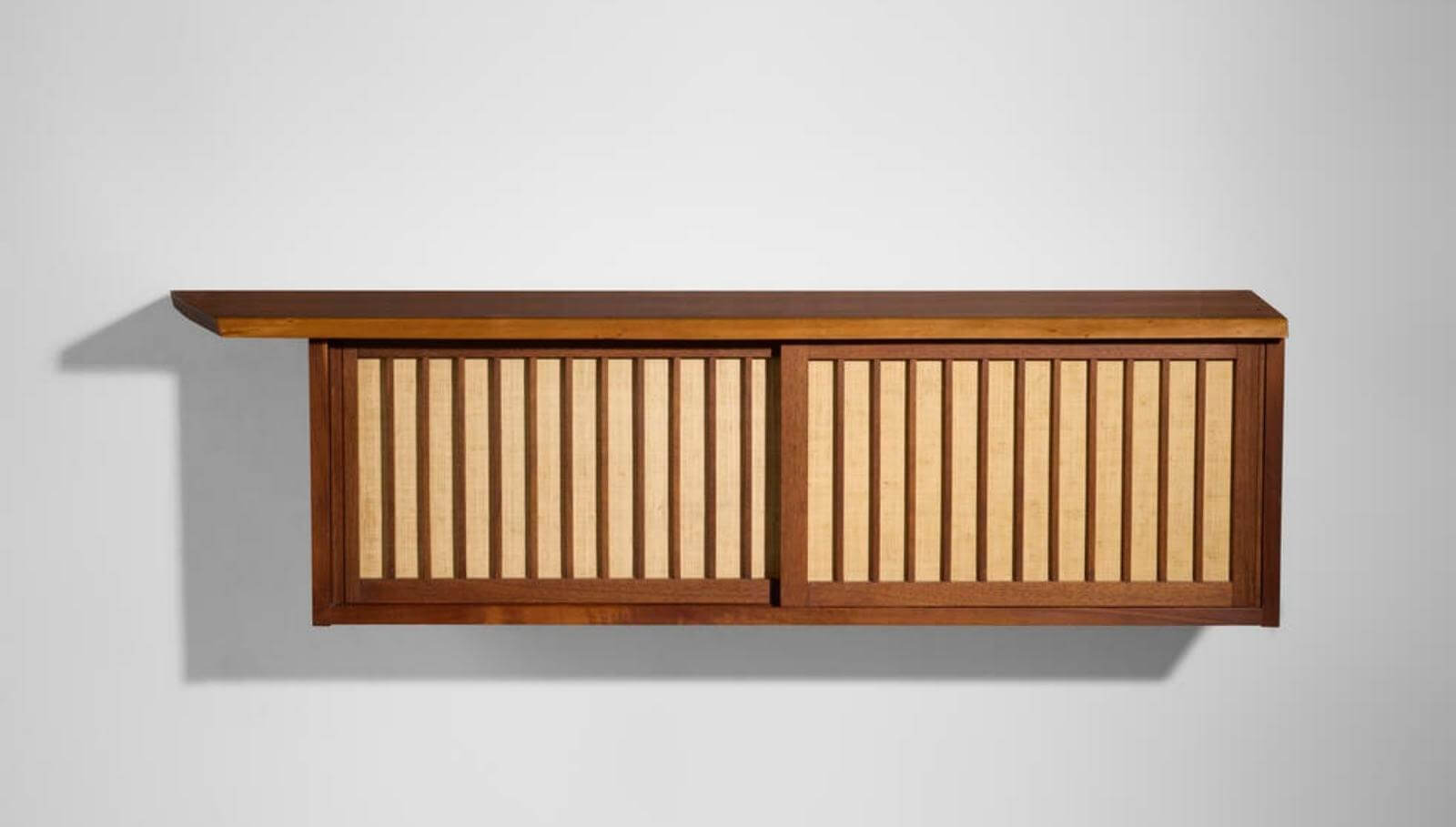
George Nakashima, ‘Nakashima Pandanus Hanging Wall Cabinet’, 1983
COURTESY: © The Artist & Zig Zag Gallery, London
A Lighthouse Called Kanata, Tokyo
Ryuhei Sako is one of Japan’s leading contemporary mokume-gane artists. Meaning ‘wood-grain metal’, the technique is believed to have been invented in the 17th century to ornament samurai katana swords. Ryuhei’s bold, undulating forms with their dramatic colour contrasts within the metal surface are the result of an innovative reinvention of this traditional process. Involving sandwiching sheets of metal together under extreme heat and pressure, flattening and hammering them into a single billet then chiselling and carving the surface, his practice pushes mokume-gane in exciting new directions.
‘Titan’, 2026 by Ryuhei Sako. Mokume-gane hammered silver, copper, shakudo, shibuichi. H25.2 × W18 × D18 cm. Price on request.
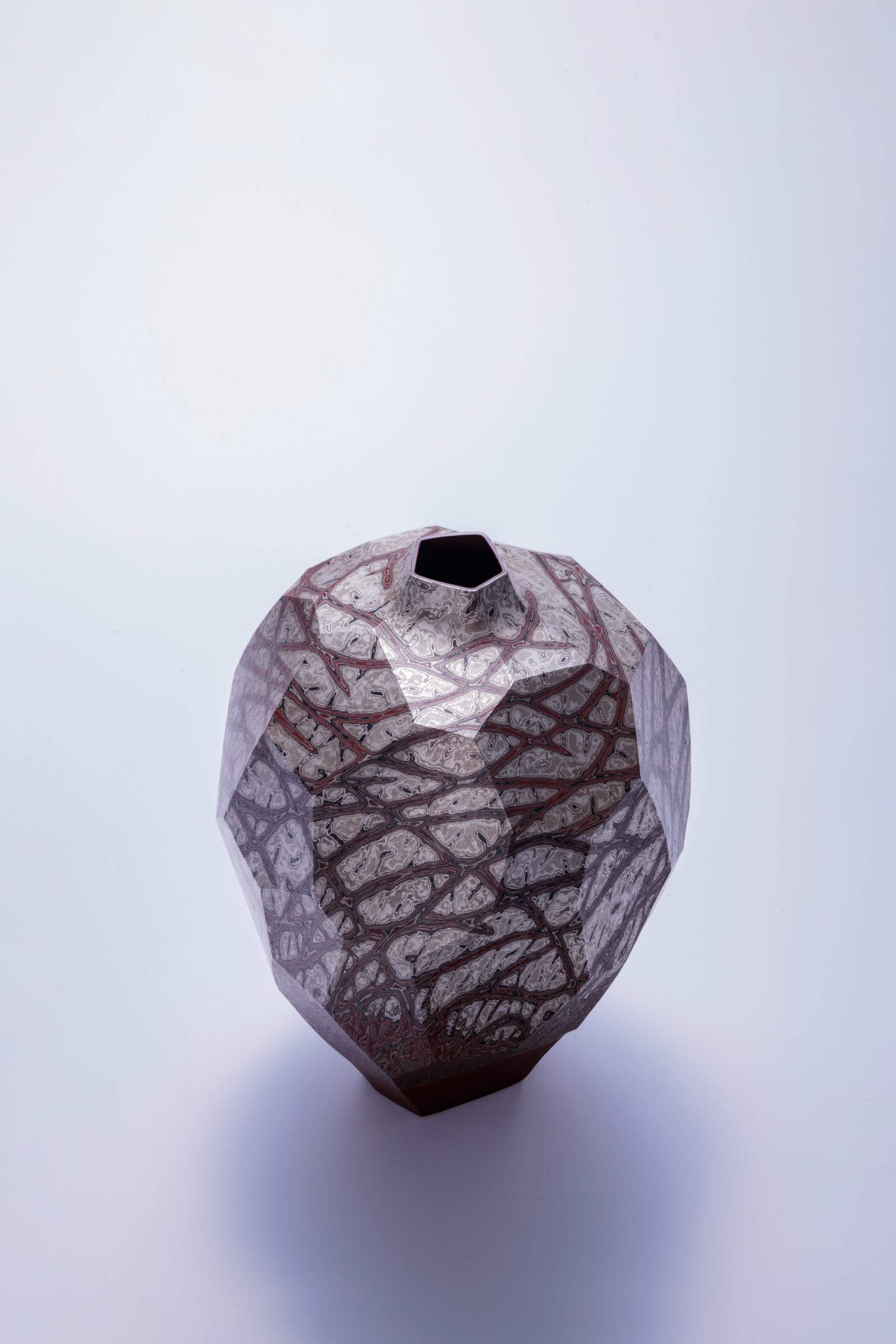
Ryuhei Sako, ‘Titan’, 2026
COURTESY: © The Artist & A Lighthouse Called Kanata, Tokyo

Charlotte Abrahams is a writer, editor and curator specialising in design and the applied arts.
Charlotteabrahams.com
View all articles by Charlotte Abrahams