London Dispatch / July 2026
Catch these four compelling exhibitions before they close.
October Gallery
‘Xanthe Somers and Yacout Hamdouch: Poetic Threads’
‘Spotlight: James Barnor’
2nd July – 15th August
Erksin, Hall & Coe
‘Sara Flynn’
24th June – 25th July 2026
Sarah Myerscough Gallery
‘Perch’ Group exhibition
27th June – 7th August 2026
‘Beneath the Skin’ by Aneta Regel
27th June – 15th August 2026
Holtermann Fine Art
‘Glowing Phalanges’ by Ahmed Umar
5th June – 1st August 2026
By Emma Crichton-Miller / 10th July 2026
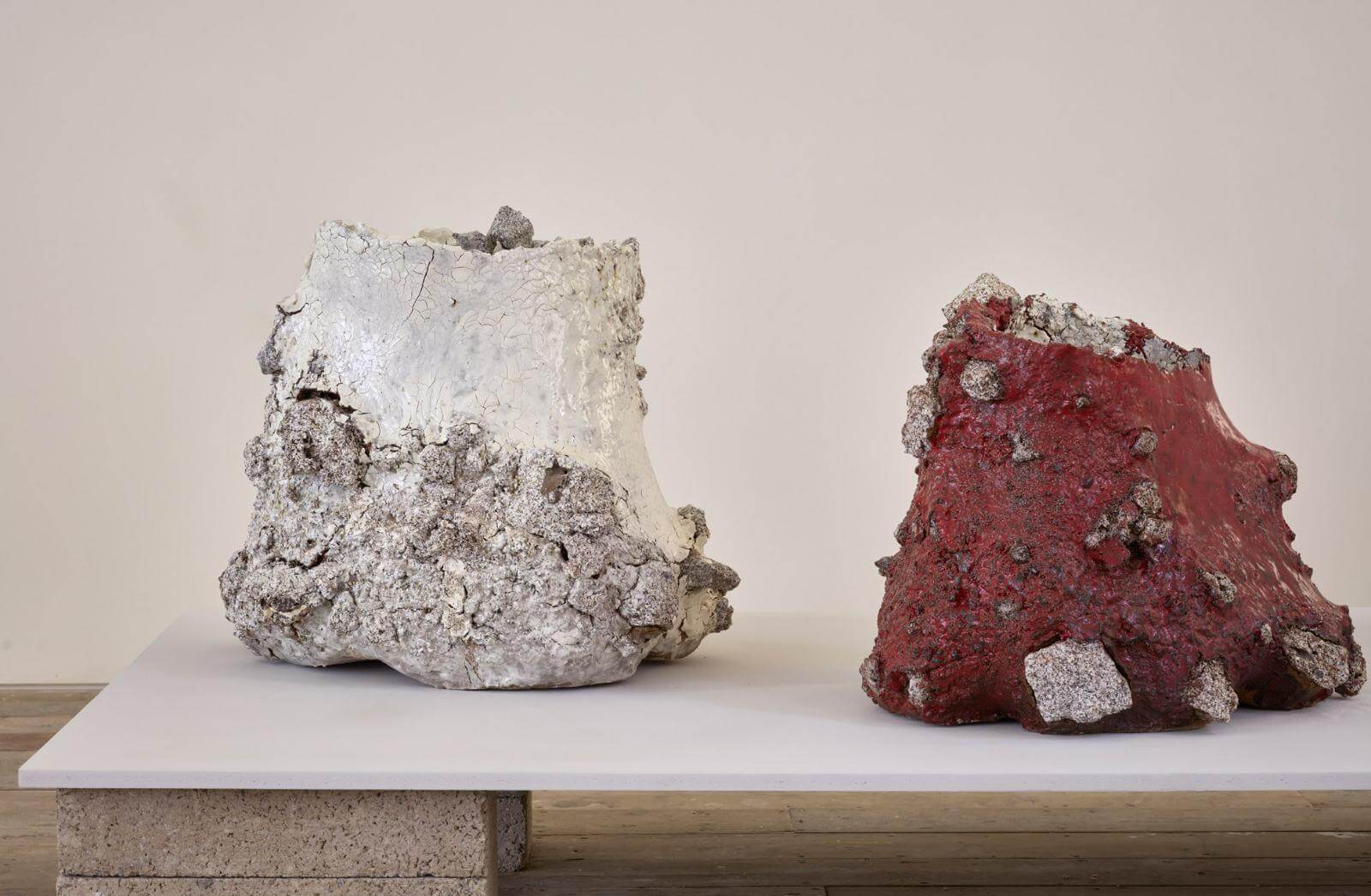
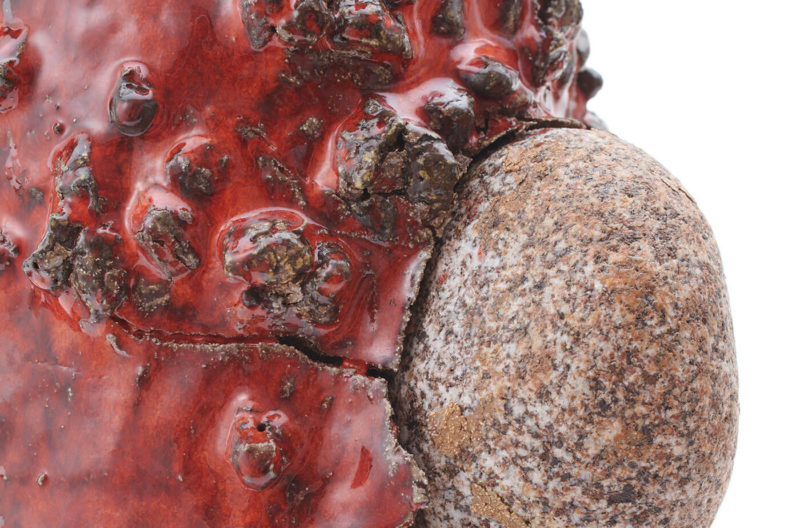
Aneta Regel, (left) ‘Raining stone (white)’, 2026; (right) ‘Raining stone (red)’, 2026
COURTESY: © The Artist & Sarah Myerscough Gallery / PHOTOGRAPH: © Gareth Hacker
THIS SUMMER, IN London, there is an outstanding crop of ceramics on view in three different galleries. The work of all three artists – from Belfast-based Sara Flynn, Zimbabwean Xanthe Somers and London-based, Polish-born Aneta Regel – is rooted in ceramic tradition. All three work with the vessel form. All three have been short-listed for the Loewe Foundation Craft Prize. Yet in every other respect – how they work, the forms, the glazes, their sources of inspiration, the meaning of what they are making – they differ radically.
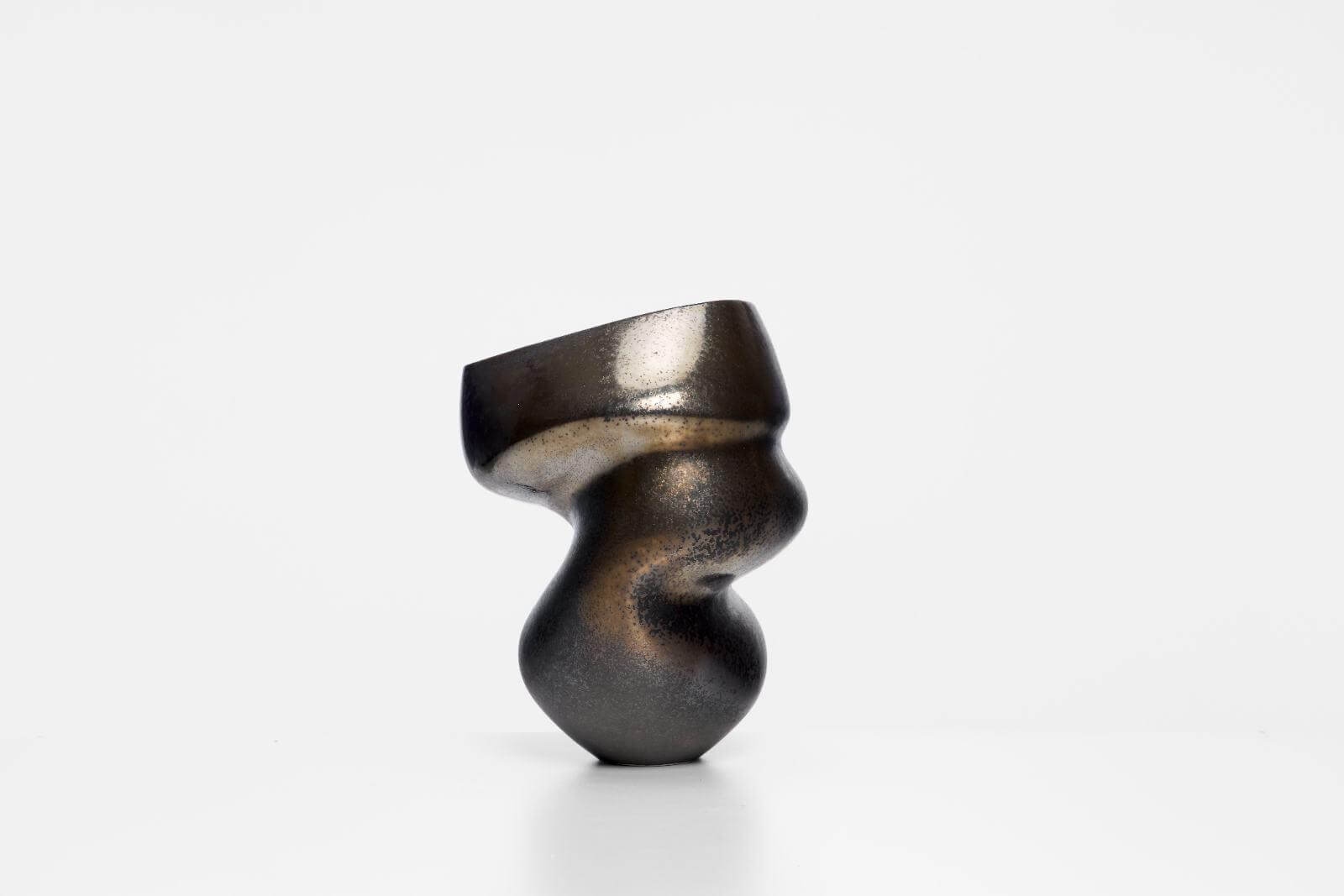
Sara Flynn, ‘Composite Vessel’, 2026 (SF-0479)
COURTESY: © The Artist & Erskine, Hall & Coe
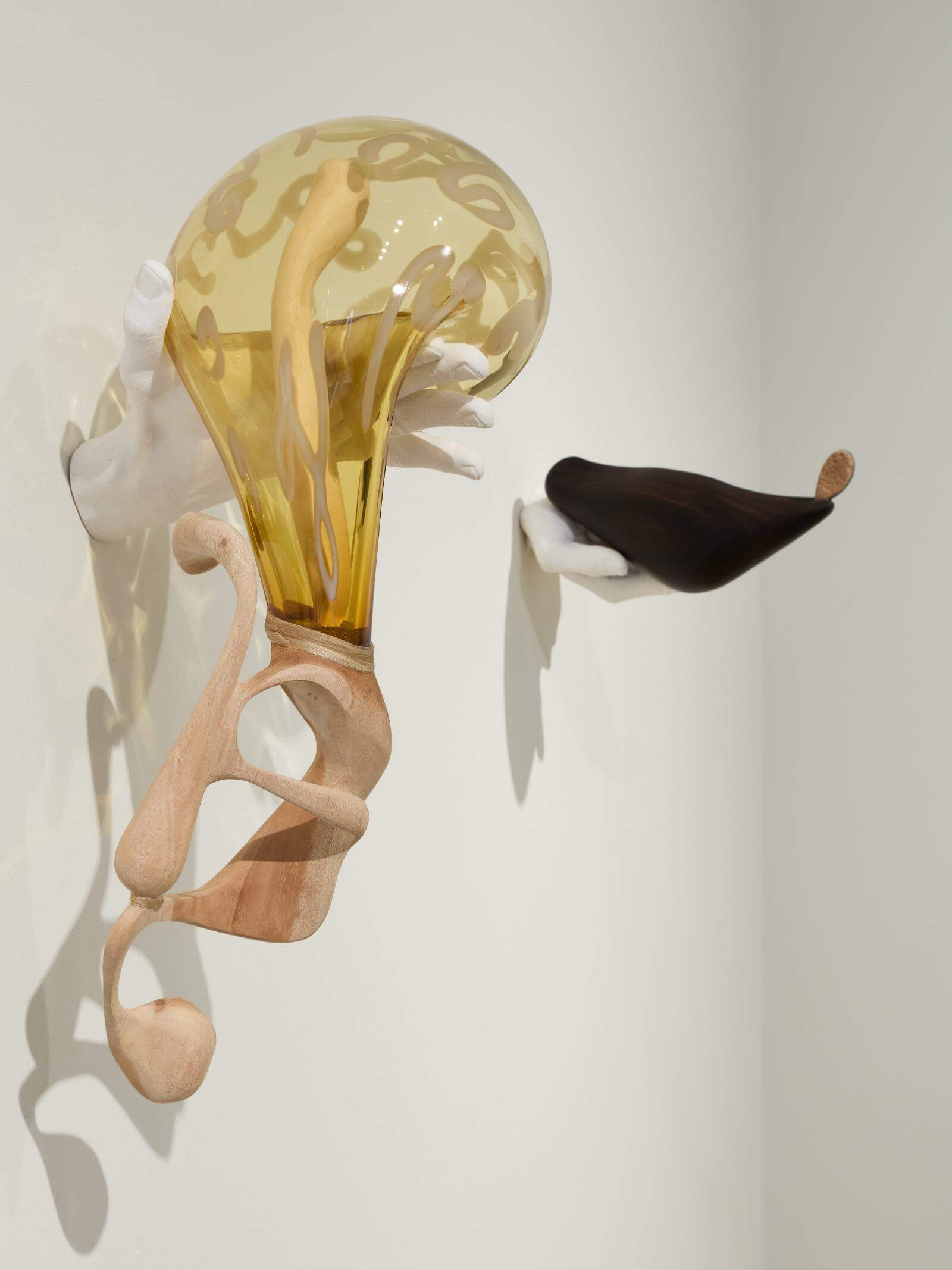
The Design Edit has also been excited to discover the uncategorisable work of Ahmed Umar, who for this London show at Holtermann Fine Art has used blown glass, carved wood and other mixed media to create a single artwork comprised of a series of potent objects, each held in acrylic casts of the artist’s right hand.
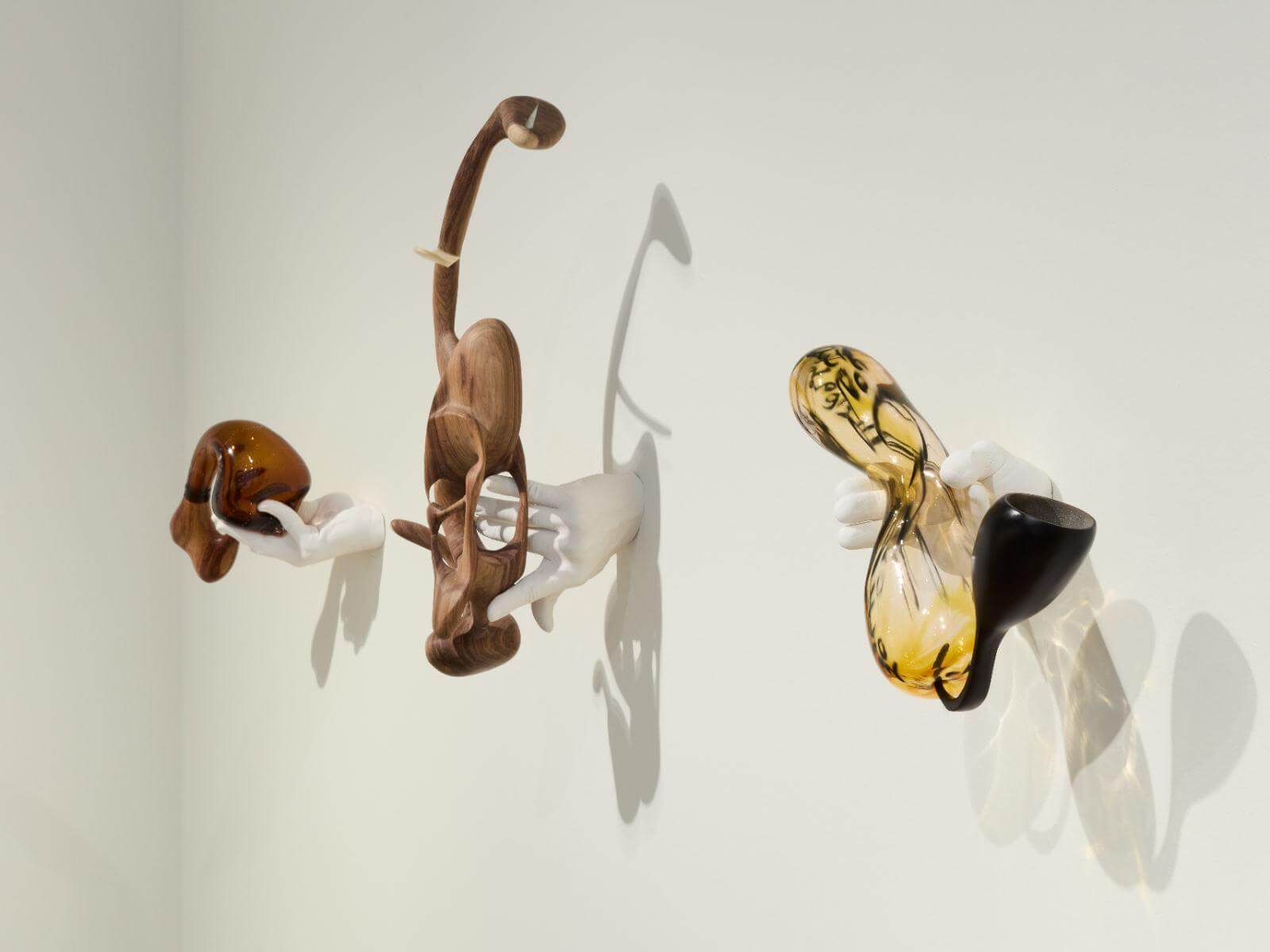
Exhibition view ‘Glowing Phalanges’ by Ahmed Umar
COURTESY: © The Artist & Holtermann Fine Art / PHOTOGRAPH: Ollie Hammick
‘Xanthe Somers & Yacout Hamdouch: Poetic Threads’
‘Spotlight: James Barnor’
October Gallery
Until 15th August
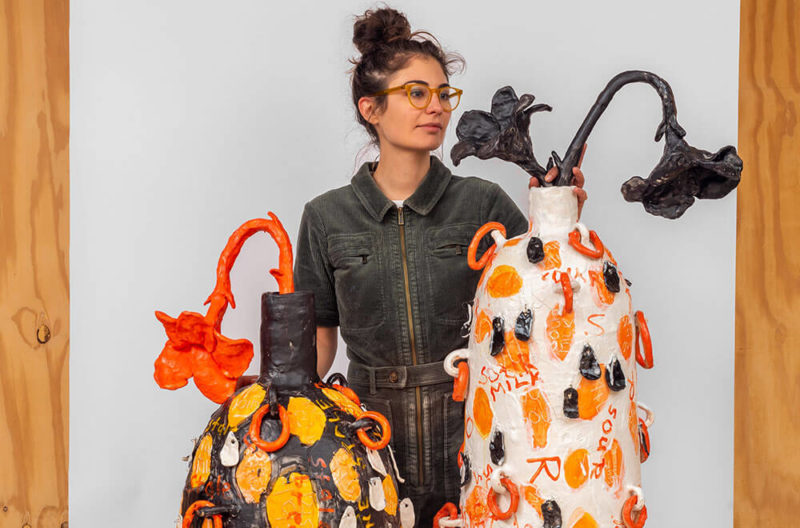
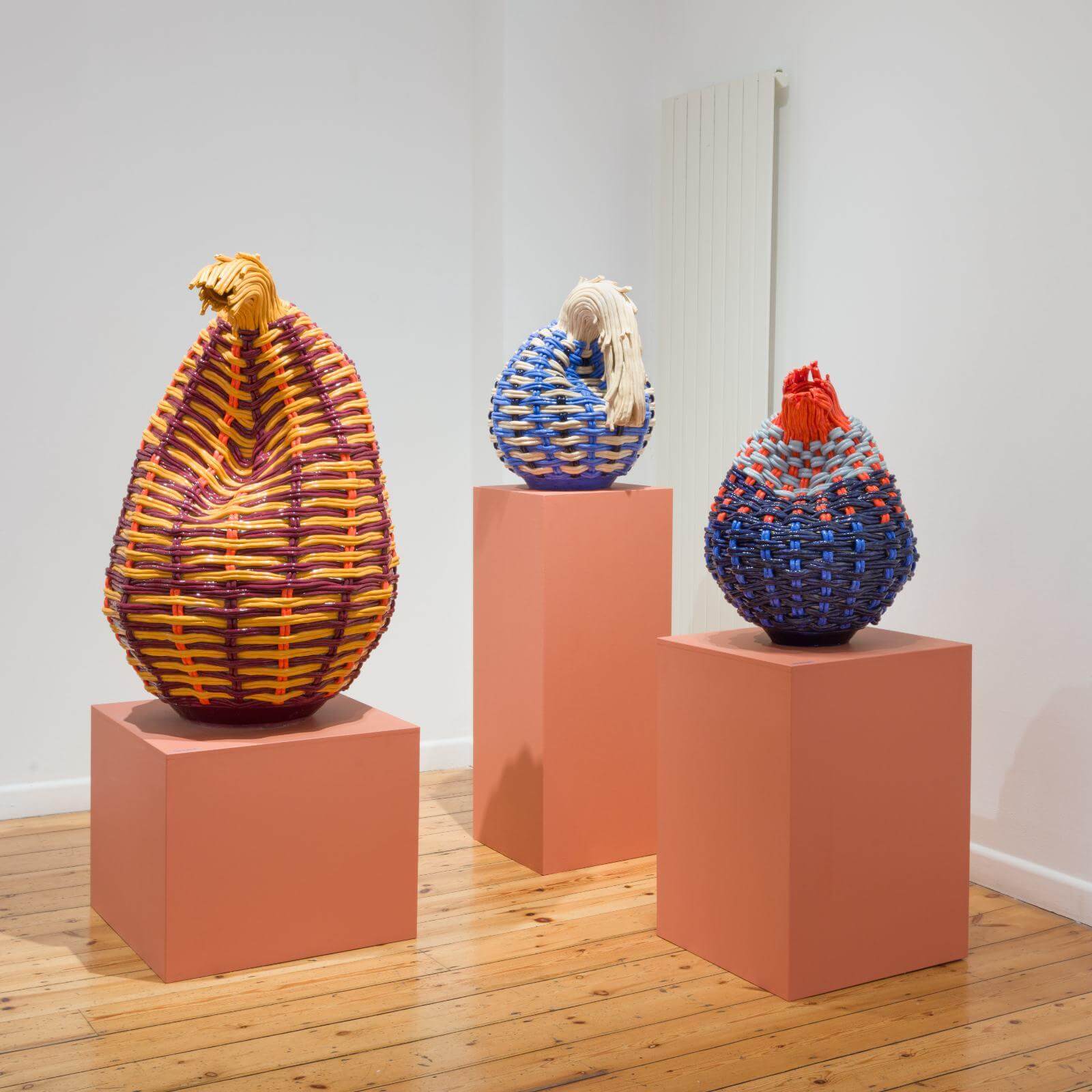
October Gallery has put together a colourful summer show as part of its season of Contemporary African Art. On the walls are the brightly coloured abstract paintings of Moroccan artist Yacout Hamdouch, evocative both of landscape and the human body, exploring memory and emotion. Within the room are the bold ceramic sculptures of Xanthe Somers, vessels in form, but constructed through a technique of woven clay that simultaneously acknowledges three ancient disciplines: clay pottery, basket-making and textiles.
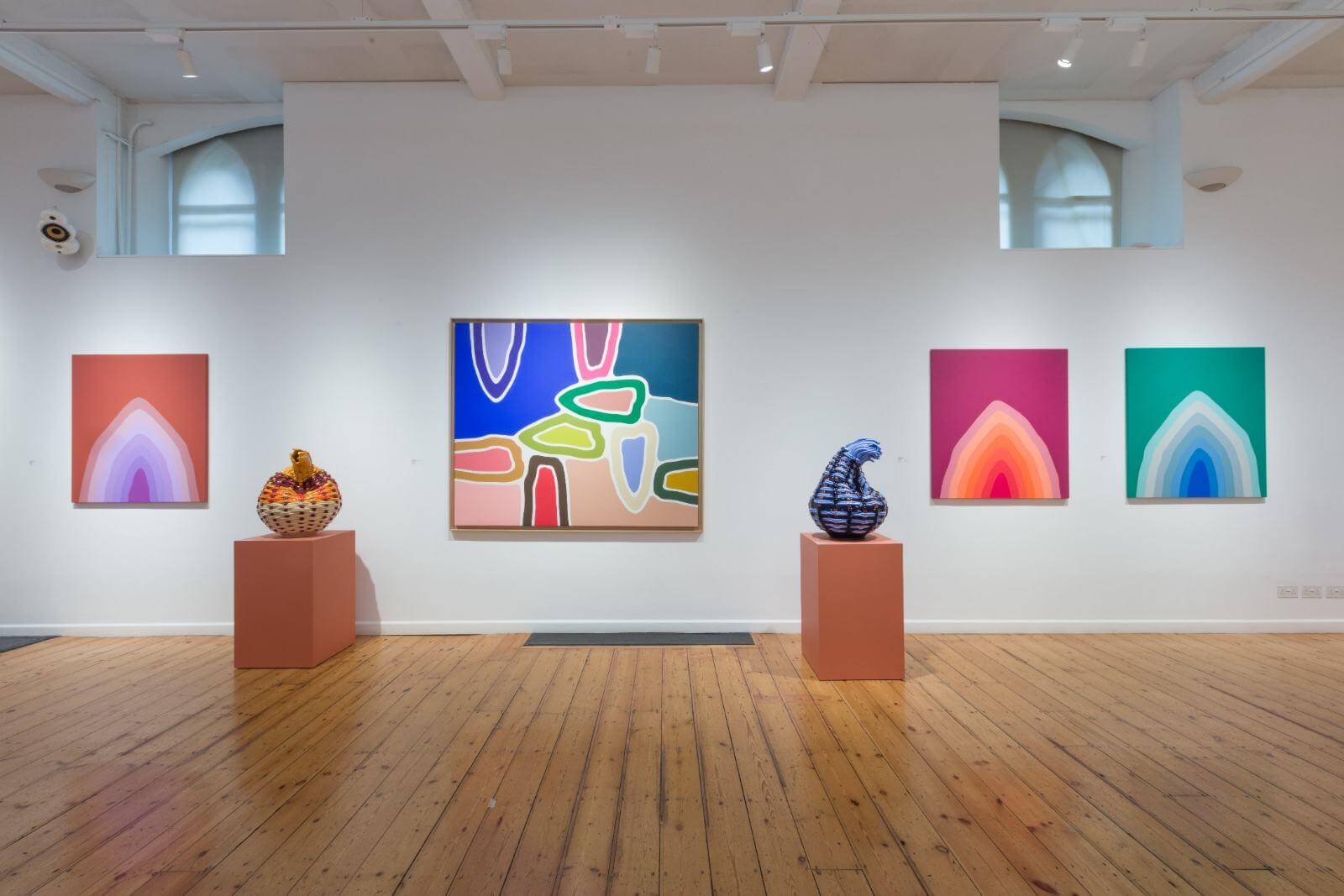
Exhibition view ‘Xanthe Somers and Yacout Hamdouch: Poetic Threads’
COURTESY: © The Artists & October Gallery London
Although these have served as means of expression for women for millennia, the humility of the materials and the low status of functional crafts have also been an excuse for the dismissal of the women’s stories they articulate. Somers, shortlisted for the Loewe Prize this year, challenges all that with her flamboyantly, defiantly handmade pots. They stand tall, immaculately painted, like proud women in their Sunday best, but are also punctured and punched, as if they have been winded and are nursing their wounds. Called ‘Cleaner, Carer, Mother, Maker’, this series of works expresses, among other things, the silent stoicism of so many women in the post-colonial global south, holding the fragile weave of their communities together.
Exhibition view ‘Xanthe Somers and Yacout Hamdouch: Poetic Threads’
COURTESY: © The Artists & October Gallery London
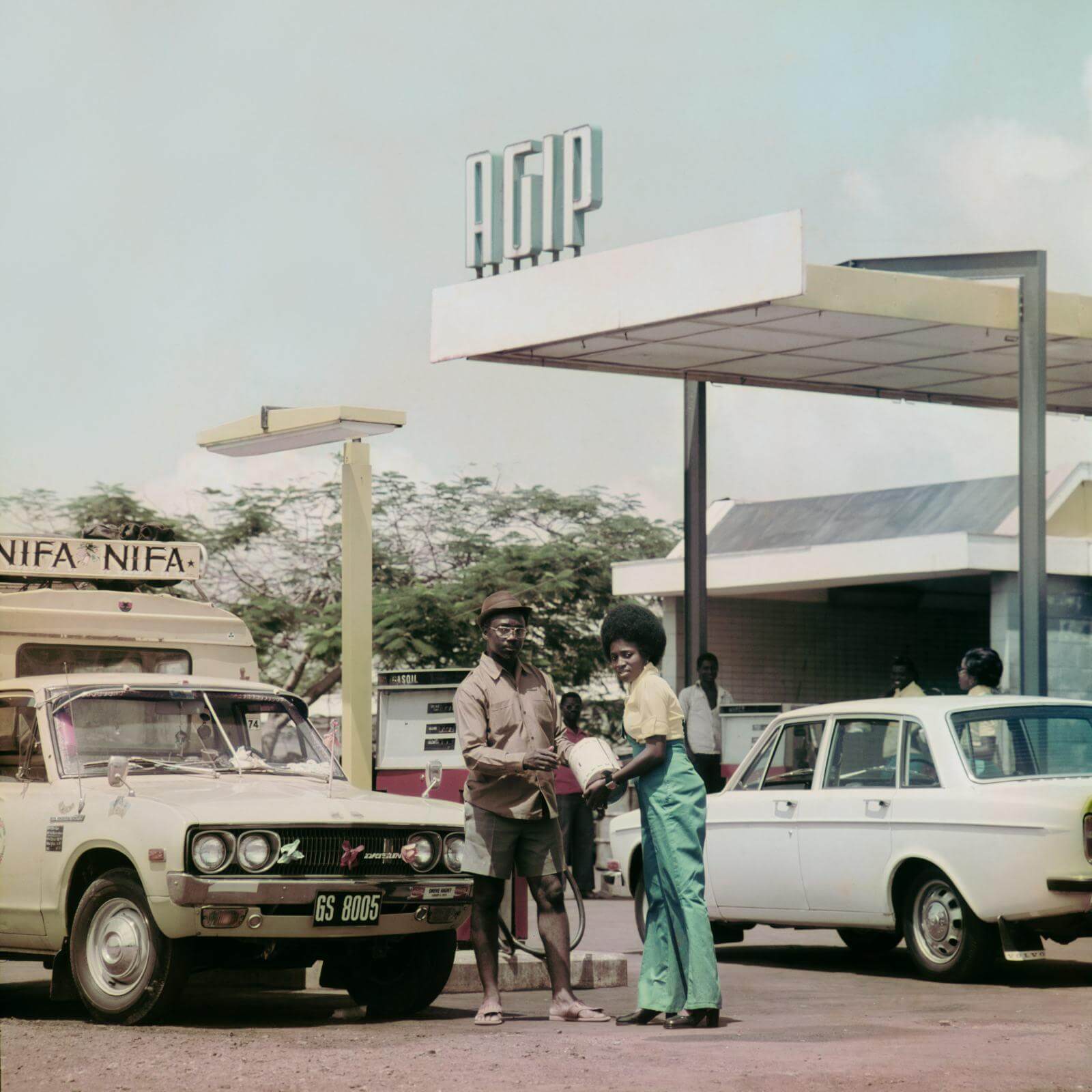
In the second space, a spotlight on renowned Ghanaian photographer James Barnor captures in black and white (and some colour) the optimism and exuberance of post-independence Ghana and Swinging Sixties London – a creative confidence mirrored by the two young artists in the adjoining space.
James Barnor, ‘NIFA NIFA’, 1974
COURTESY: © The Artist & October Gallery London
‘Sara Flynn’
Erskine, Hall and Coe
Until 25th July
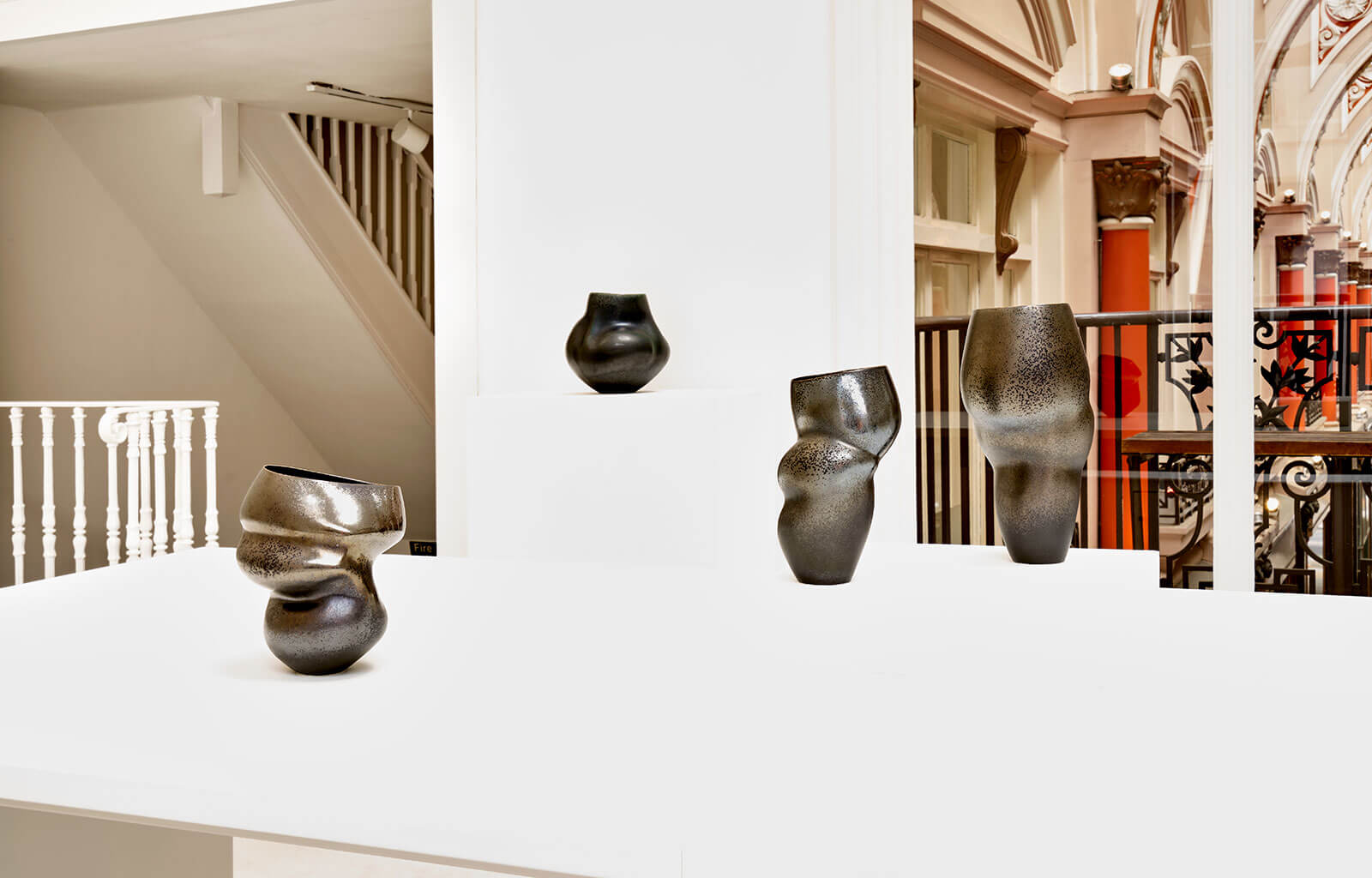
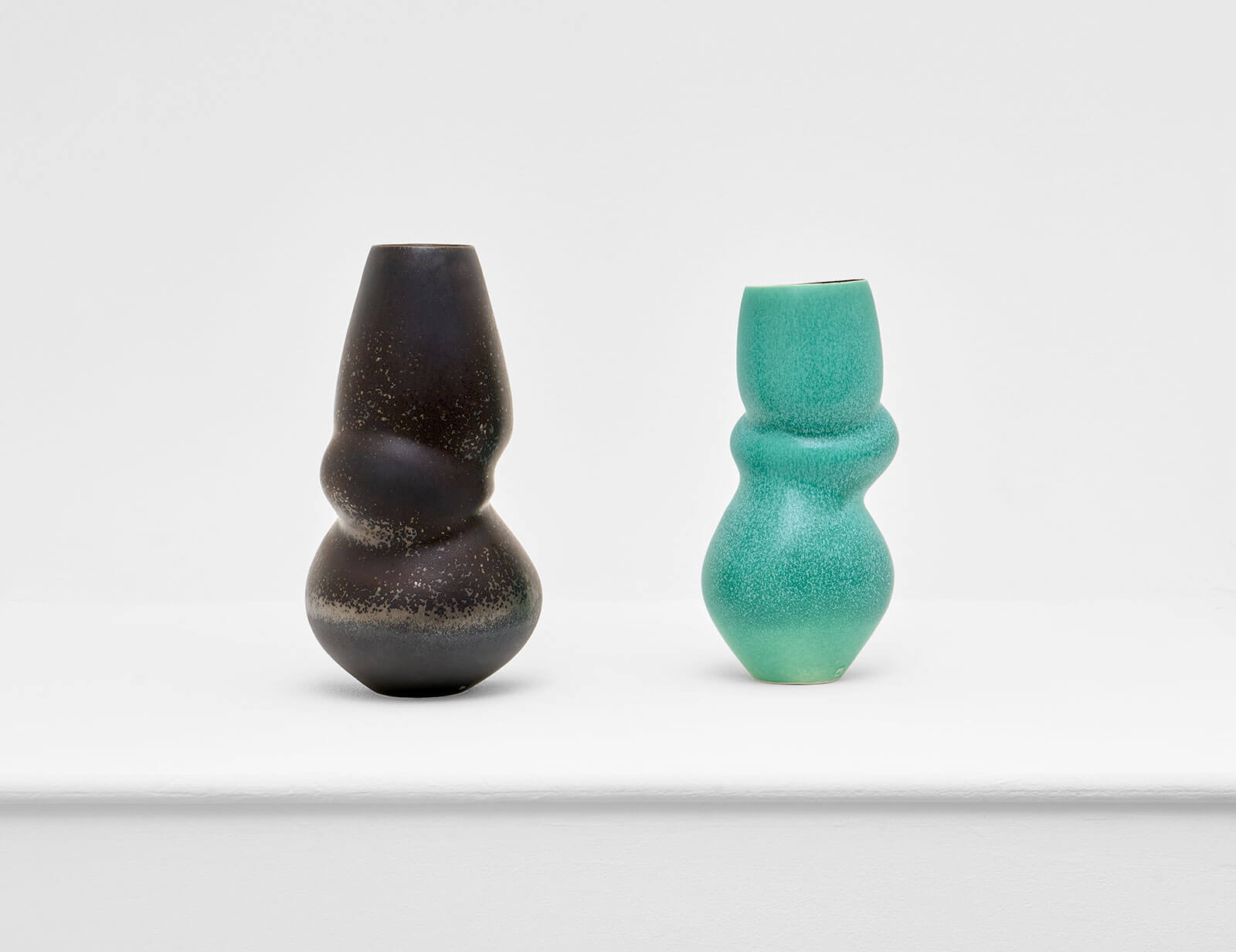
Sara Flynn, based in Cork City, in the Republic of Ireland, has been quietly making astonishing pots for almost thirty years. Flynn throws her porcelain vessels on a wheel before then embarking on a variety of processes – cutting and sealing like a tailor, to create seams and ridges, tucks and dimples; moulding from the inside to push out rounded forms, teasing gravity; before then firing and glazing with an increasing range of colours and metallic lustres. Whatever the method, she works with precision to achieve forms that are wholly abstract but echo the lines of hills and mountains, the concavities of sea shores and the sensuous bulges of the human body.
Exhibition view ‘Sara Flynn’
COURTESY: © The Artist & Erskine, Hall & Coe
The forms hold the spinning movement of their birth and reflect the adventure of the kiln, where sections may shift or collapse, whilst their exquisite smooth skins, catching the light, express Flynn’s hard-won technical accomplishment. In this latest collection, beautifully exhibited in the light-filled gallery, Flynn has pushed her experiments with imbalance and asymmetry further than ever – paradoxically enhancing the contrary effects of poise and equilibrium.
Sara Flynn, ‘Composite Vessel’, 2026 (SF-0474 & SF-0477)
COURTESY: © The Artist & Erskine, Hall & Coe
The tension generated by the almost loss of control becomes a source of energy. You sense the versions that did not survive Flynn’s exacting judgment. Her meticulous attention to the marriage of form and glaze – a union of line and colour – produces pots of singing conviction.
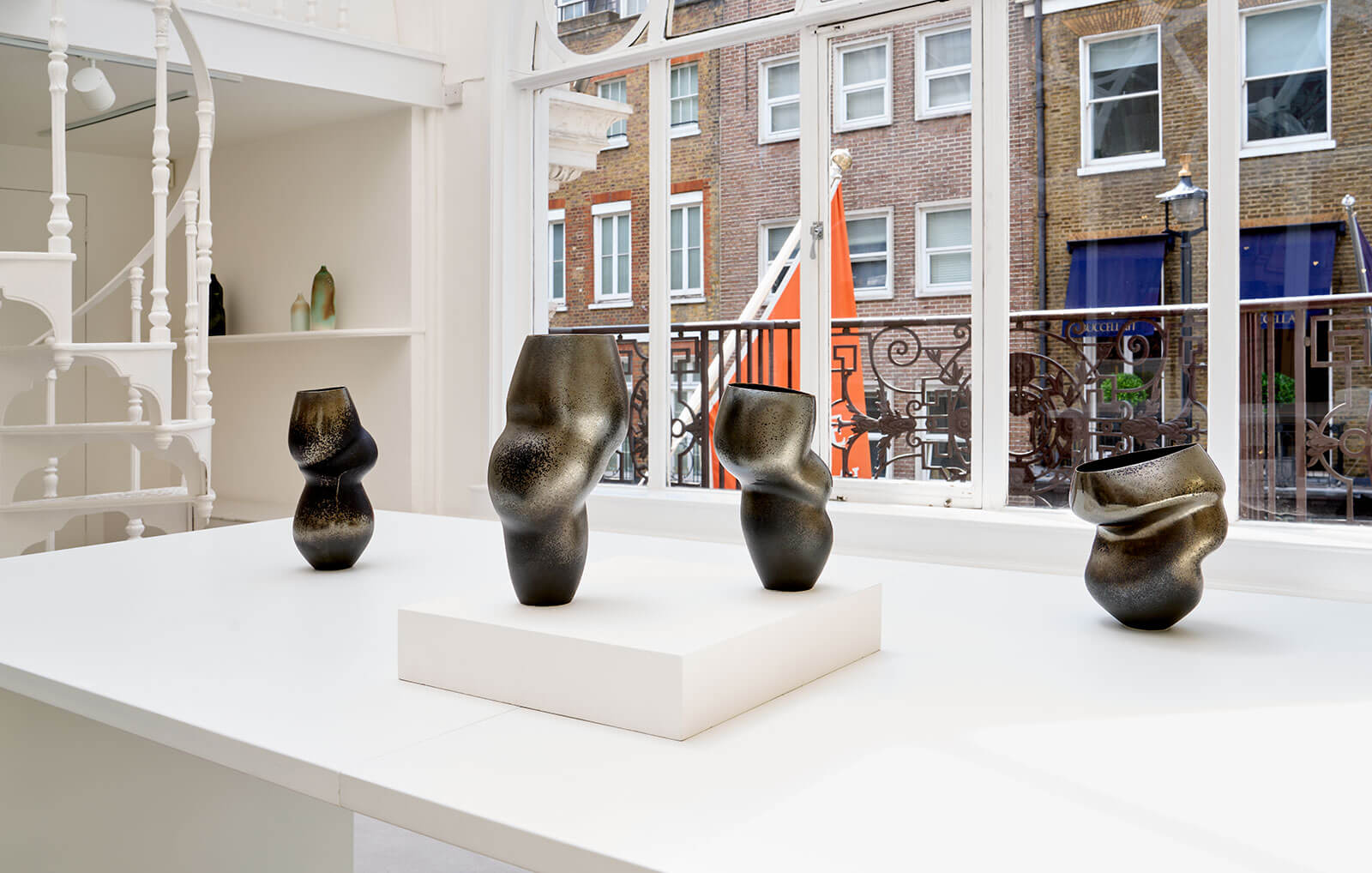
Exhibition view ‘Sara Flynn’
COURTESY: © The Artist & Erskine, Hall & Coe
‘Aneta Regel: Beneath the Skin’
‘Perch: A Collection of Chairs’
Sarah Myerscough Gallery
Until 7th/15th August
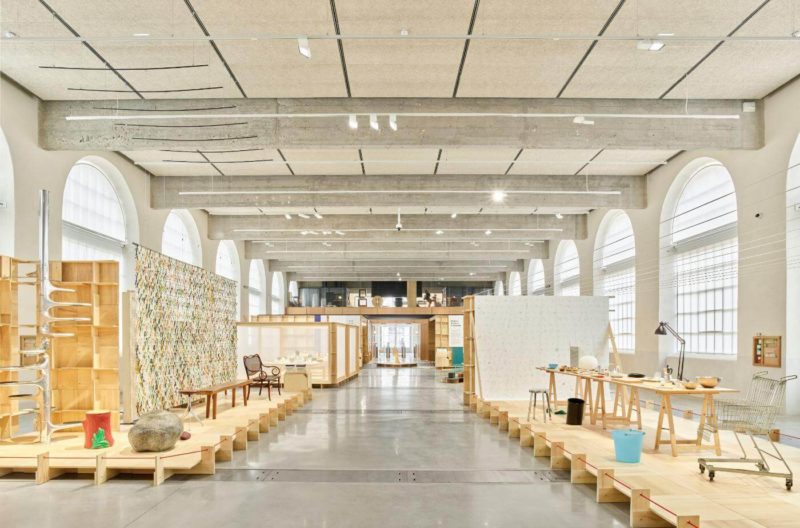
For their summer show, Sarah Myerscough Gallery have created two landscapes. On the ground floor, between several of the monumental textiles that featured in their previous show, they have interspersed chairs of different varieties and materials.
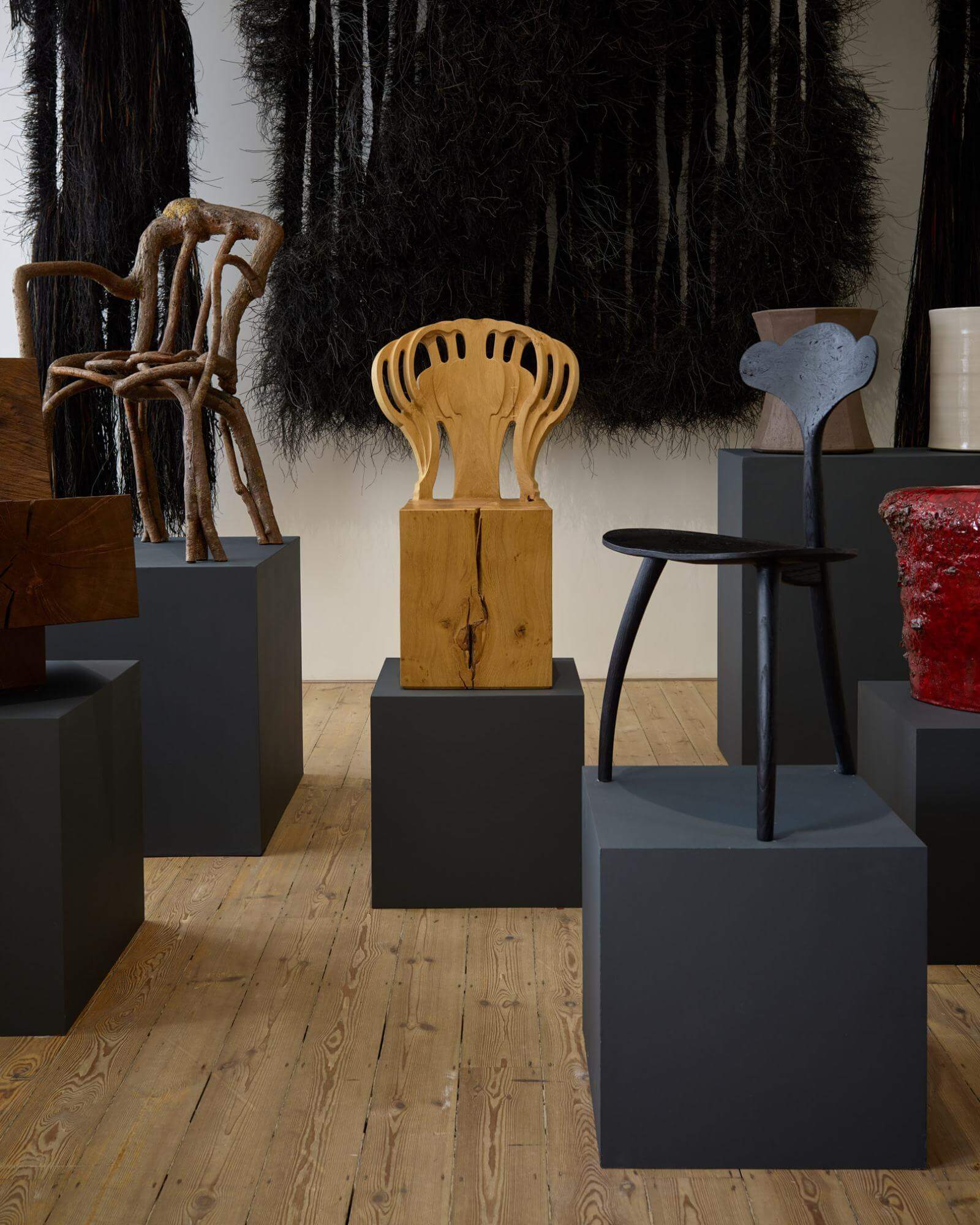
Exhibition view, ‘Perch’
COURTESY: © The Artists & Sarah Myerscough Gallery / PHOTOGRAPH: © Gareth Hacker
This group exhibition ‘Perch’ has the feel of a forest, with the chairs the lesser trees against the soaring backgrounds provided by the textiles of Teresa Hastings, Diana Scherer, Wycliffe Stutchbury and others. A spectacular curved carved oak throne by Nic Webb guards the entrance.
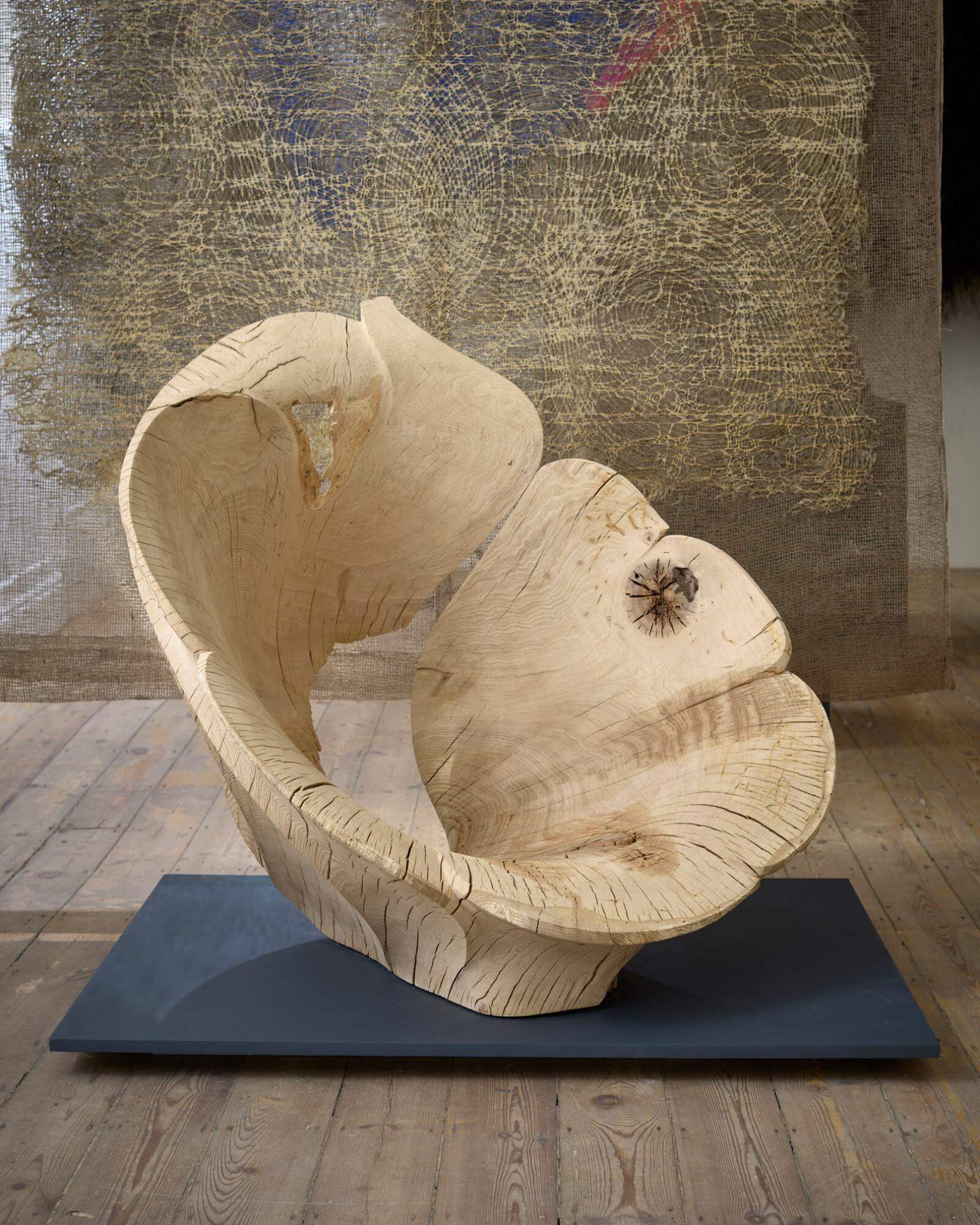
Nic Webb, ‘Oak Settle’, 2026
COURTESY: © The Artist & Sarah Myerscough Gallery / PHOTOGRAPH: © Gareth Hacker
Where ‘Perch’ emphasises the vertical, upstairs a horizontal landscape of pots unfolds like geophysical eruptions on a vast plain. Aneta Regel has spoken about her strong childhood memories of “the post-glacial landscapes of Poland”, with their harsh winters and oozing moraines. These sculptural hand-built vessels look as if formed from the same geological and meteorological events that created the earth itself.
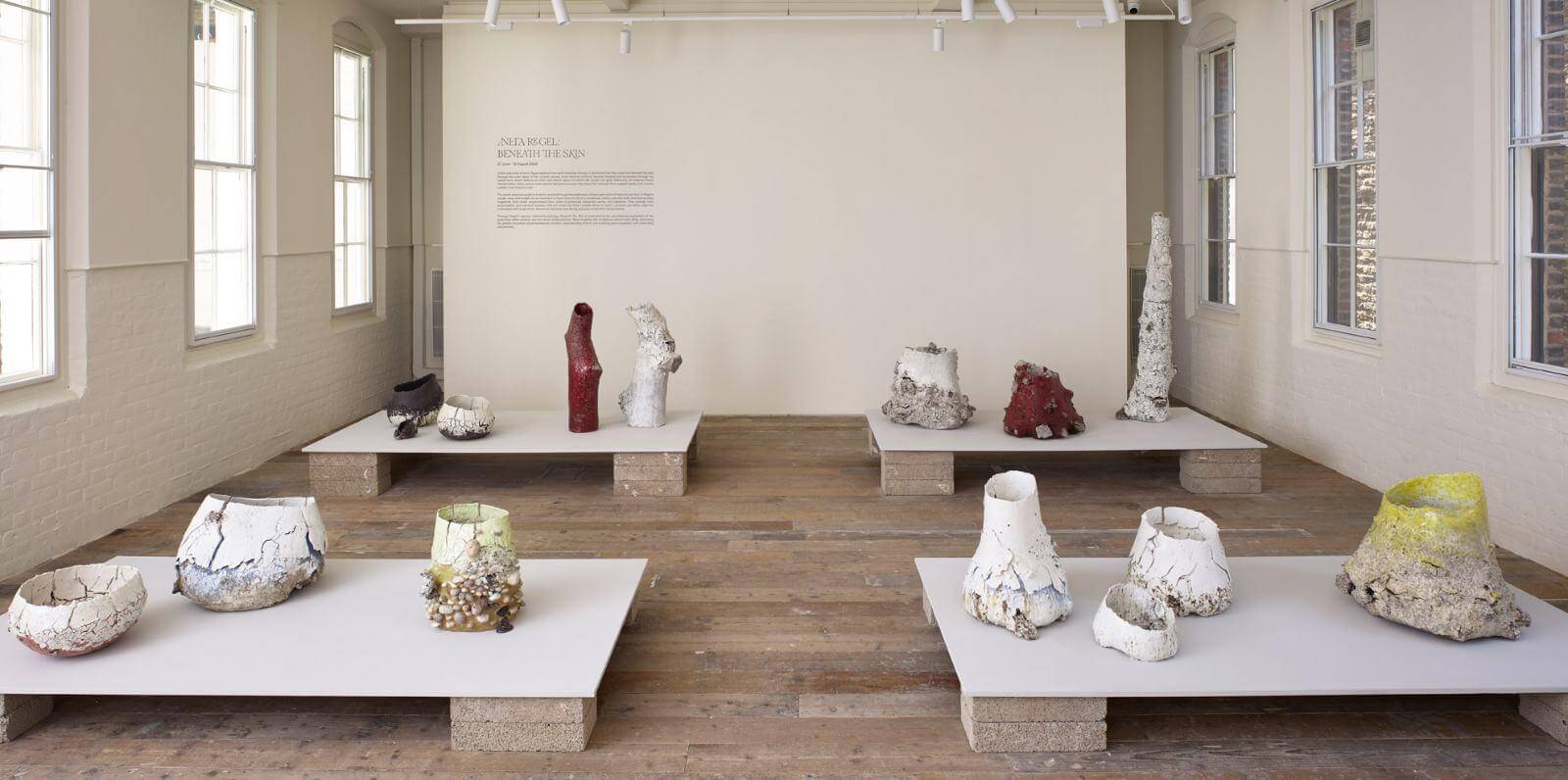
Exhibition view ‘Beneath the Skin’ by Aneta Regel
COURTESY: © The Artist & Sarah Myerscough Gallery / PHOTOGRAPH: © Gareth Hacker
They dramatise the wrenching of the earth, the cracking of glaciers, the breaking open of the heavens and the ground. Their bodies are formed from highly variegated mixtures of porcelain and stoneware clays, volcanic rocks, broken ceramics and pigment, fired often multiple times to expose the life – the chemistry – beneath the skin.
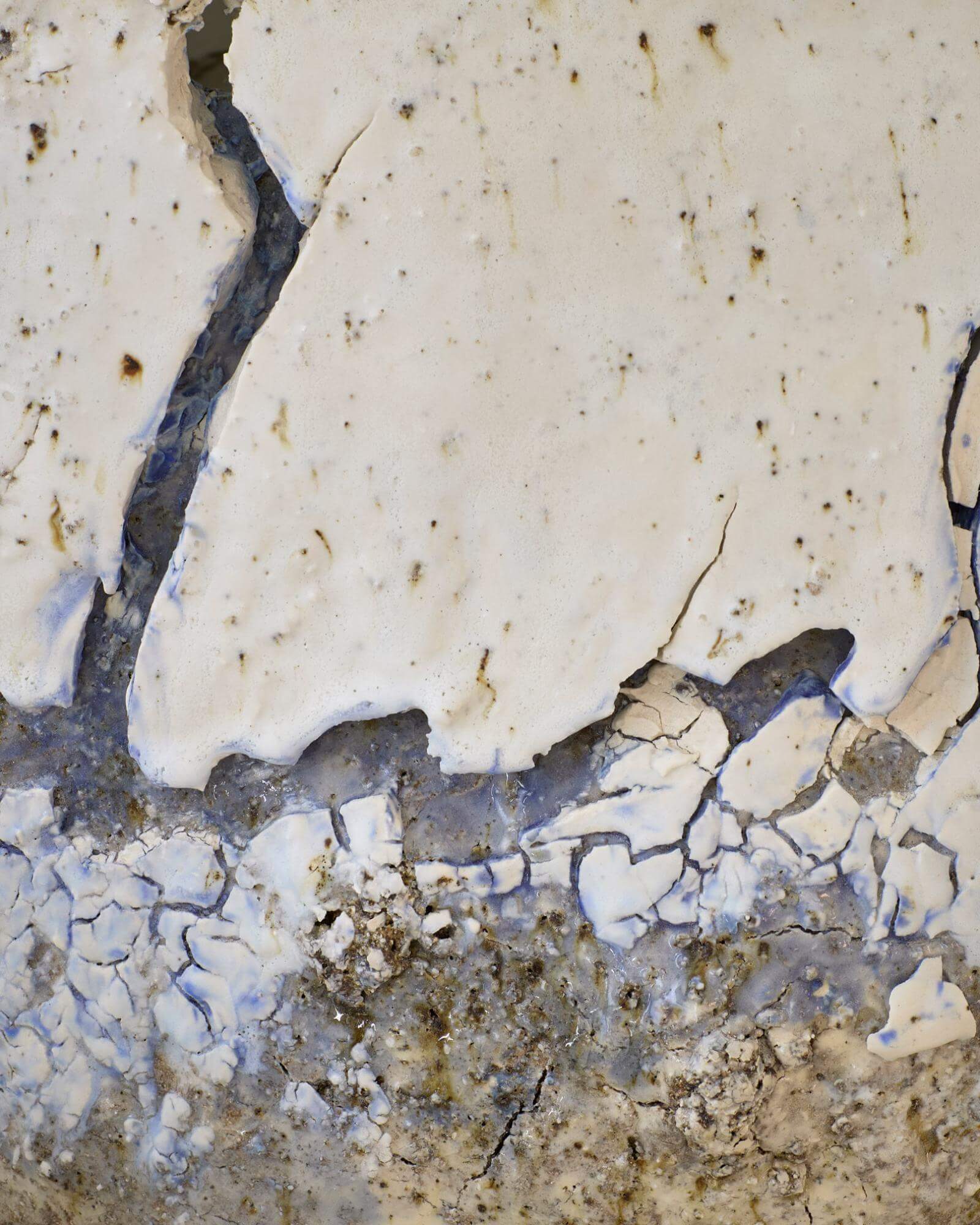
Aneta Regel, ‘Raining stone (white & blue)’, 2026 (detail)
COURTESY: © The Artist & Sarah Myerscough Gallery / PHOTOGRAPH: © Gareth Hacker
Regel focuses in this body of work entirely on the vessel form, with its potential both to hold a world and to turn it, explosively, inside out, so that you no longer know what is sky and what is earth, what is interior or what is exterior. But these vessels, with their painterly, emotional skins of glaze – charcoal black, blood red, ice white and sky blue – also evoke the human body and the powerful hidden feelings and memories that course through us. In this way, they root us in the volatile planet we inhabit.
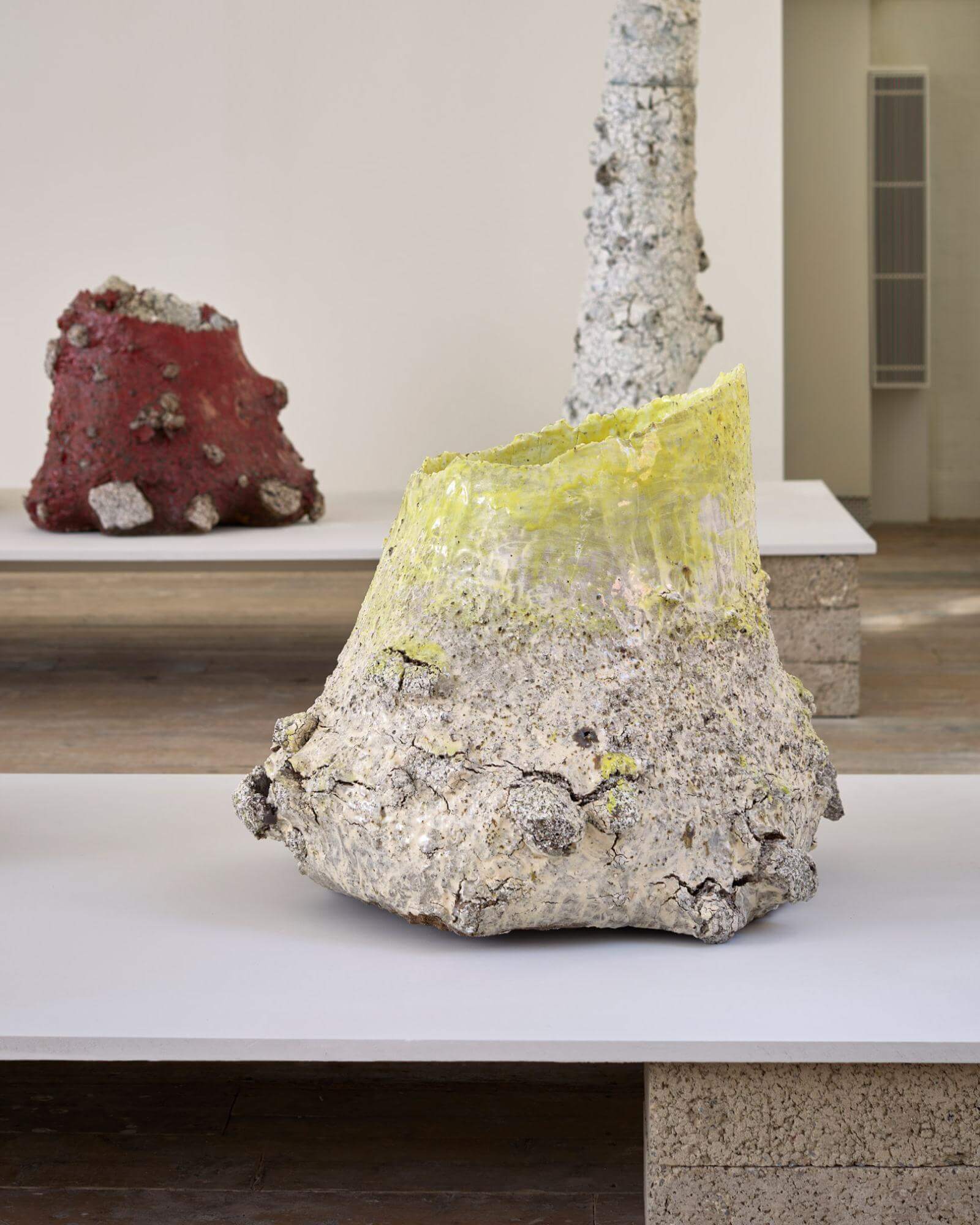
Exhibition view ‘Beneath the Skin’ by Aneta Regel with (foreground) ‘Raining stone (yellow & white)’, 2026; (background) ‘Raining stone (red)’, 2026
COURTESY: © The Artist & Sarah Myerscough Gallery / PHOTOGRAPH: © Gareth Hacker
‘Ahmed Umar: Glowing Phalanges’
Holtermann Fine Art
Until 1st August
Stepping from Cork Street into the white cube space of Holtermann Fine Art, the visitor is confronted with a series of compelling, enigmatic objects, disposed around the room at chest height. When you look closely, you see that these are balanced, caressed and proffered by an almost invisible white acrylic hand, modelled on the artist’s own. The display evokes a line of calligraphic script, each sculpture a dancing unit of meaning; but each is also a marvel of imaginative manufacture, finely working materials as diverse as glass, cow horn and ebony tourist figurines, into an intriguing array of forms.
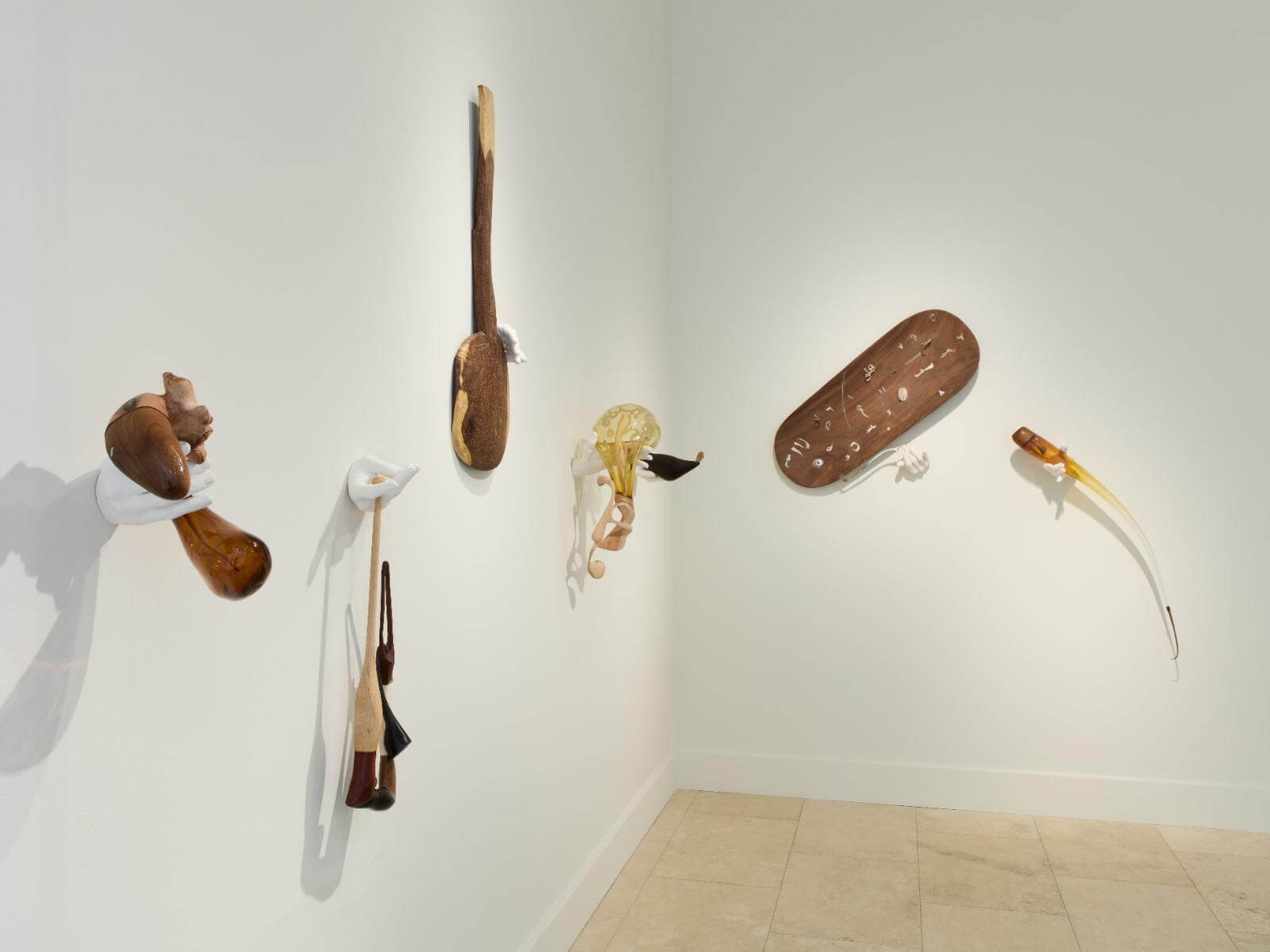
Exhibition view ‘Glowing Phalanges’ by Ahmed Umar
COURTESY: © The Artist & Holtermann Fine Art / PHOTOGRAPH: Ollie Hammick
Ahmed Umar is, like Aneta Regel, an immigrant. Now living in Oslo, Norway, Umar has been twice displaced – from his birthplace in Sudan and then from Saudi Arabia, where he was raised. The question of home extends across not just physical and cultural but also sexual and spiritual dimensions. He comes from a Sufi family with strong religious belief, anchored in specific rituals. Some of these rituals, particularly the use of prayer beads and amulets, are explicitly prohibited in the Wahhabism practised in Mecca, where Umar grew up. Umar’s identity as a queer Muslim Norwegian multi-media artist, exuberantly explored in his performance ‘Talitin (The Third)’ (2023) at the 2024 Venice Biennale, and his 2024 video installation ‘Truth Bears No Scandal’, further complicates his sense of belonging.
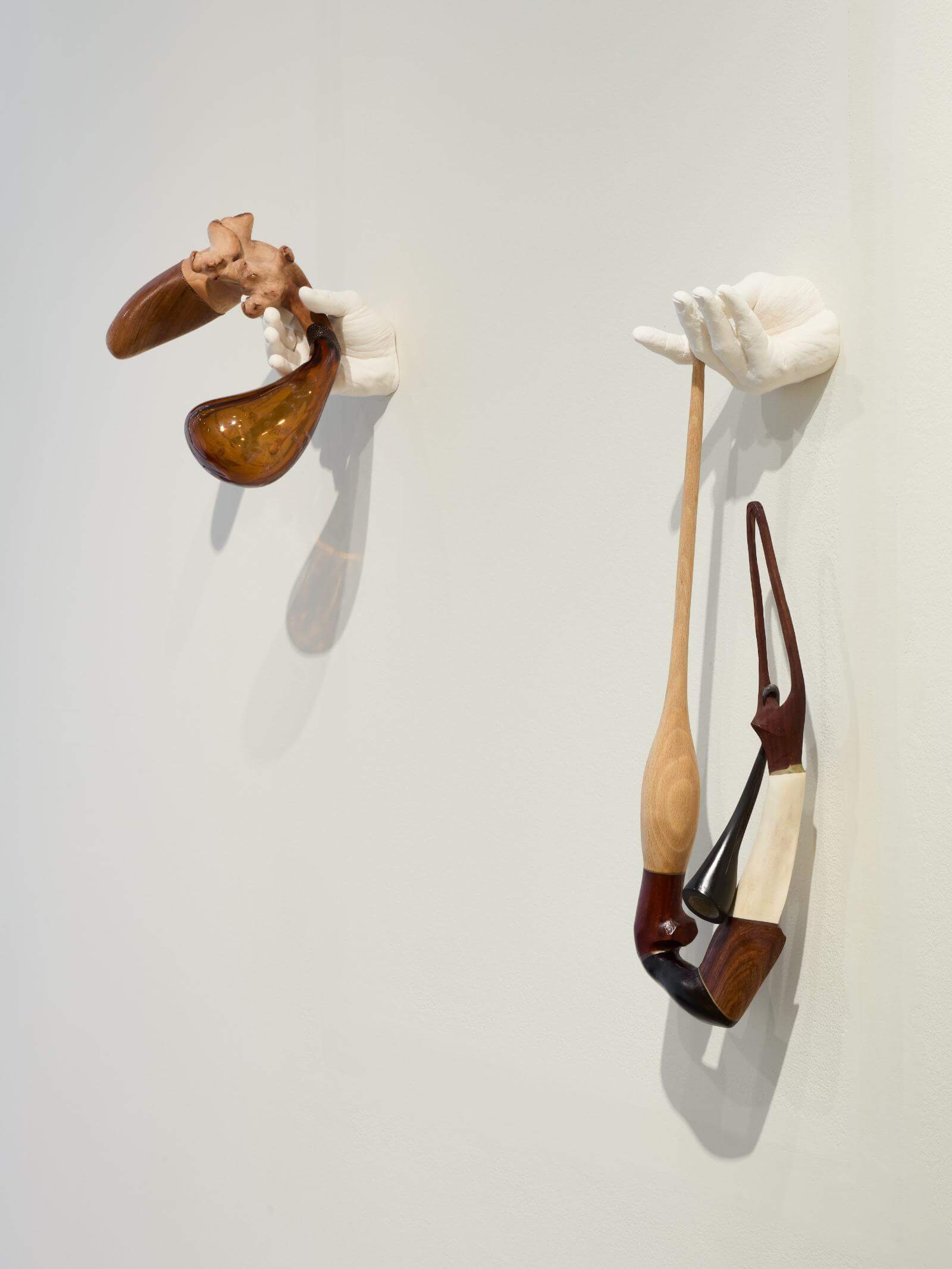
Exhibition view ‘Glowing Phalanges’ by Ahmed Umar
COURTESY: © The Artist & Holtermann Fine Art / PHOTOGRAPH: Ollie Hammick
This particular work, a series of fifteen exquisitely made, provocative objects, part amulet, part jewellery, part sculpture, is in a way a defiance of all orthodoxies and homogeneities. It is first a response to the Wahhabi prohibition of amulets and prayer beads. Wahhabis instead use the fingers of the right hand for prayer, counting the fifteen phalanges, or bones – three in each digit. At school, Umar was apparently taught that if you had prayed well, on the dark Day of Judgment your reward would be glowing phalanges. But more than that, the diversity of materials and cultural reference – camel tooth, reindeer antler, mother of pearl, shell, leather, horsehair and many different types of wood, bronze, brass and resin – married to the fineness of the working, enables a joyous and exquisite heterogeneity.
On a hot day, it was easy to believe that this artwork glowed.
Exhibition view ‘Glowing Phalanges’ by Ahmed Umar
COURTESY: © The Artist & Holtermann Fine Art / PHOTOGRAPH: Ollie Hammick
Emma Crichton-Miller is Editor-in-Chief of The Design Edit.
View all articles by Emma Crichton-Miller