New York Dispatch / October 2026
Three striking solo collectible design shows to catch this fall
Emma Scully Gallery
‘The Future of the Past: An exhibiton of works by Rafael Prieto’
1st October – 12th December
Dernier Cri
‘Casey Johnson: Primary Forms’
23rd September – 30th October
Jacqueline Sullivan Gallery
‘Mirrors by Peter Rippon: A Unique Selection for the Library’
3rd October – 21st November
By Adrian Madlener / 22nd October 2026
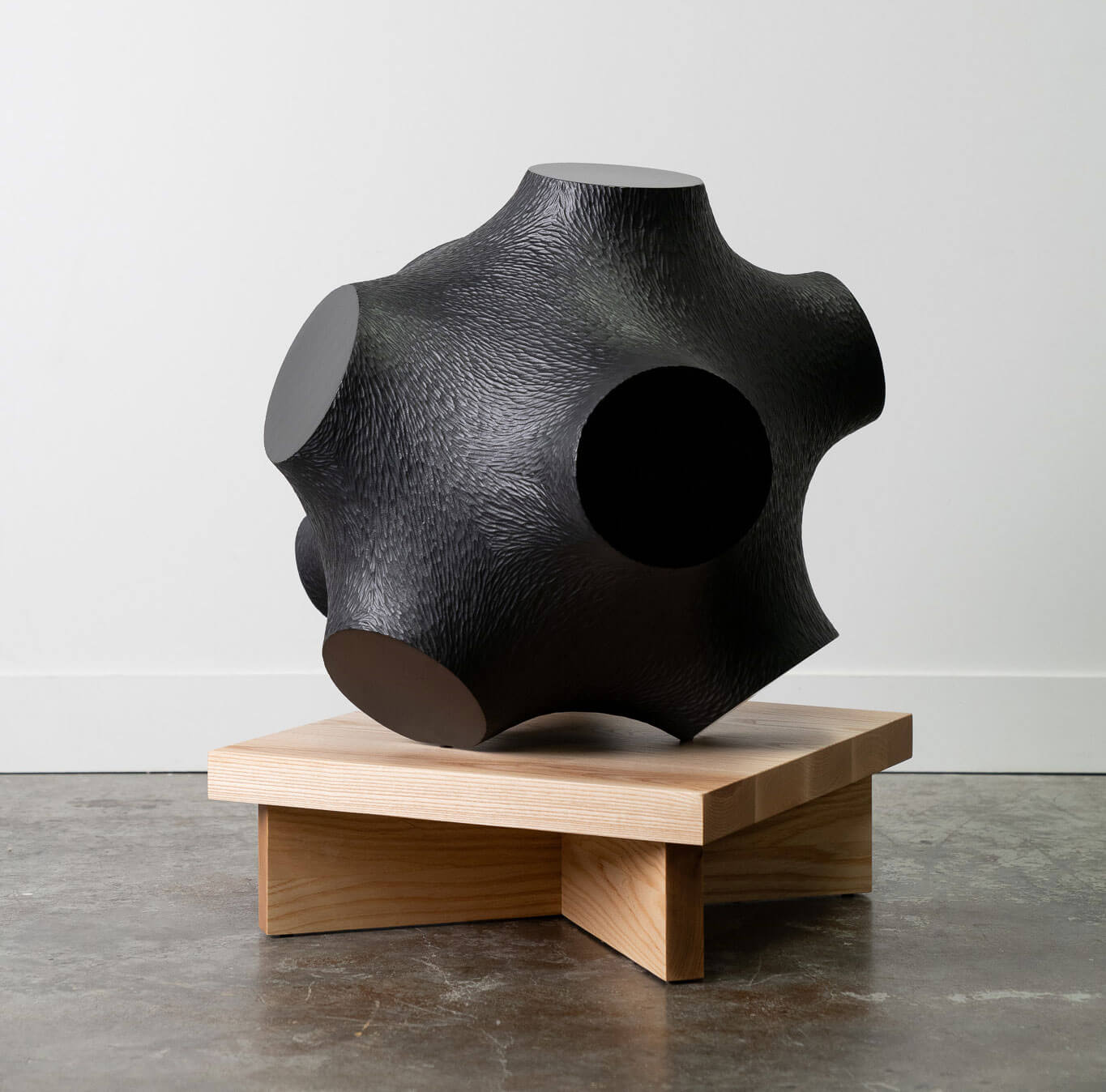
Casey Johnson, ‘Primordial Core’ 2026
COURTESY: © The Artist & Dernier Cri
AS CRISP AUTUMN air finally settles over Manhattan, the city’s collectible design landscape is signalling a profound shift; a movement away from superficial aesthetics toward narrative depth and historical, even primordial, enquiry. This October, three standout presentations are characterised by physical authenticity, material substance and architectural provenance.
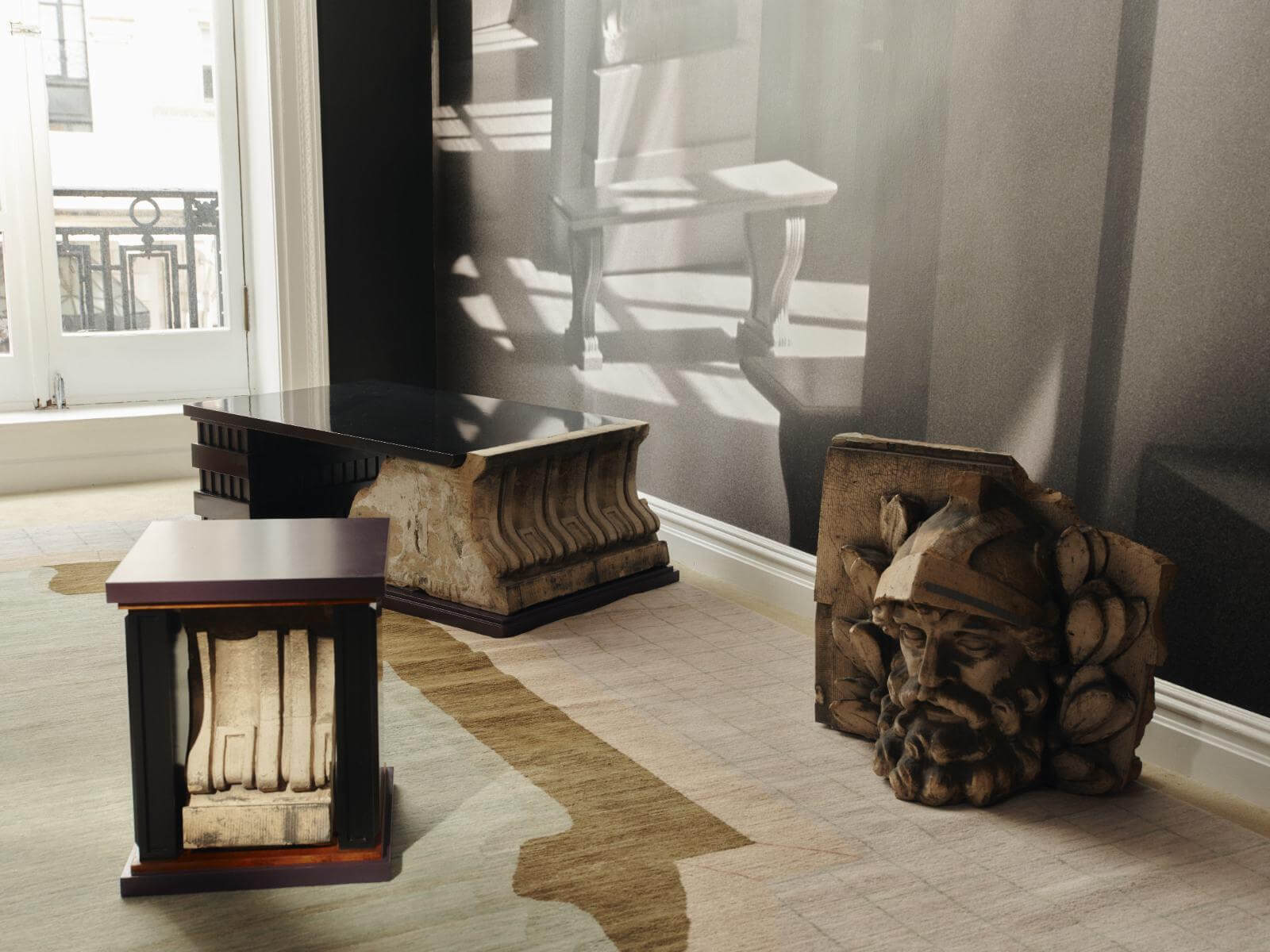
Exhibition view, ‘The Future of the Past’ by Rafael Prieto
COURTESY: © The Artist & Emma Scully Gallery / PHOTOGRAPH: Clement Pascal
A few overarching themes unite these showcases: the dialogue between salvage and archival preservation; the complete dissolution of utilitarian boundaries as artisans strip furniture down to pure sculptural expression; and tactile materiality deployed in stark juxtaposition to emphasise visual intrigue and visceral touch.
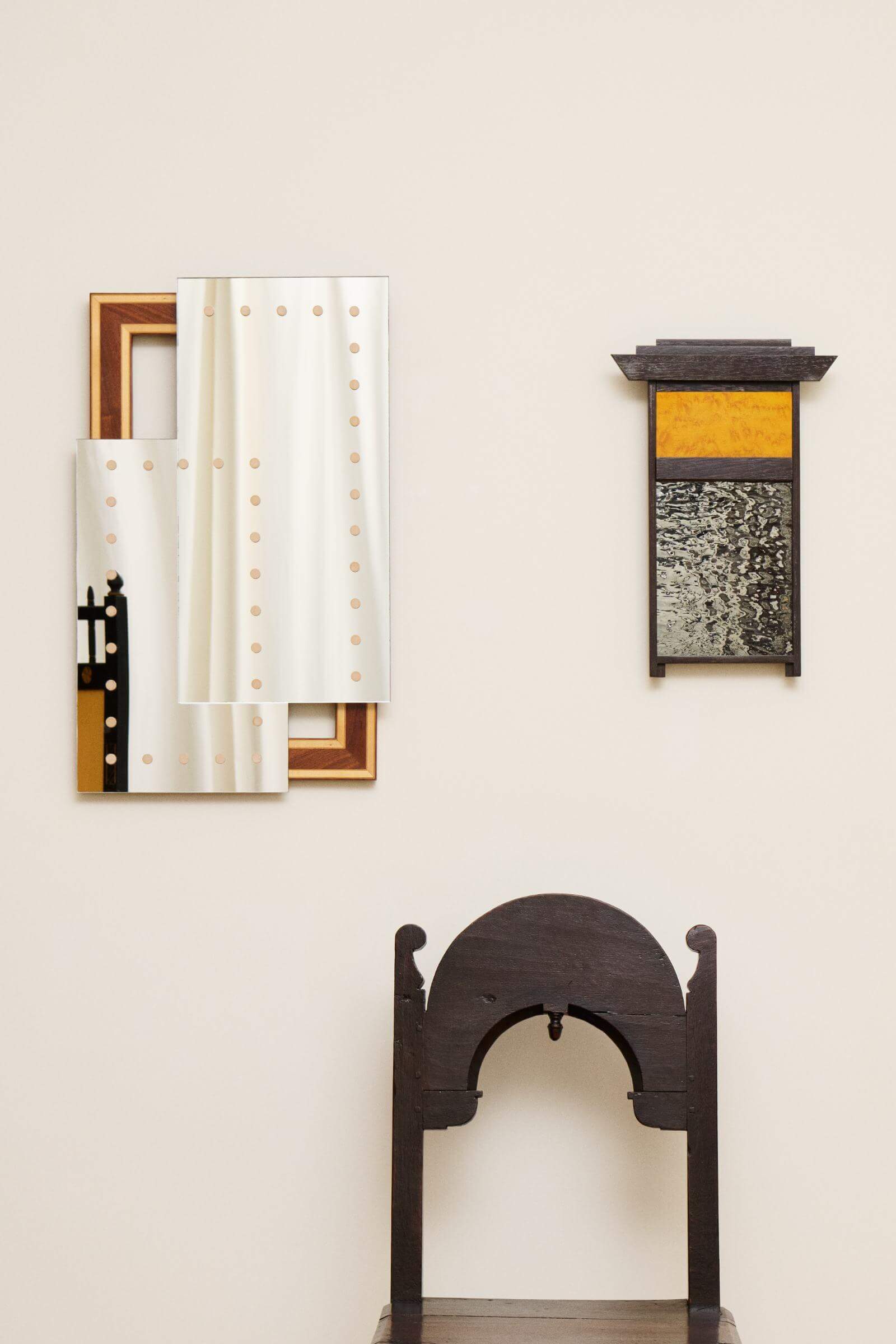
Exhibition view, ‘Mirrors by Peter Rippon’
COURTESY: © The Artist & Jacqueline Sullivan Gallery / PHOTOGRAPH: Sofie Kjørum Austlid
‘The Future of the Past: An Exhibition of works by Rafael Prieto’
Until 12th December
At Emma Scully Gallery on the Upper East Side, artist-designer Rafael Prieto presents ‘The Future of the Past’, a poetic exploration centred upon urban archaeology, collective memory and forgotten metropolitan structures. The capsule collection is inspired by sixteen ornamental stone fragments salvaged from the facade of an early 1900s building, opposite Prieto’s studio in Tribeca.
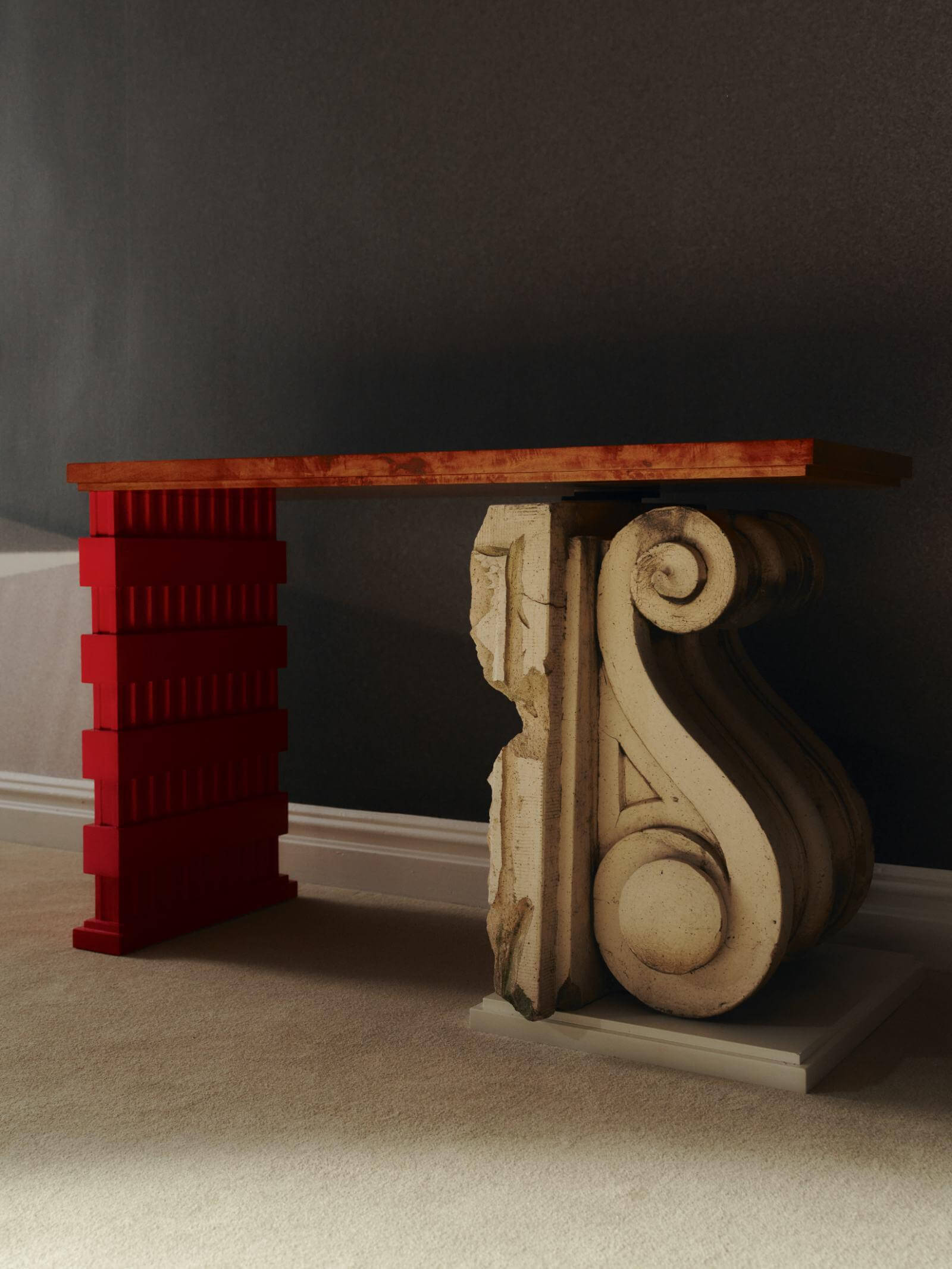
Rafael Prieto, ‘Red Birch and Stone Table’, 2026
COURTESY: © The Artist & Emma Scully Gallery / PHOTOGRAPH: Clement Pascal
The discarded relics were slated for disposal, but the designer asked to keep them. “For a year and a half they lived with me in the studio,” Prieto writes, “I sat with them and tried to understand what they held: a city built and rebuilt, many cultures and many hands pressed into stone, and the quiet question of what happens to the past once it’s taken down.”
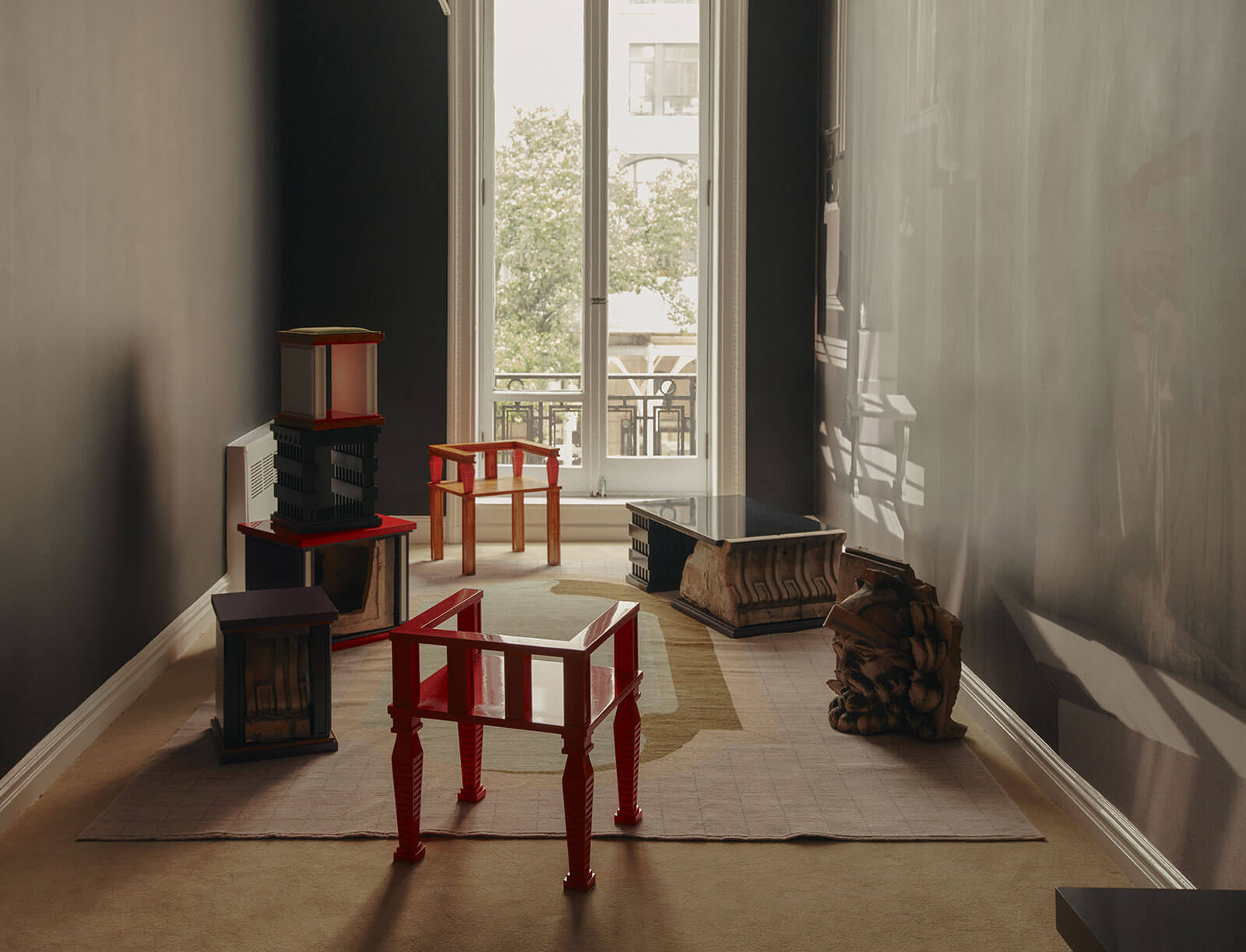
Exhibition view, ‘The Future of the Past’ by Rafael Prieto
COURTESY: © The Artist & Emma Scully Gallery / PHOTOGRAPH: Clement Pascal
‘The Future of the Past’ is inspired by these stone ornaments and the time spent in their company. The resulting body of work skilfully repurposes the reclaimed masonry as contemporary furniture: seating, side and coffee tables. Four creations directly incorporate original limestone, while others translate carved detailing into abstracted forms fashioned from lacquered wood finished in deep red, dark purple and black hues.
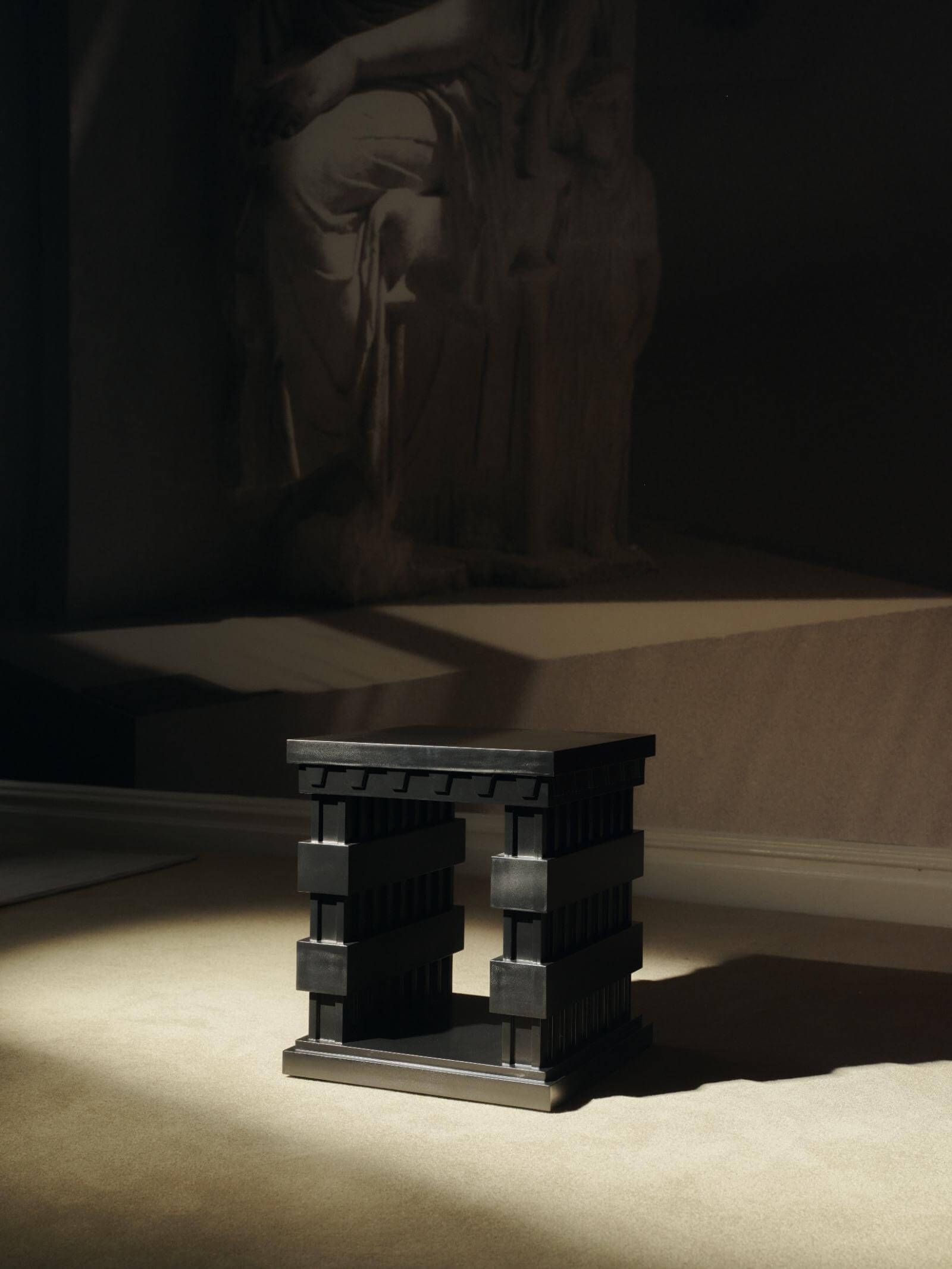
Rafael Prieto, ‘Black Painted Birch Small Table’, 2026
COURTESY: © The Artist & Emma Scully Gallery / PHOTOGRAPH: Clement Pascal
This intentional dichotomy between hard, weathered stonework and smooth, chromatic gloss creates a compelling emotive contrast, interrogating whether preservation should remain a static act, or evolve through inventive transformation. You might think of the French architect and preservationist Viollet-le-Duc’s intuitive approach to restoration: adding a water evacuation system to his mid 19th-century update of Notre Dame in Paris so that the edifice might stand forever.
Enhancing the presentation are scenic wall coverings developed by Wallpaper Projects that integrate Prieto’s analogue photography – converting the interior space into an immersive visual landscape and contextualising the work.
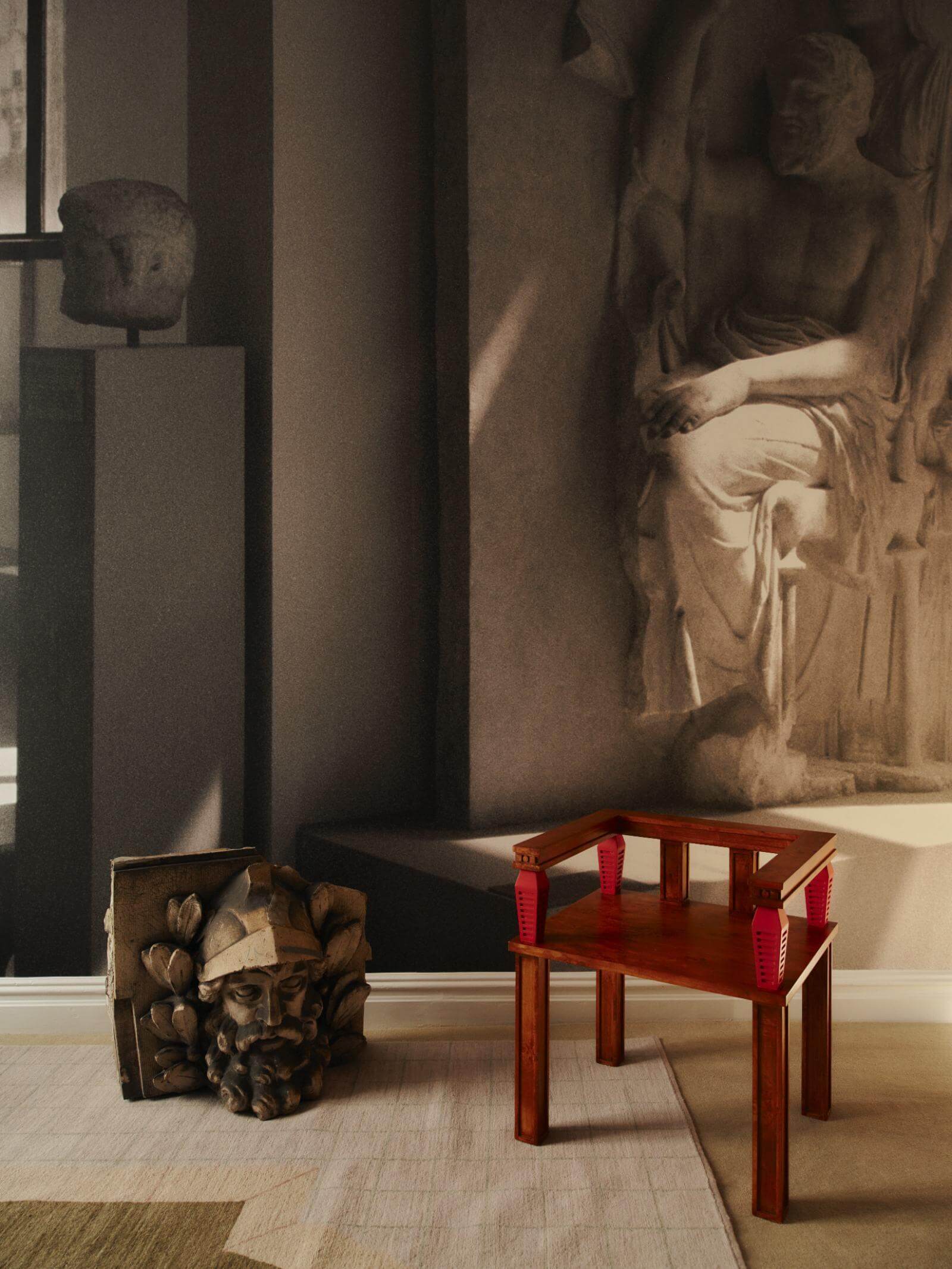
Exhibition view, ‘The Future of the Past’ by Rafael Prieto
COURTESY: © The Artist & Emma Scully Gallery / PHOTOGRAPH: Clement Pascal
‘Casey Johnson: Primary Forms’
Until 30th October
In Midtown East, gallery Dernier Cri presents a solo showcase by Casey Johnson, marking the creator’s return to fine art sculpture. The exhibition highlights Johnson’s evolution beyond bespoke woodwork towards pure elemental geometry and material composition. While the artisan previously earned acclaim for functional furniture pieces, this presentation does away with any need for after the fact justification. Casey has freed himself to investigate raw form, structural balance, and intuitive handcrafting in its purest state. Studio furniture movement forebears such as Wendell Castle would be proud.
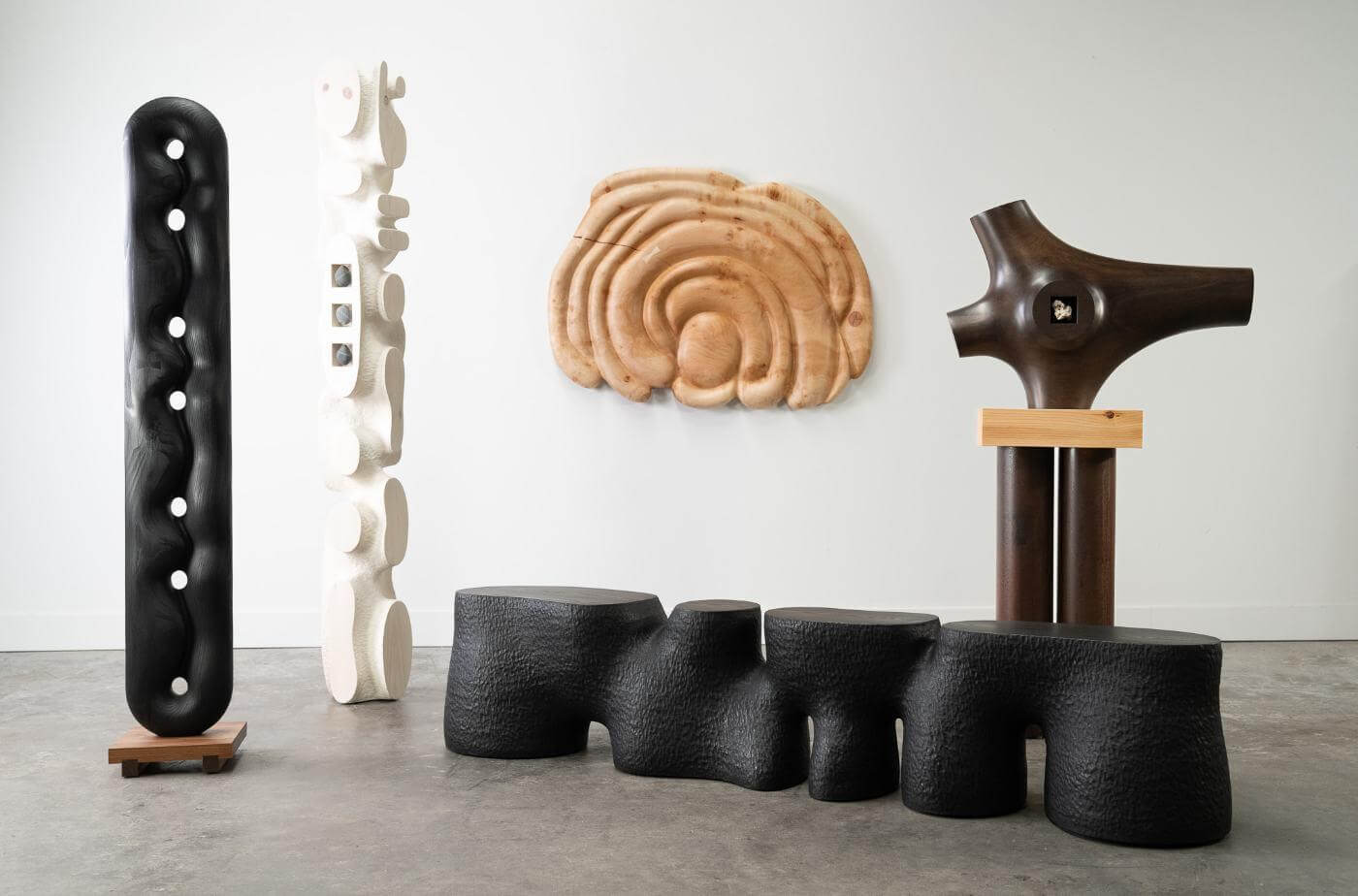
Exhibition view, ‘Casey Johnson: Primary Forms’
COURTESY: © The Artist & Dernier Cri
Working across pine, maple, reclaimed oak, walnut, dark Valchromat, and industrial steel tubing, Johnson contrasts hand-carved grain with polished planes to capture dramatic play between light and shadow. Through labour-intensive subtraction and meticulous surface treatment, the works reveal an intimate tactile dialogue between natural timber and stone, establishing a powerful architectural presence within the gallery space.
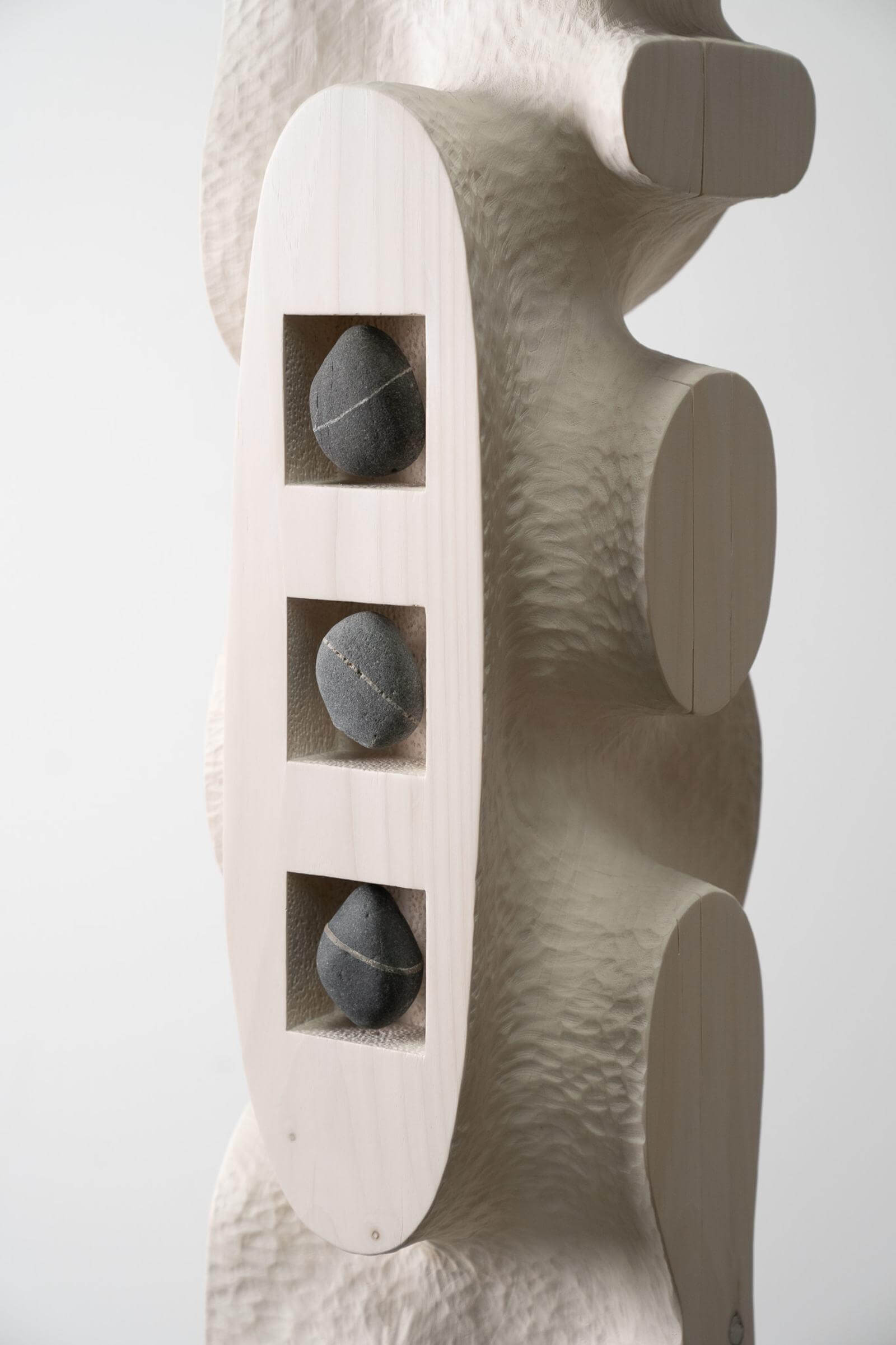
Casey Johnson, ‘3 Wishes (Power of Intention)’ 2026 (detail)
COURTESY: © The Artist & Dernier Cri
Monolithic wooden structures carry smooth stone inlays, generated as totem-like objects …
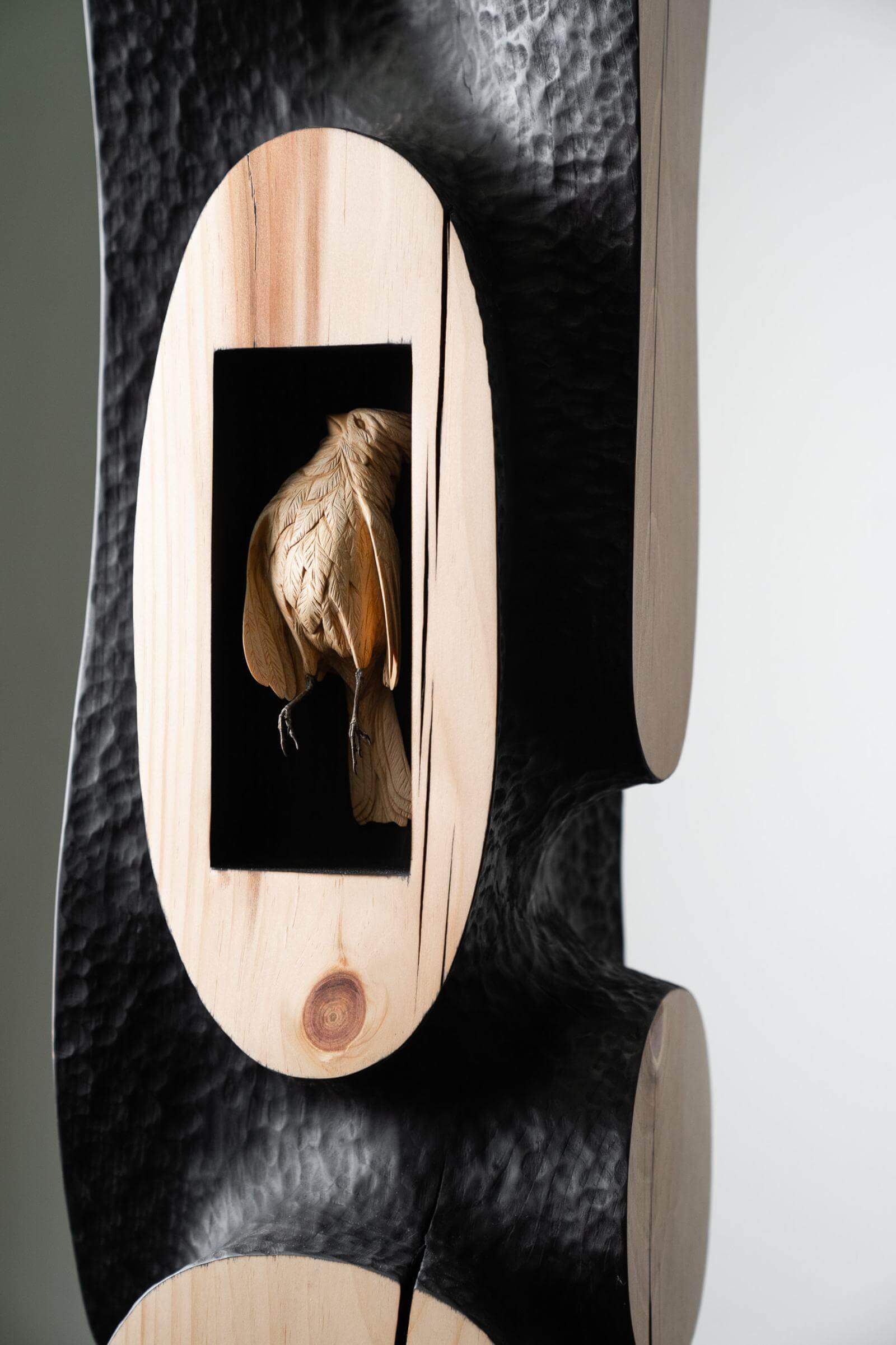
Casey Johnson, ‘Offering’ 2026 (detail)
COURTESY: © The Artist & Dernier Cri
… balancing masculine and feminine, organicism and geometry, rawness and refinement.
‘Mirrors by Peter Rippon: A Unique Selection for the Library’
Until 21st November
In Tribeca, Jacqueline Sullivan Gallery is showcasing three decades of “reflective” output created by Peter Rippon between 1994 and 2025. The retrospective investigates mirror glass as both a functional domestic device and an understated psychological apparatus designed to shift spatial perception through deliberate optical alteration.
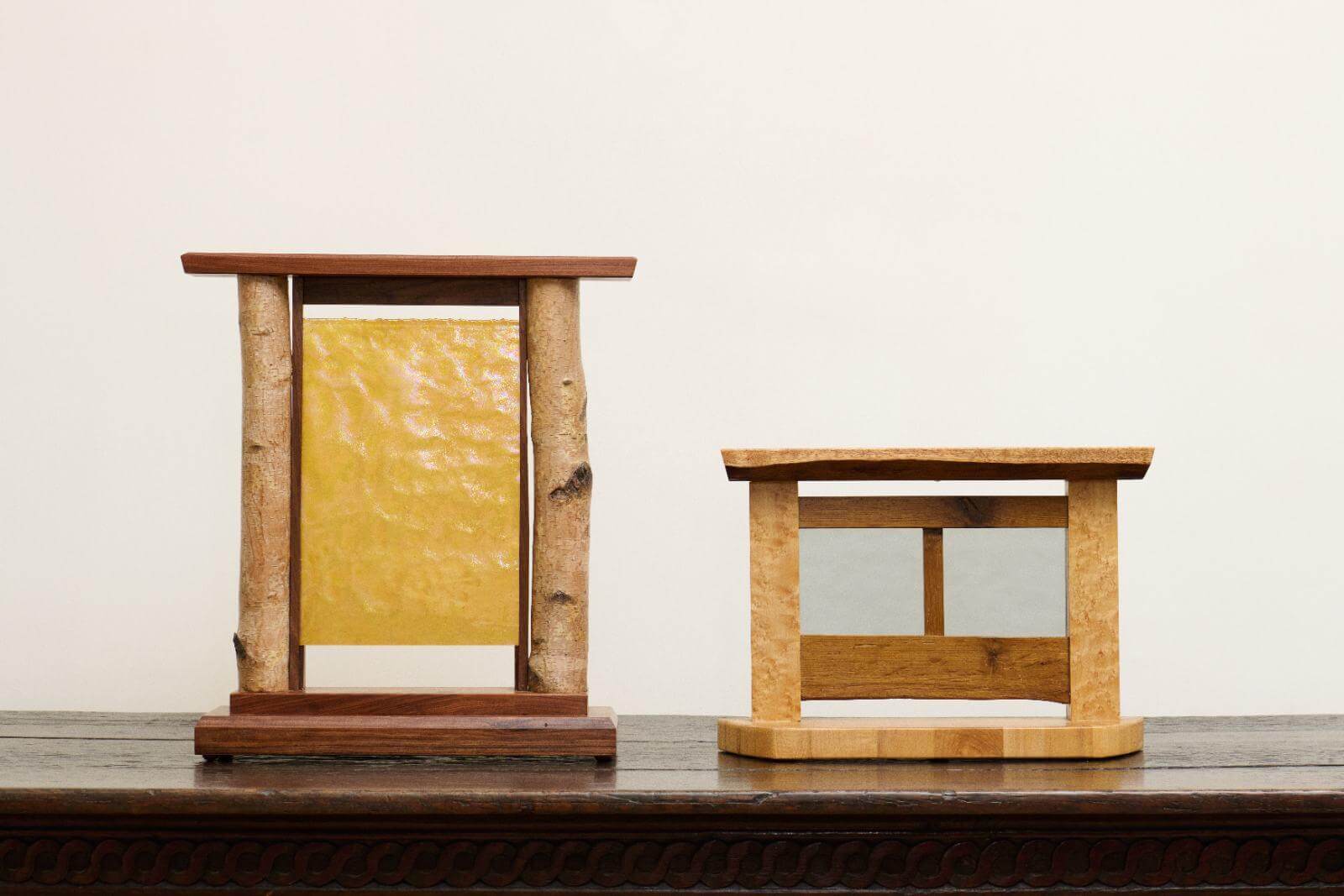
Peter Rippon, ‘Time Passes’, 2025 (left); ‘Glass Torii’, 2025 (right)
COURTESY: © The Artist & Jacqueline Sullivan Gallery / PHOTOGRAPH: Sofie Kjørum Austlid
Drawing on Rippon’s dual background in fine art and custom cabinetry, the British-born artist and craftsperson approaches “framing” as a rigorous architectural exercise, but also one that can facilitate various forms of self-projection.
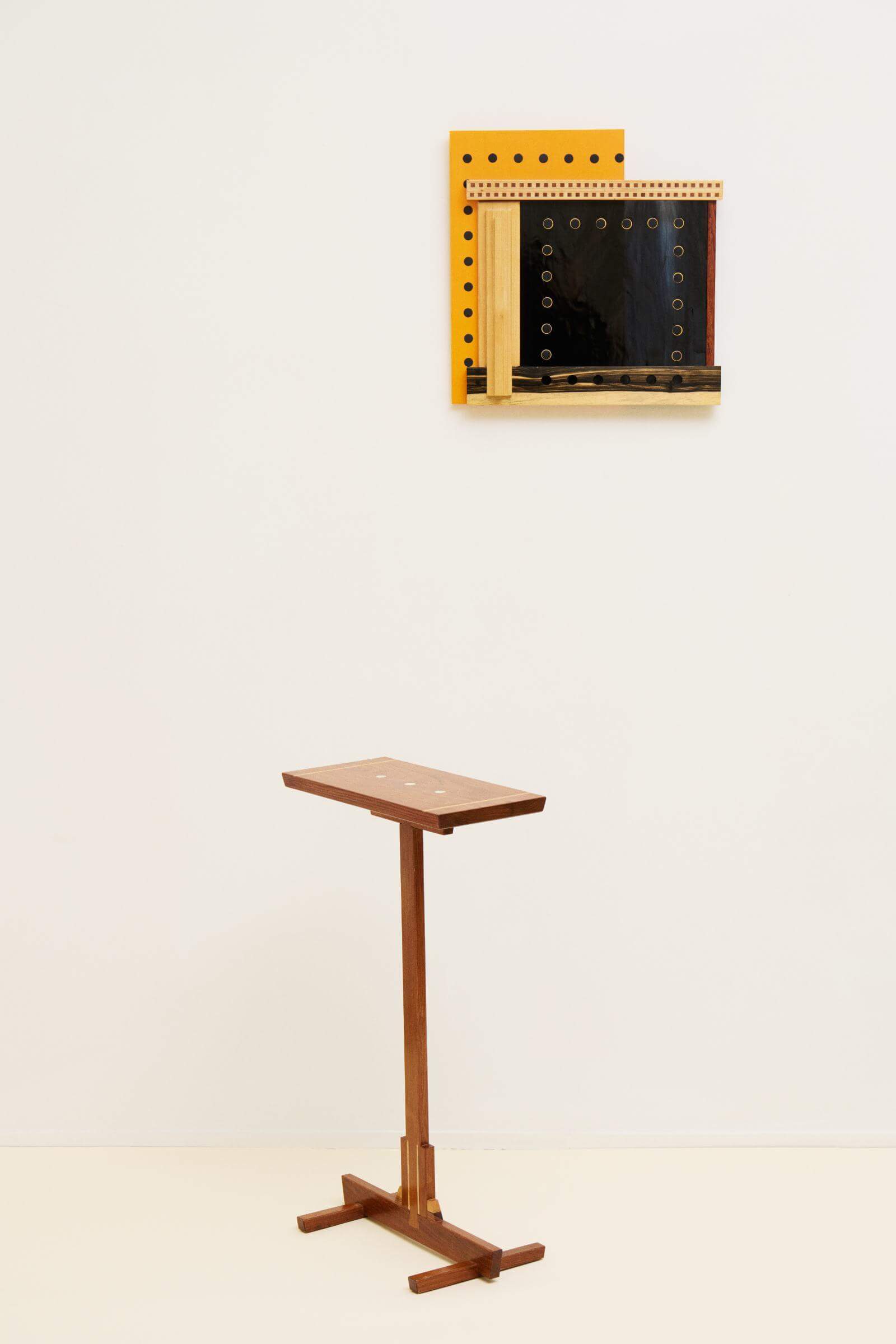
Peter Rippon, ‘Rosewood Table’, 1994 (left);‘Gracia #5 En La Noche’, 2014 (right)
COURTESY: © The Artist & Jacqueline Sullivan Gallery / PHOTOGRAPH: Sofie Kjørum Austlid
Rippon explores the perceptual contrast experienced as viewers shift focus between examining the detailed craft of the frames and observing their reflected image. By positioning the viewer as an active participant within the artwork, these mirrors transcend passive utility and become dynamic instruments of spatial expansion, echoing historical precedents – ranging from Robert Adam’s classical interiors, to the lustrous surfaces of ancient times. Displayed alongside selected items from Sullivan’s personal stores, these specular works function as portals where ornament, function, and human presence intertwine, establishing meditative dialogues on seeing, being seen, and architectural illusion.
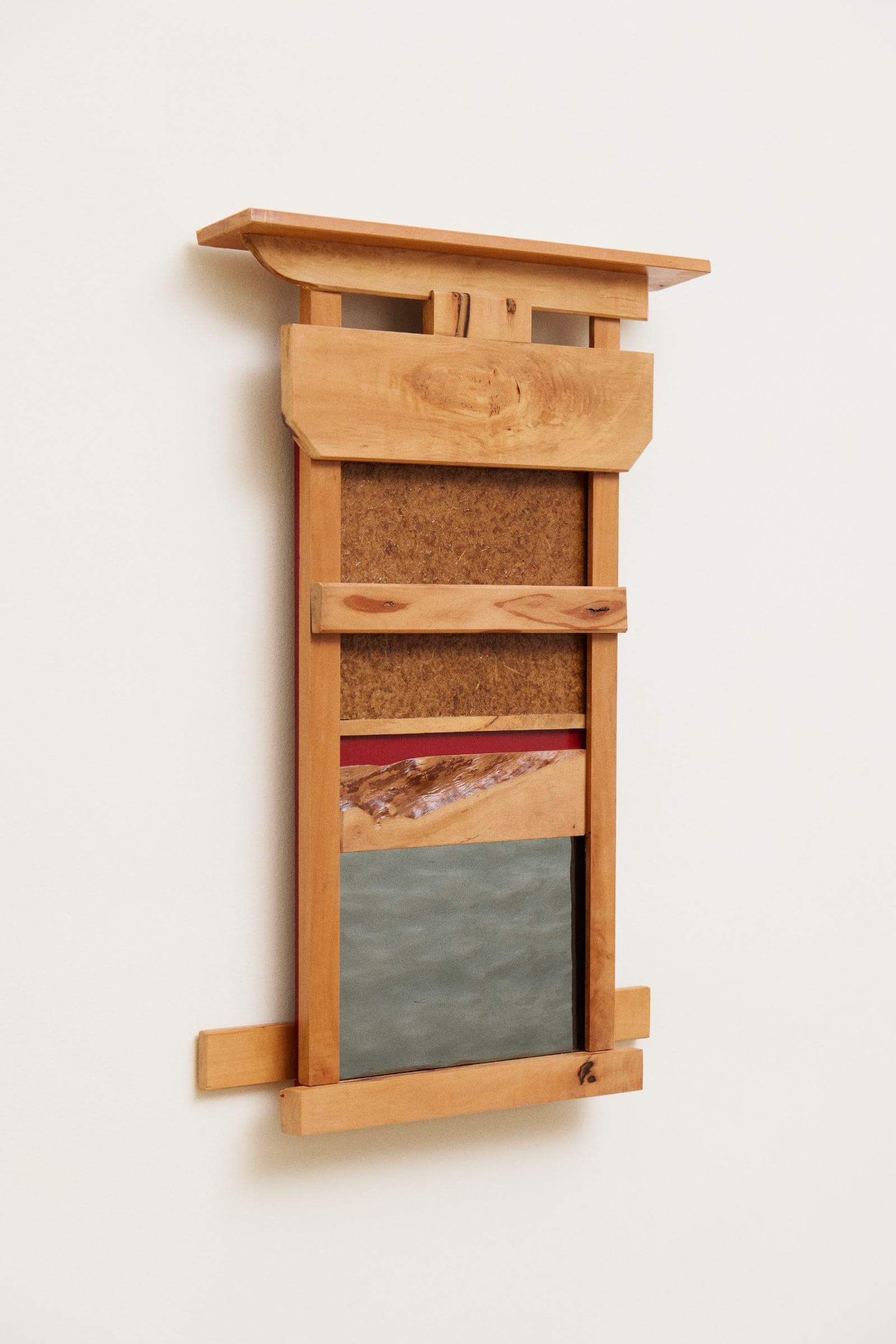
Peter Rippon, ‘Sumida River’, 2024
COURTESY: © The Artist & Jacqueline Sullivan Gallery / PHOTOGRAPH: Sofie Kjørum Austlid

Adrian Madlener is a Brussels-born, New York-based writer covering a wide range of design-related topics.
View all articles by Adrian Madlener