miart 2026 / Review
From young mixed-media practitioners, to rare treats from twentieth-century design masters.
South Wing Allianz MiCo, Milan
17th-19th April 2026
By Emma Crichton-Miller / 16th April 2026
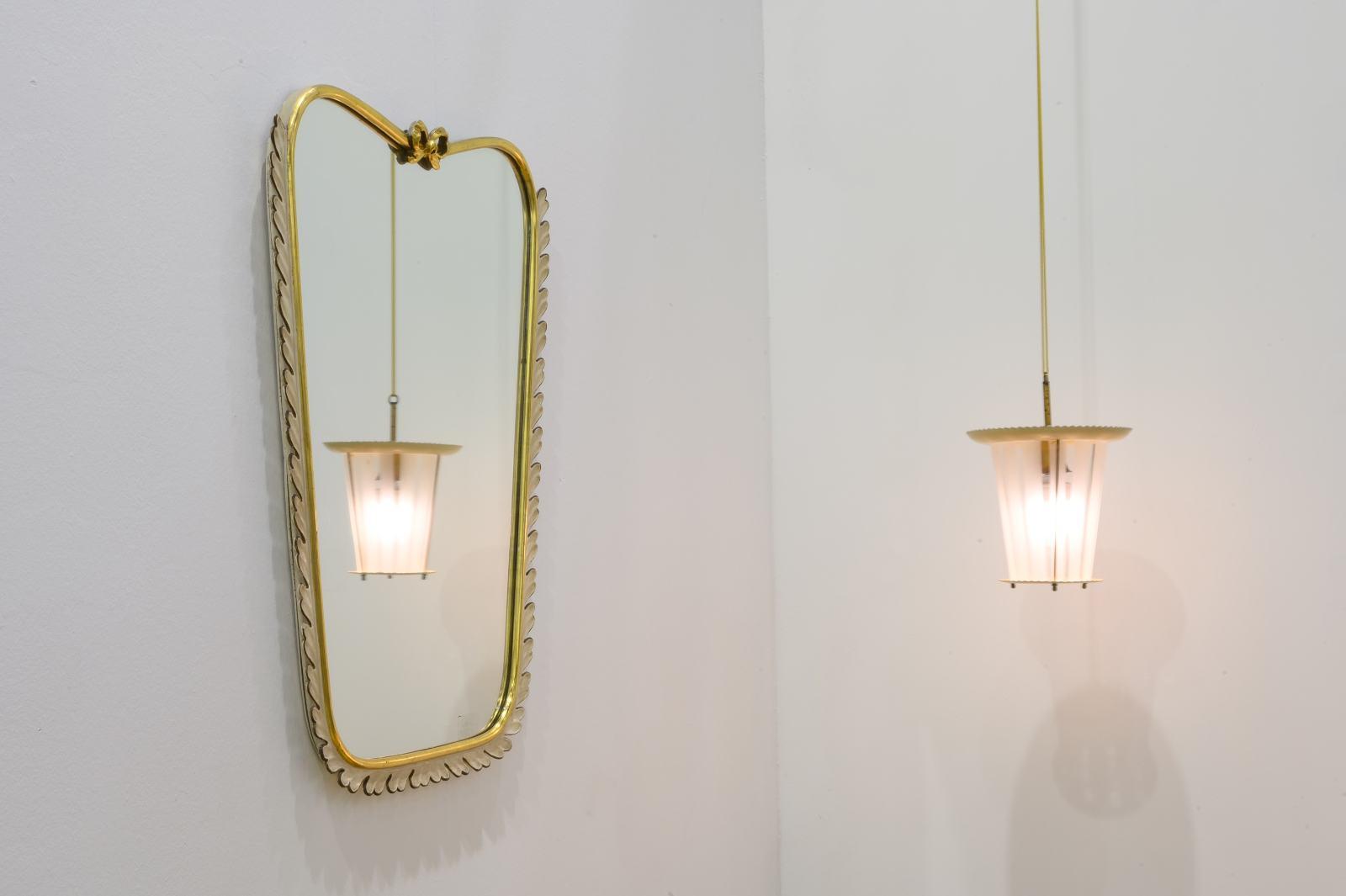
Paulo Buffo, ‘Mirror’, 1954; ‘Lantern’, circa 1950
COURTESY: Eredi Marelli
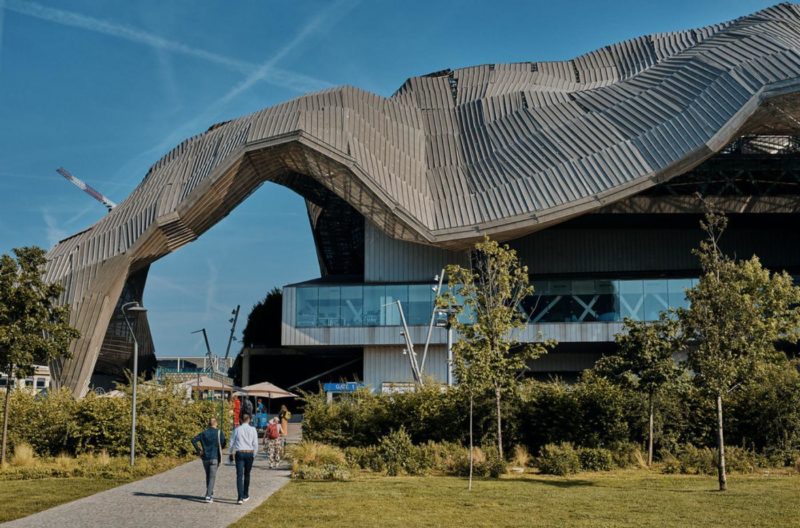
AS THE FASHIONABLE crowd of Milan queued in spring sunshine to access the VIP day at miart’s new venue, there was understandable nervous anticipation. The fair is smaller than it was last year, and while fair director Nicola Ricciardi notes the advantages of being a slimmer fair – 160 galleries as opposed to last year’s 180, in a more attractive but more compact location – he also acknowledges the uncertain global situation. Moreover, whilst the overlapping of miart with the second edition of Paris Internationale Milan represents a welcome enriching of the local scene, it is undoubtedly competition for galleries eager to catch the eye of Milan’s collector community and recently arrived wealthy foreigners.
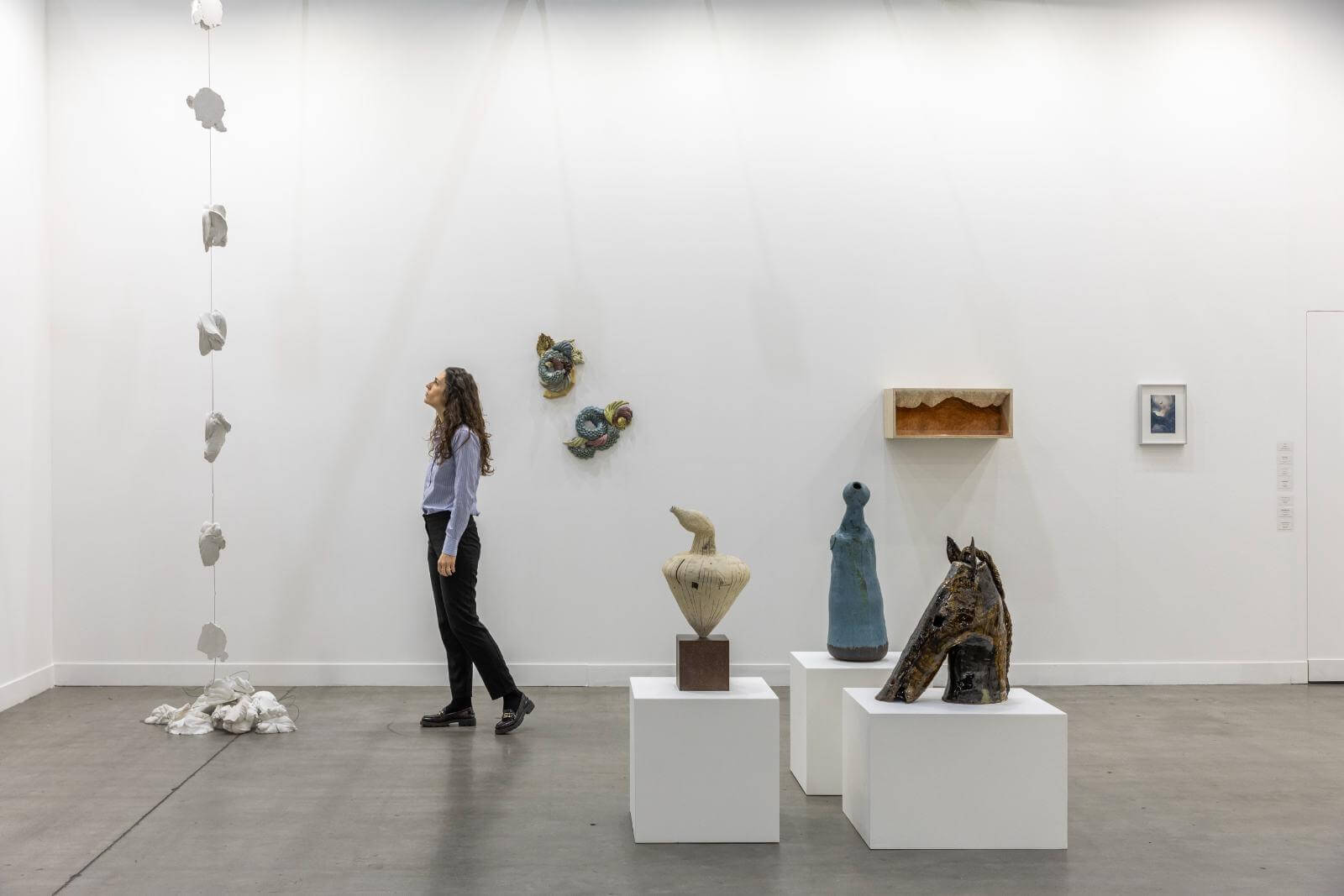
Installation view Galleria Massimo Minini at miart, 2026. Left to right works by: Paolo Icaro (hanging), Francesco Simeti (wall-hung, centre) and Phoebe Collings-James (foreground)
COURTESY: Nicola Gnesi studio
The new location also offers the challenge of operating on three floors, with three distinct sections. Younger galleries, offering curated booths are placed at the entrance to the fair; established galleries mounting conventional booths on the lower ground; and on the top floor, a spacious, high-ceilinged area has been reserved for more extensive thematic displays, by such international big names as Ben Brown Fine Arts and Tornabuoni Arte. But as Ricciardi commented on a quick early tour, “Just to cut and paste what had been done before would not have been the way to approach these difficult times.”
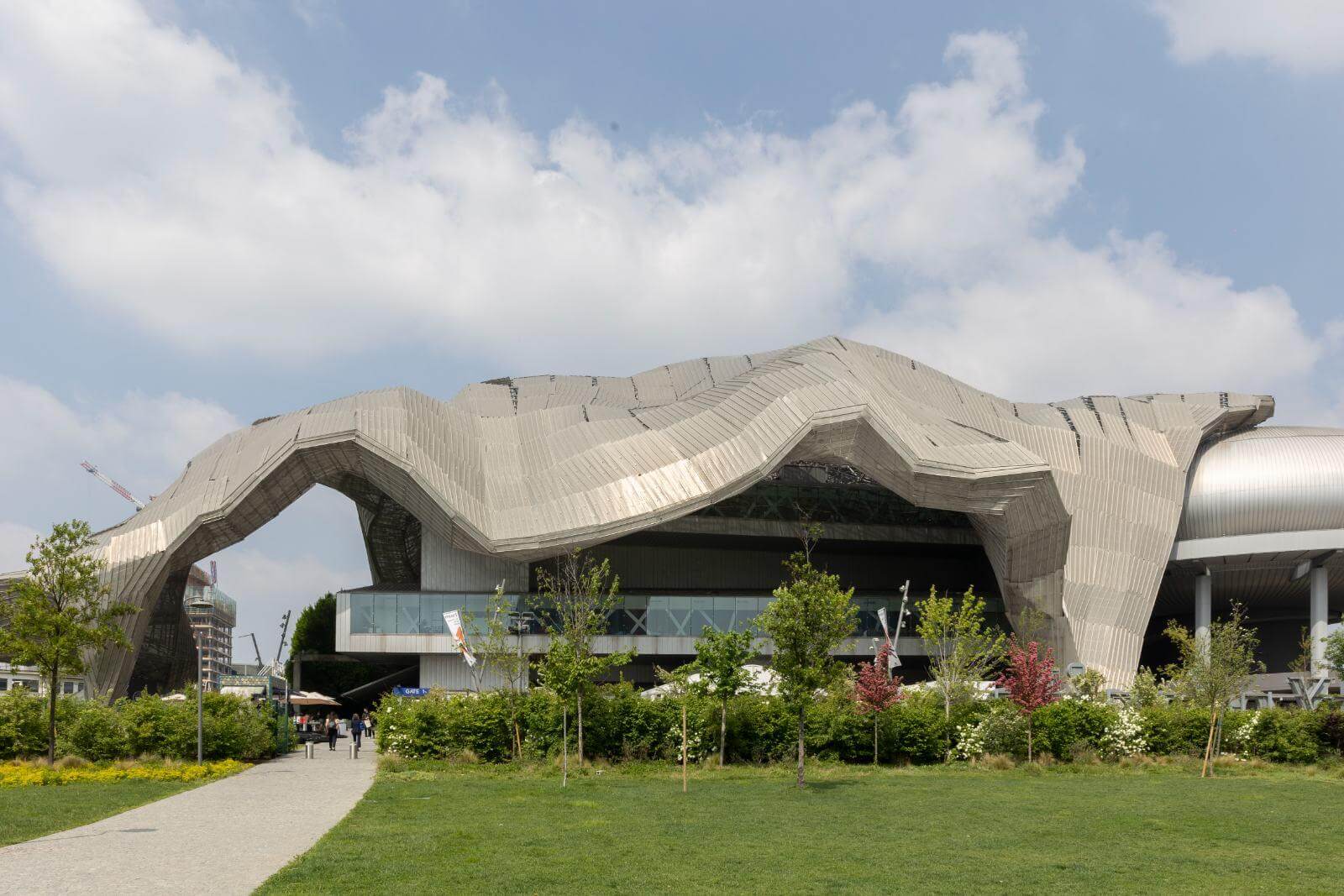
South Wing, Allianz MiCo
COURTESY: miart
The 40% International, 60% Italian make up of the fair – together with the mix of older and younger galleries – is a way of building resilience. As Ricciardi puts it: “Come for what you know, discover what you don’t know.”
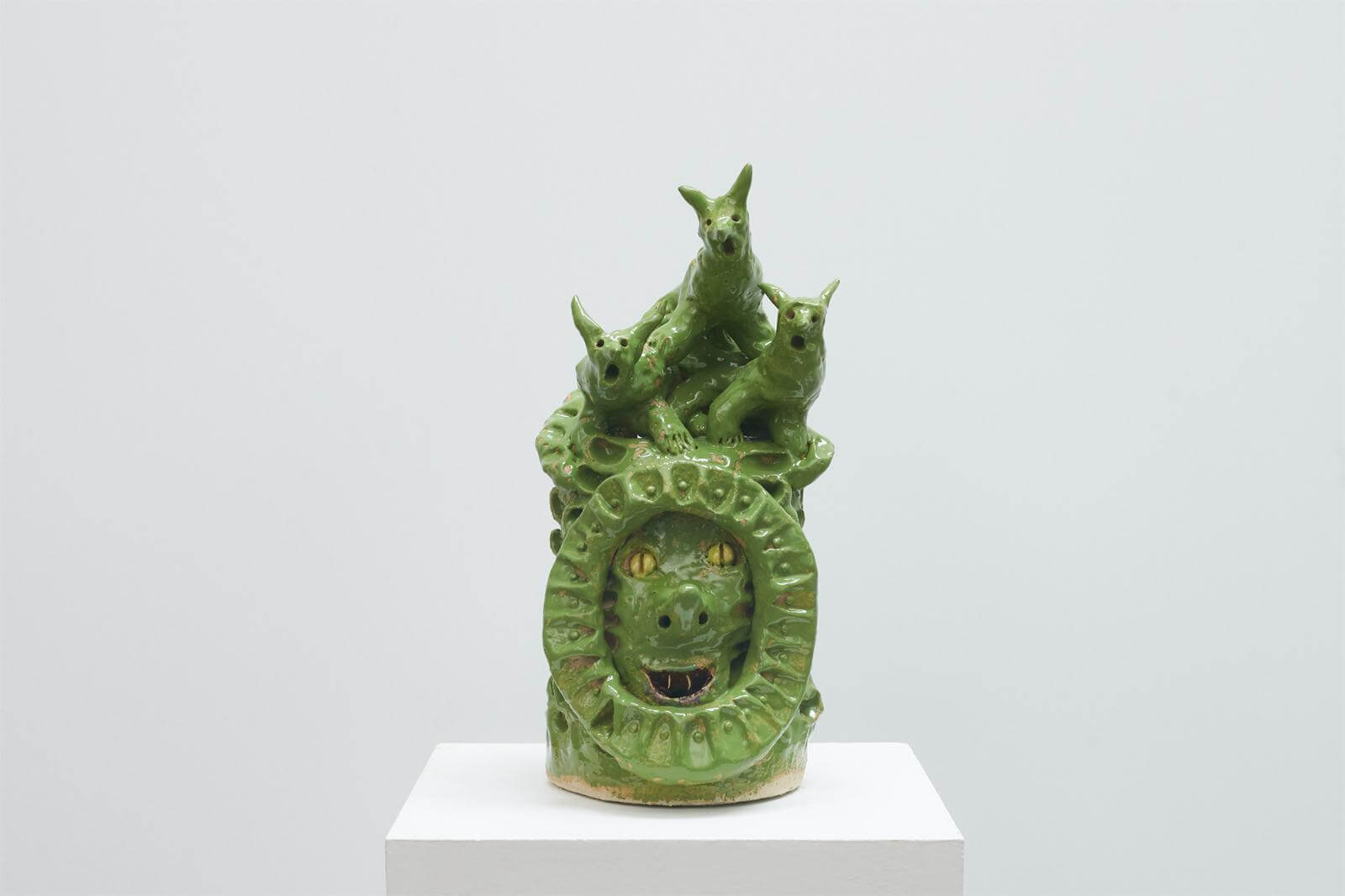
Frederik Næblerød, ‘Identity I’, 2025
COURTESY: Frederik Næblerød and Alice Folker Gallery / PHOTOGRAPH: Alice Folker Gallery
The separation of Emergent, Established and Established Anthology allows for different kinds of curation and consequently enables different kinds of conversations between visitors and gallerists. Meanwhile, the tenuous theme of Jazz, which links this year’s miart – entitled ‘New Directions’ – to John Coltrane’s 1963 album of the same name does at least allow for a fertile mix of genres, materials and eras: from early twentieth century portraiture to contemporary sculpture and installation; from photography to ceramics; from ephemeral preparatory drawings to considered design; and from twentieth century masters such as Lucio Fontana or Alighiero Boetti, to today’s youngest mixed-media practitioners.
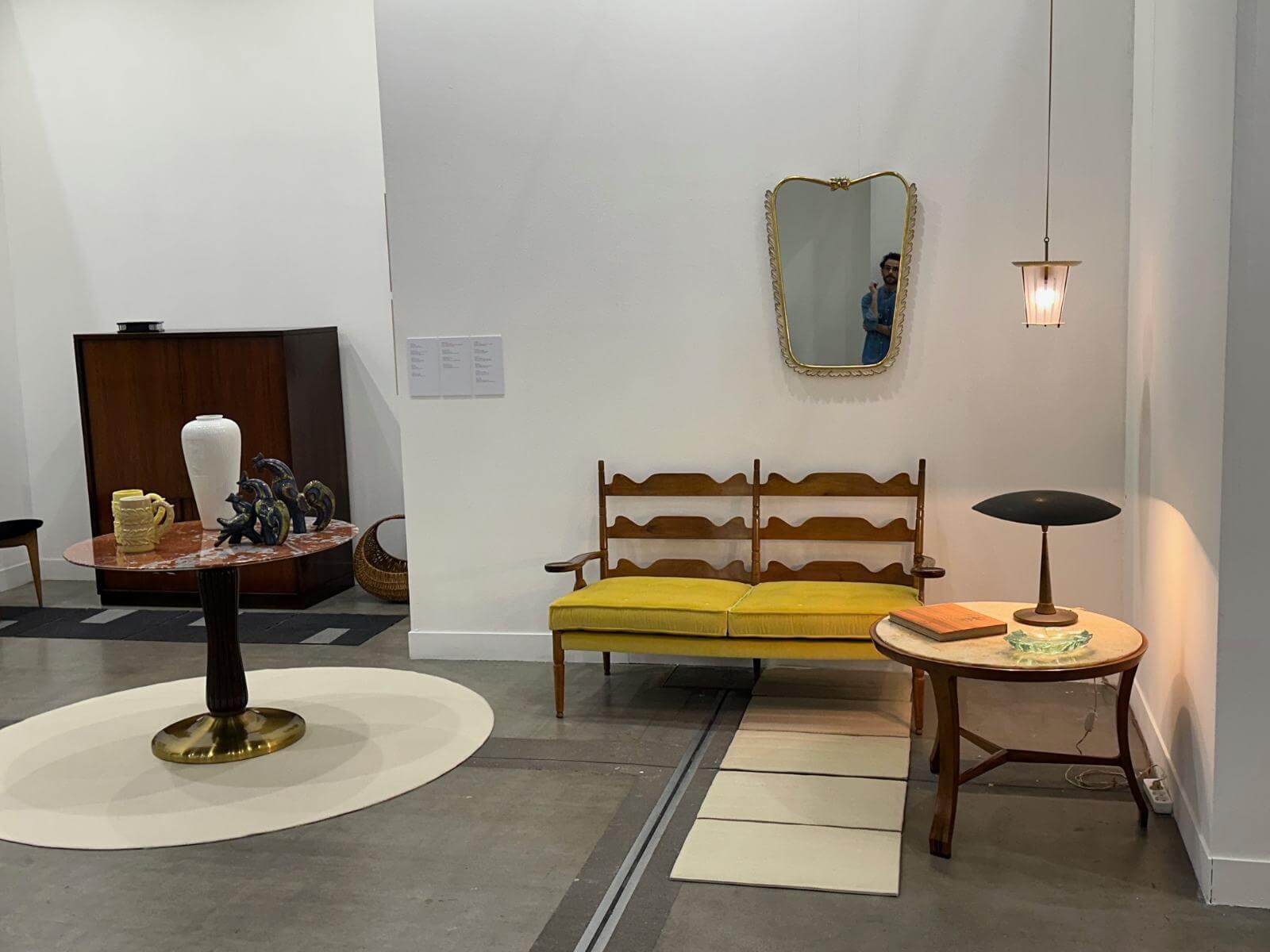
Installation view Eredi Marelli, miart 2026
We went to press too early to report on sales, but certainly, on preview day, there was plenty to provoke thought and draw the eye. This is a quintessentially Milanese fair, appealing to an audience steeped in the city’s design history and accustomed to a way of living where art and design have, for generations, been brought together in the home. It is therefore inevitable that besides the dedicated design galleries, there are also many art galleries showing work in glass, ceramics or textiles. This included Ed Gallery, from Piacenza, showing a glass piece from Venini by Elena Cutolo and an elegant blue ribbed vase from 1928 by those other Muranesi masters, Fratelli Toso – as well as Galleria Carlo Virgilio & C. showing a green vase designed by Carlo Scarpa for Capellin & C. (circa 1928-30).
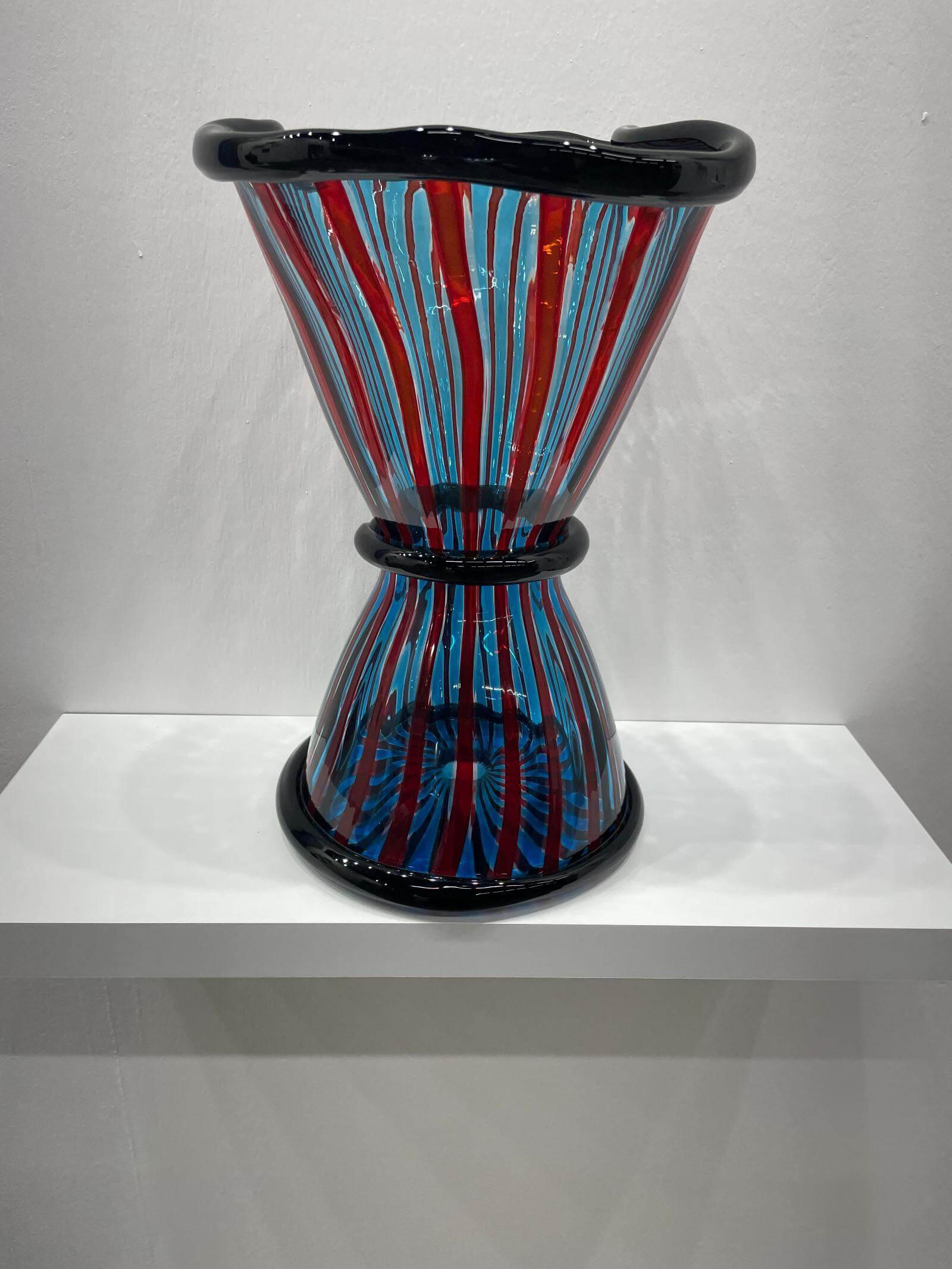
Elena Cutolo, ‘Vaso Rosa Tea’, 2004
COURTESY: Elena Cutolo & Ed Gallery Piacenza
Meanwhile, three of London-based Phoebe Collings-James’s recent highly expressive ceramic sculptures were on view with Galleria Massimo Minini, alongside two wall-based ceramics pieces by Francesco Simeti from 2024. There were also rare treats in the design on view: from the subtle, gentle elegance of the Paolo Buffa display at Eredi Marelli, to the striking outside lanterns of Paul Dupré Lafon (from 1952) at Robertaebasta.
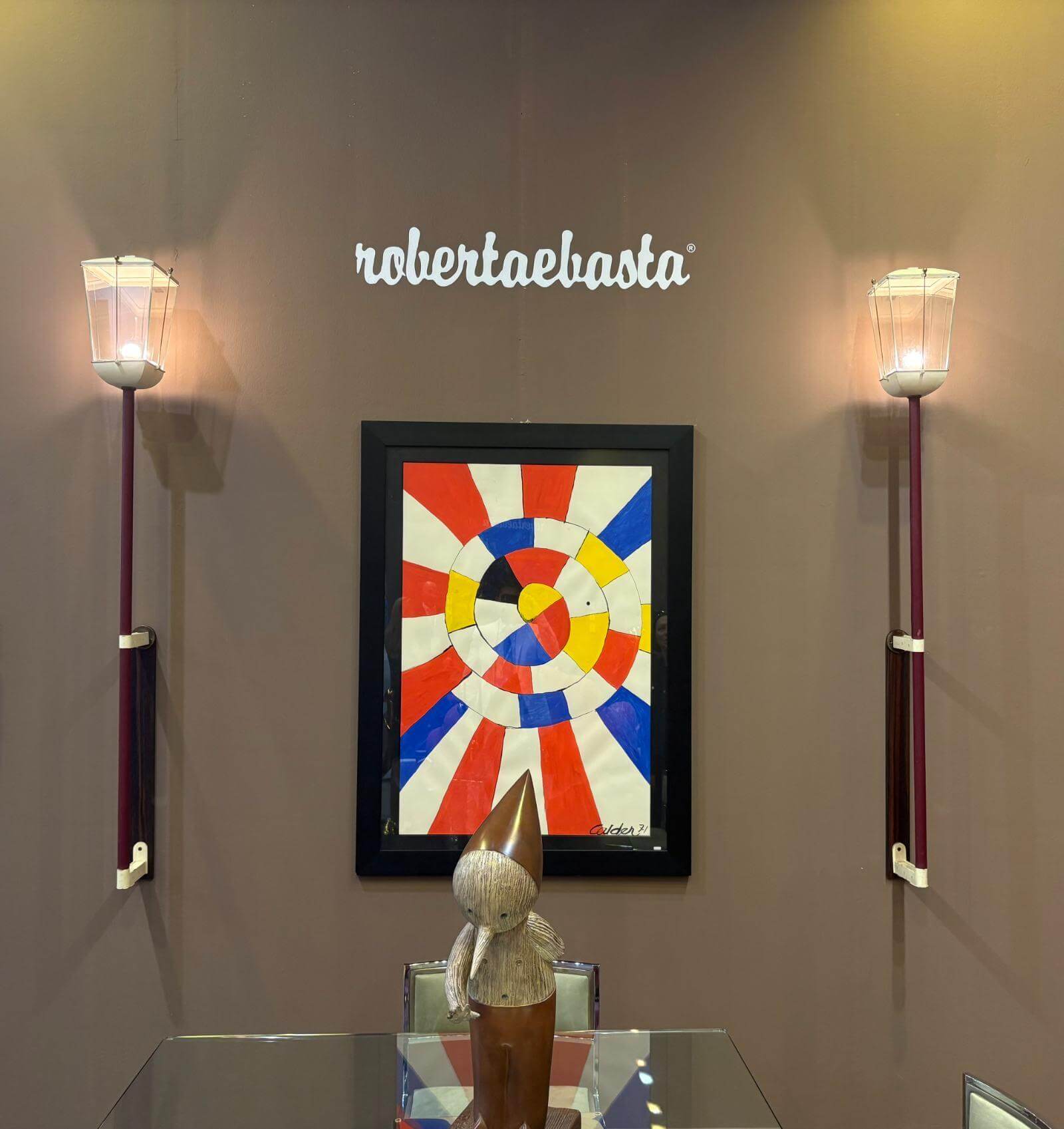
Installation view Roberaebasta, miart 2026, with Paul Dupré Lafon pair of wall lamps in leather, metal and glass, 1952
Luisa Delle Piane turned her design gallery presentation of the sculptural pieces of Mario Ceroli and Andrea Branzi, with some intriguing embroidered wooden vases by the team of architect Massimiliano Locatelli, design director of Prada, Fabio Zambernardi, and embroidery crafter Graziano Giordani, into a meditation on the limits of the natural and the artificial – even teasing us with a fake grass floor.
Here we saw the very thin walls between the realms of design and conceptual art dissolve. What was then remarkable was to see how fused these domains appear in the works on display in the Emergent Galleries. These interesting shows by emerging contemporary artists demonstrate a complete creative freedom to range between design, craft, fashion, sculpture and performance, creating hybrid and ironic objects that might be furniture or sculpture, stage prop or found object. As the artist Concorde explained about her display of dysfunctional, discomforting, up-cycled found furniture with London gallery Ilenia, “I am crazy about furniture – it is the sense of utility, familiarity and comfort.”
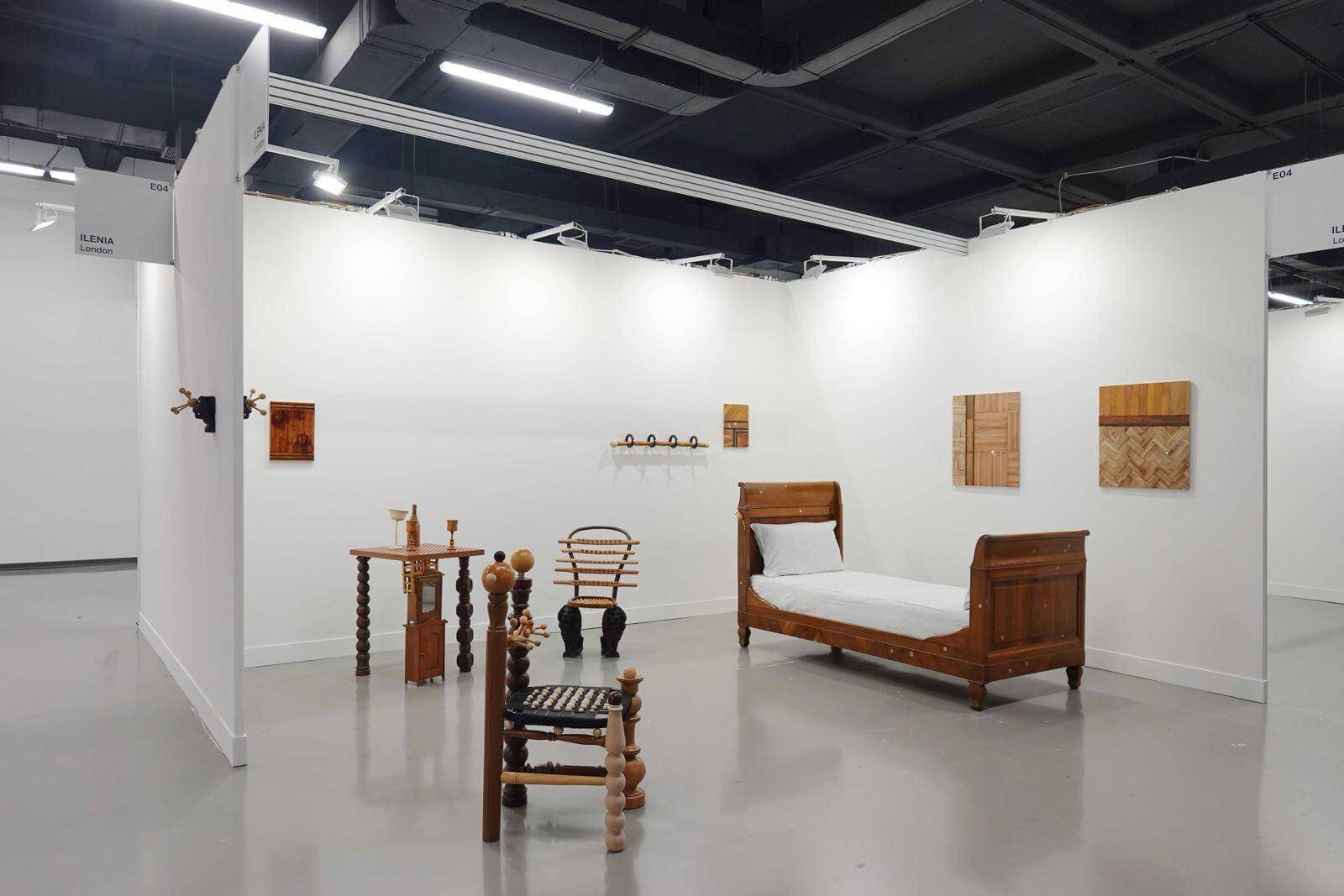
Installation view Concorde, miart 2026.
COURTESY: Concorde and Ilenia, London
Over the last five years, she suggests, since Covid, people have become much more aware of and attached to their home furnishings. The language of the domestic space, especially in relation to the human body, has become vivid and vital to a generation of artists. In honour of the noble lineage of furniture makers whose traditions she respects – but also disrupts – she has fixed a small carved wooden mouse to the bed in her display. It is an echo of the little carved mice that the nineteenth century Yorkshire craftsman, Robert “Mouseman” Thompson, used to carve on all his pieces, now highly sought after by collectors. The depth of her transformational imaginative engagement with furniture and its history is both poignant and thrilling. This was just one discovery of many on offer to the curious at this year’s miart.

Emma Crichton-Miller is Editor-in-Chief of The Design Edit.
View all articles by Emma Crichton-Miller