Paris Design Week / Review
Anna Sansom offers her highlights of the city-wide festival, where contemporary design confronts national heritage.
Paris
10th-19th September 2026
By Anna Sansom / 21st September 2026
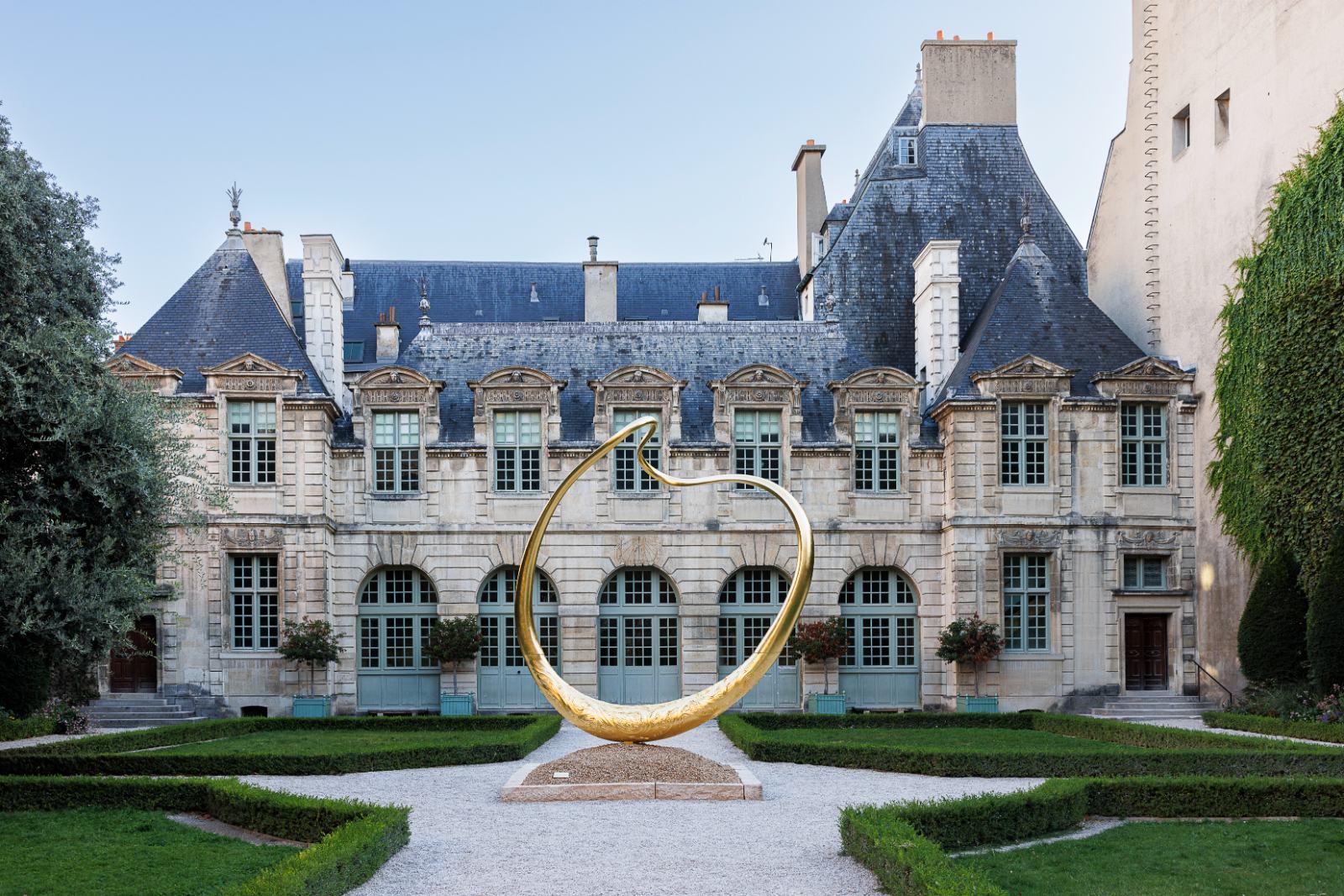
Joseph Walsh, ‘Fadó’, 2026 at Hôtel de Sully
COURTESY: © The Artist / PHOTOGRAPH: © Alice Casenave
A GIGANTIC, GOLDEN, twisted ring gleams in the sunshine in the gardens of Hôtel de Sully, headquarters of the Centre des monuments nationaux in the Marais district of Paris. It belongs to Joseph Walsh’s ‘Magnus’ series and forms part of his exhibition, ‘Arcanum Formae’ (until 25th October). The lower half of the sculpture is cast in bronze and the upper section is oak, finished in gold leaf. Walsh has sought to evoke natural patterns – such as those found in tree rings and sediment – by creating undulating thumbprints in wax. These “gestural drawings”, emphasising man’s relationship to nature, glimmer on the sculpture’s base. “A lot of the inspiration came from the outdoors and how a tree grows and erodes in nature,” the Irish designer told The Design Edit. This third ‘Magnus’ work, each being site-specific, was unveiled during this year’s Paris Design Week.
Inside the Orangery there are three virtuosic display cabinets that Walsh has made for a Hong Kong collector. The sinuous organic forms recall huge shells, while the painterly marks are evidence of how the burr ash became ill or damaged over time. The desk and table similarly convey Walsh’s sophisticated mastery of wood through deftly executed swirling lines.
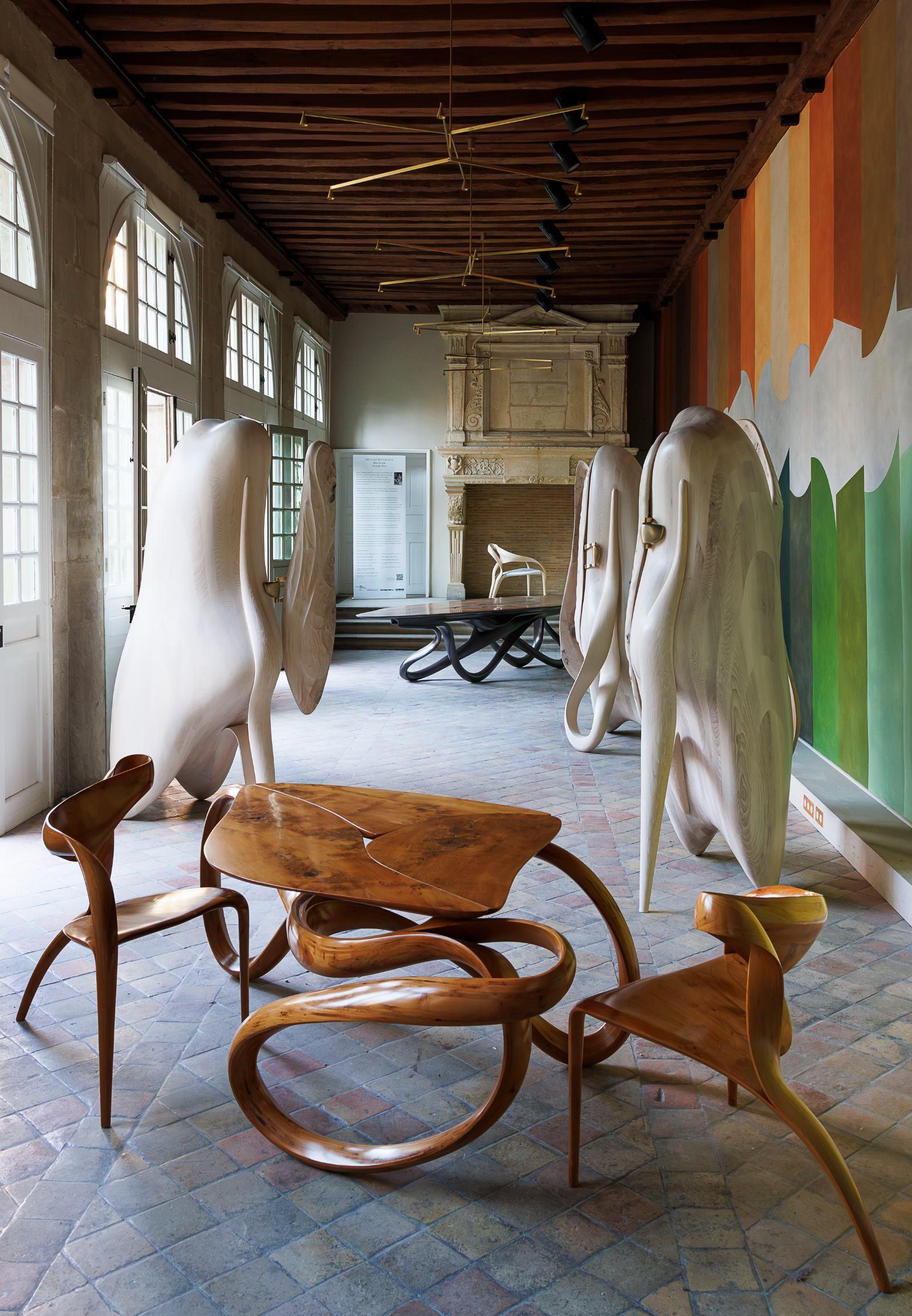
Exhibition view, Joseph Walsh ‘Arcanum Formae’ at Hôtel de Sully, 2026
COURTESY: © The Artist / PHOTOGRAPH: © Alice Casenave
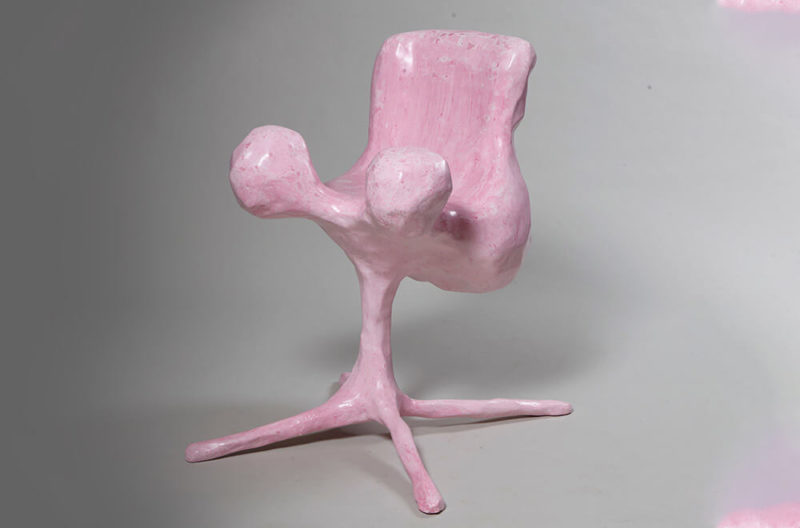
This 16th edition of Paris Design Week saw temporary installations at several other prestigious national monuments, including the Arc de Triomphe and the Grand Palais. Some are still in situ. In a high-profile take-over, Jérémy Pradier-Jeauneau’s exhibition ‘La Tempête’ (until 4th October) is installed on the first floor of the Arc de Triomphe. Contrasting with the stately style of the building, the French artist and artistic director presents pieces about everyday experiences that create a disruptive counter-narrative. The childhood memory of his grandmother pretending to read a magazine, whilst watching him clamber around, has inspired a whimsical installation with a ceramic chair and a parasol. A living room with velvet seating shaped like a crescent moon and pendant lights recalls a crown, while the bedroom’s drapery and flooring draw inspiration from the Arc de Triomphe’s historic tapestry. The placement of novels by Victor Hugo reminds visitors that the French writer’s body once lay beneath the site.
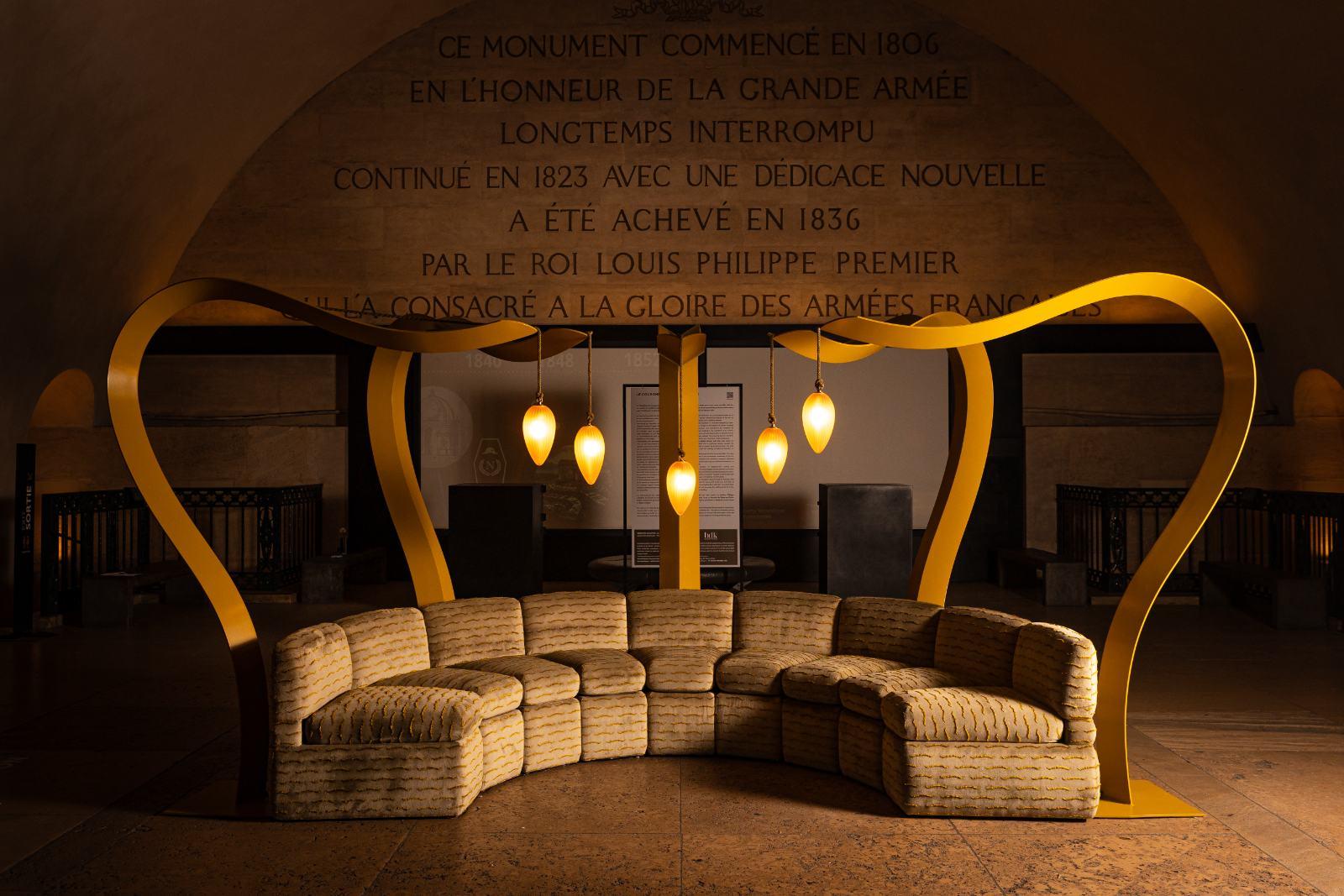
Exhibition view, Jeremy Pradier-Jeauneau ‘La Tempête’ at the Arc de Triomphe
COURTESY: © The Artist
Elsewhere, ‘Le Grand Bouquet’, a hybrid work at the intersection of sculpture and design, no longer on view, was installed in the splendid setting of the Grand Palais by the French collective, Uchronia. A majestic bouquet of pale pink metal flowers, created by expert metal-workers Atelier François Pouenat, towered beneath a vaulted window decorated with bronze foliage. Floral motifs on rugs laid across the circular terracotta beds, designed and made by bed brand Tréca Paris and upholstered by silk weaver Manufacture Prelle, paid homage to the ornate mosaic on the floor, while playing to the hilt today’s maximalist interior design trend.
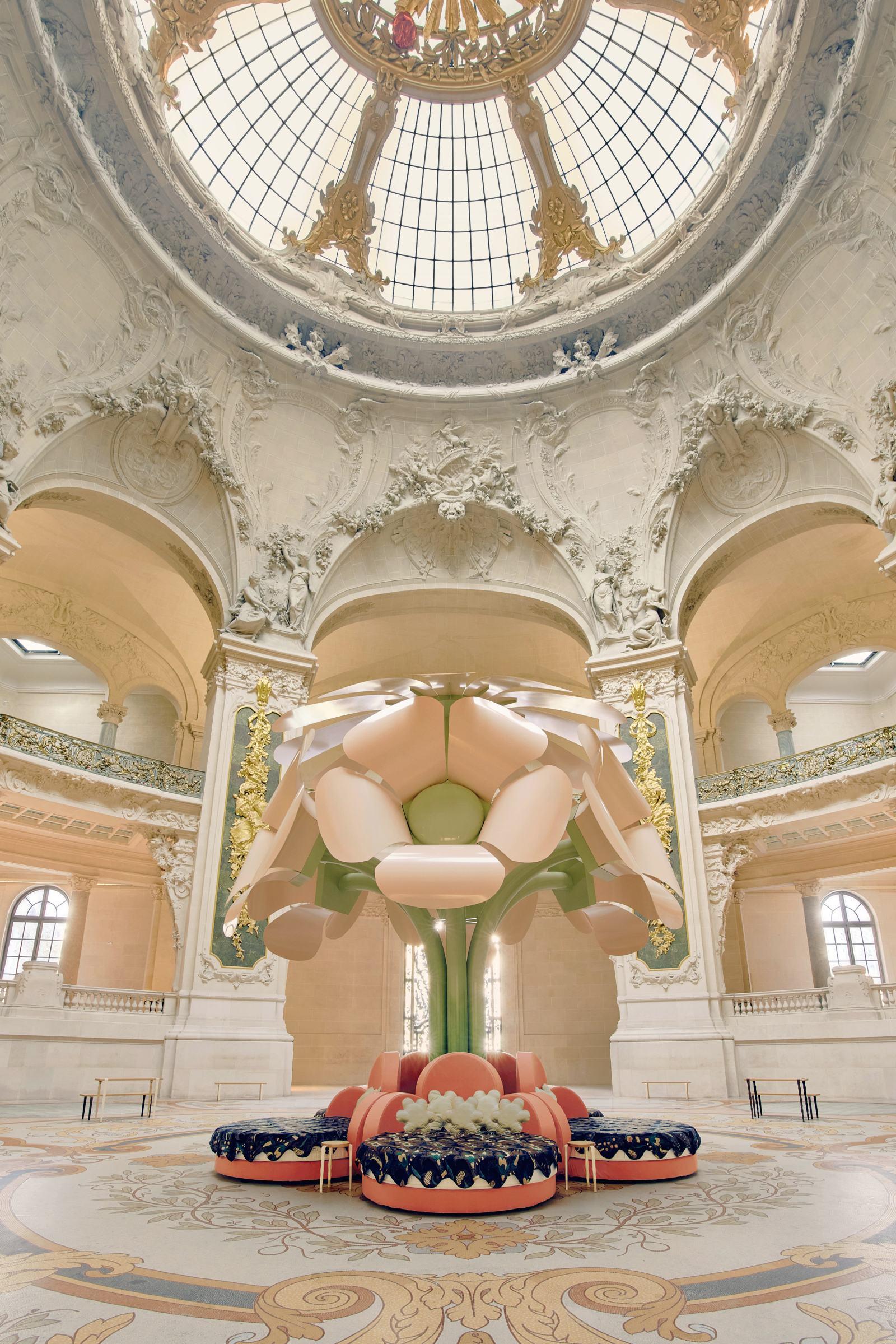
Uchronia, ‘Le Grand Bouquet’, 2026 at the Grand Palais
COURTESY: © The Artists / PHOTOGRAPH: © Romain Moriceau
Further exhibitions are located at the nearby Hôtel de la Marine, overlooking Place de la Concorde. Constructed by Louis XV’s architect Ange-Jacques Gabriel in the eighteenth-century, the institution was once the royal furniture storehouse, then the headquarters of the former marine ministry, before opening to the public with restored apartments and decorative arts a few years ago. The courtyard is dominated by ‘Astre Mobile’ (until 27th September), a sleek transparent “art car” with white seating and gold finishings by Antoine Tauvel, co-founder of Maison Lacmé. Attention to detail is revealed in the driftwood steering wheel, shell-embroidered upholstery and onyx wheels. “‘Astre Mobile’ was born from a very simple desire: taking a familiar, popular and joyful object, [Citroën’s] Méhari car, and asking to what extent fine craftsmanship could metamorphose it,” said Tauvel. “After two years of work, it finds itself in a place charged with history and savoir-faire, whilst retaining something playful and almost childlike.”
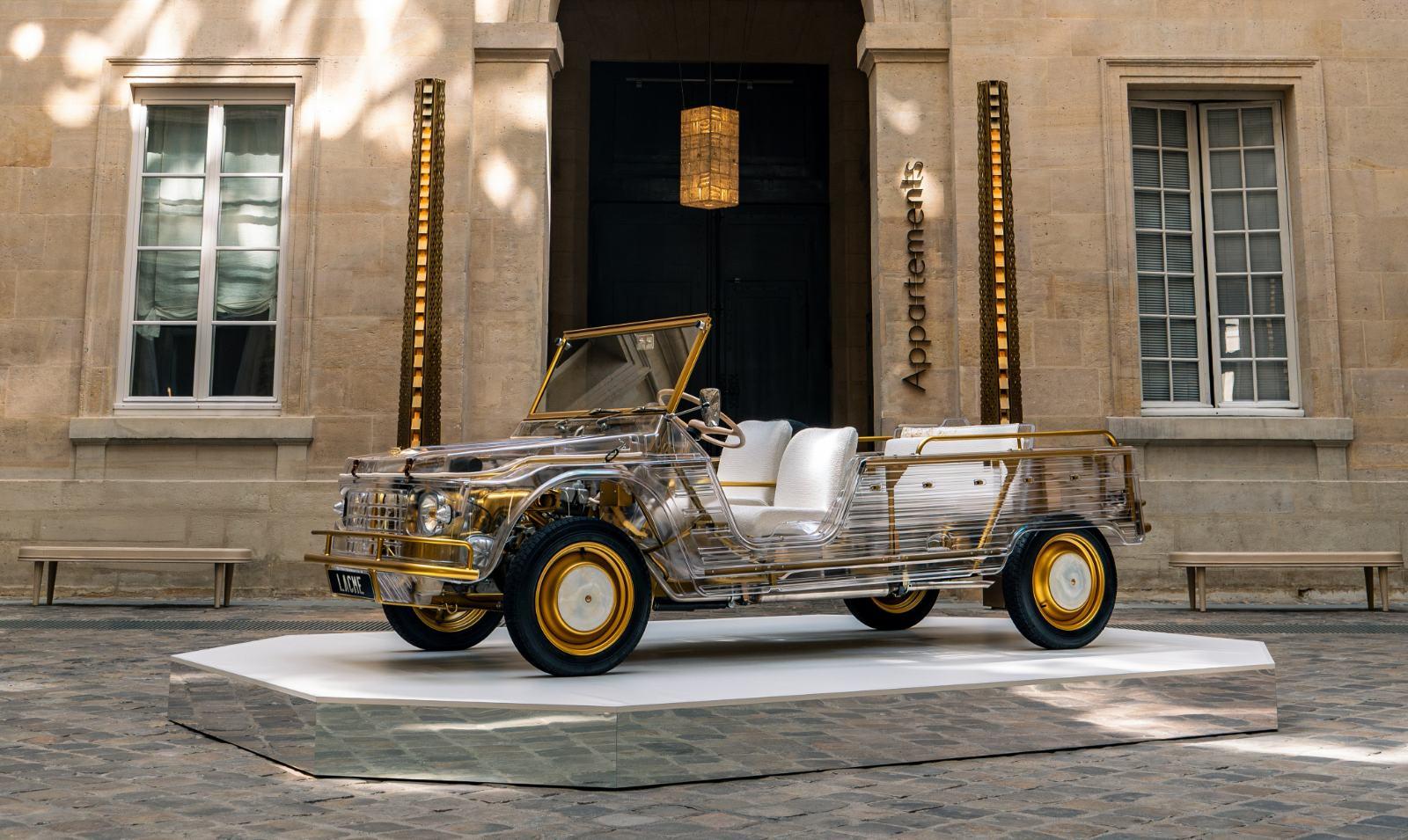
Maison Lacmé, ‘Astre Mobile’, 2026
COURTESY: © The Artist / PHOTOGRAPH: © Erald Vanbutsele
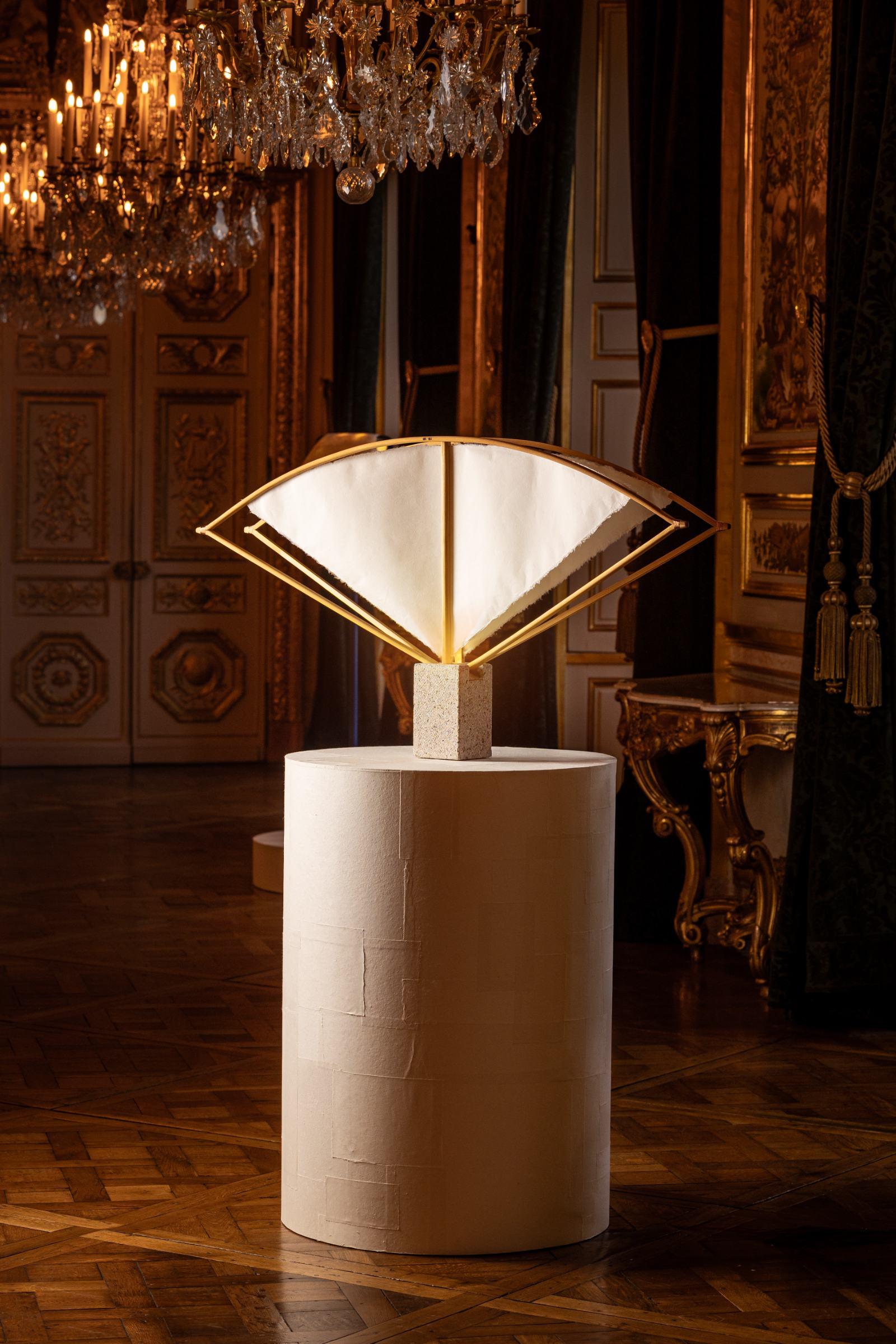
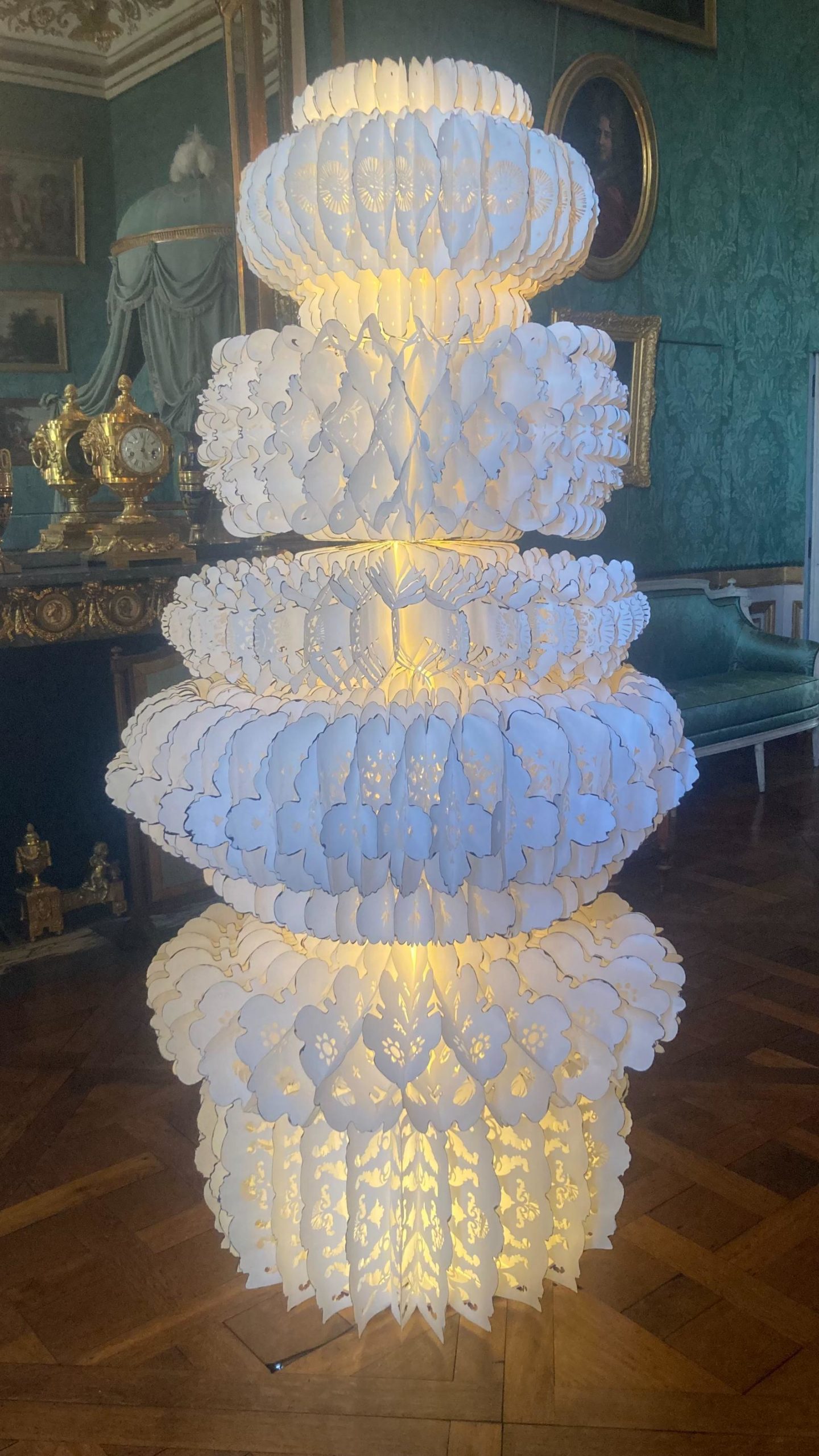
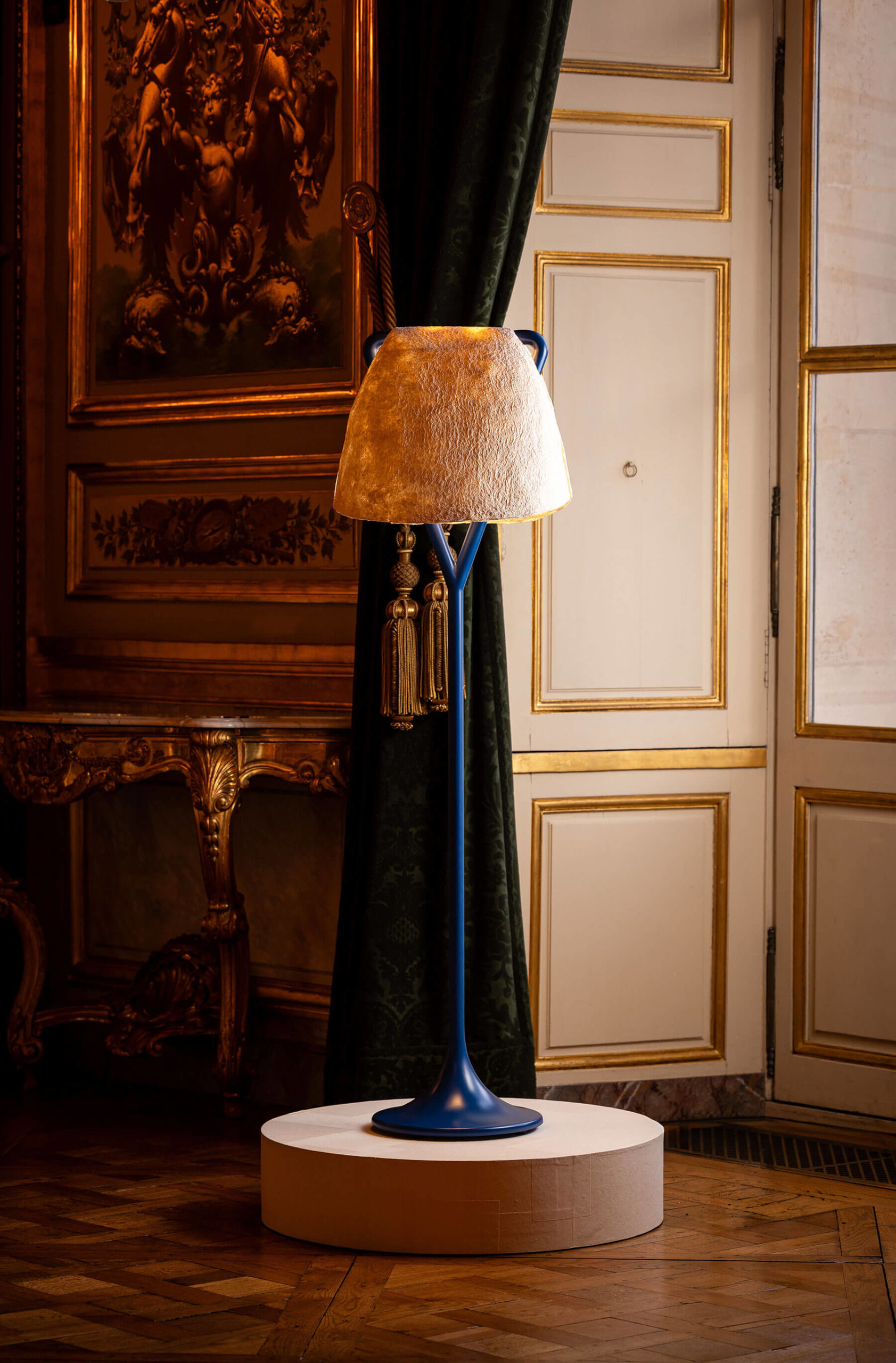
Dotted throughout the apartments are works from the ‘Hanjimania’ exhibition (until 27th September) – a dialogue between French and Korean designers through Korea’s traditional handmade paper, hanji. Six French designers teamed up with a Korean counterpart to make a piece. Pierre Yovanovitch collaborated with Ko Somi to create a textured lampshade for a standing light, ‘Lili’. Constance Guisset paired with Lee Sun on the ‘Bloom’ light, made from successive rolls of paper descending from a wooden arm. Meanwhile, Studio KO joined forces with Kim Woncheon to create the ‘Aube’ light formed from two sheets of paper held in an arch, the arrow made of light. Works by the Korean designers are also on view, such as Sim Jiseon’s garden-bookcase growing flowers and plants and Lee Sun’s ornamental, multi-tiered standing lamp.
-

-
Studio KO and Kim Woncheon, ‘Aube’ light, 2026 at Hanjimania in the Hôtel de la Marine
COURTESY: © The Artist / PHOTOGRAPH: © Arthur Minot
-

-
Lee Sun, ‘Ornament in Translation’, 2026 at Hanjimania in the Hôtel de la Marine
COURTESY: © The Artist / PHOTOGRAPH: Anna Sansom
-

-
Pierre Yovanovitch and Ko Somi, ‘Lili’ standing light, 2026 at Hanjimania in the Hôtel de la Marine
COURTESY: © The Artists / PHOTOGRAPH: Arthur Minot
The juxtaposition of contemporary design with French heritage continued at the Musée de la Chasse et de la Nature, a museum about nature and hunting. In the courtyard Harry Nuriev, named designer of the year 2026 by interiors fair Maison&Objet, installed a wide diversity of everyday objects, arranged in a grid, from a children’s bicycle to speakers and skittles. Sculptures of ducks and plates featuring poultry were a nod to the museum’s collection, while the non-hierarchical installation offered a modern twist on its curiosity cabinets.
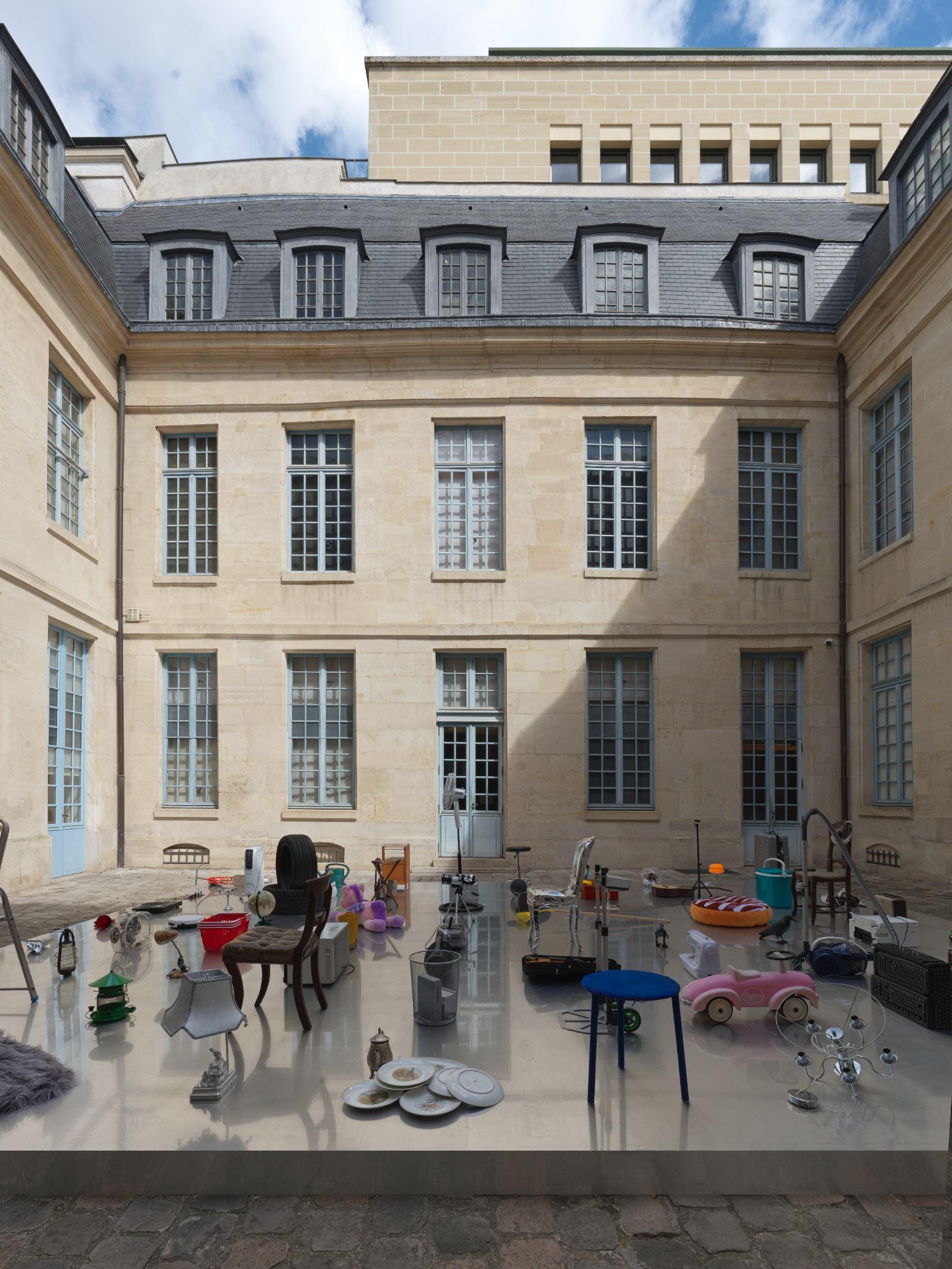
Harry Nuriev installation at the Musée de la Chasse et de la Nature
COURTESY: © The Artist
A few minutes away, the gardens of Hôtel de Rohan in the Archives Nationales played host to designer Pierre Renart’s installation, ‘Arabesque’ – a vast wooden arabesque that swooped into a bench on one side and a chaise longue on the other, forming an outdoor seating arrangement. From one angle, it gave the illusion of a Mobius strip; from another, it vaguely resembled an ampersand.
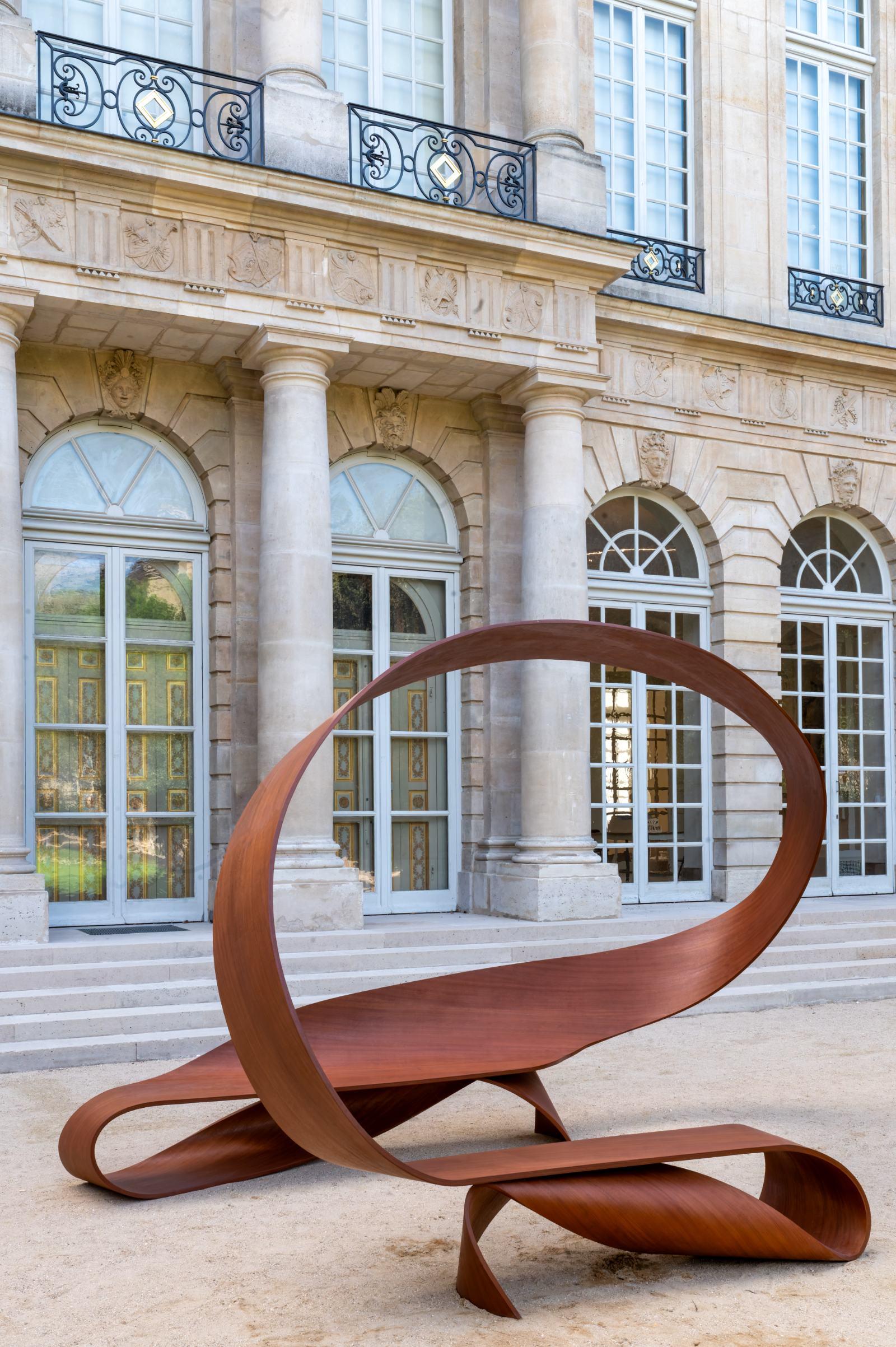
Pierre Renart, ‘Arabesque’, 2026
COURTESY: © The Artist & Maison Parisienne Galerie / PHOTOGRAPH: Benedicte Drummond
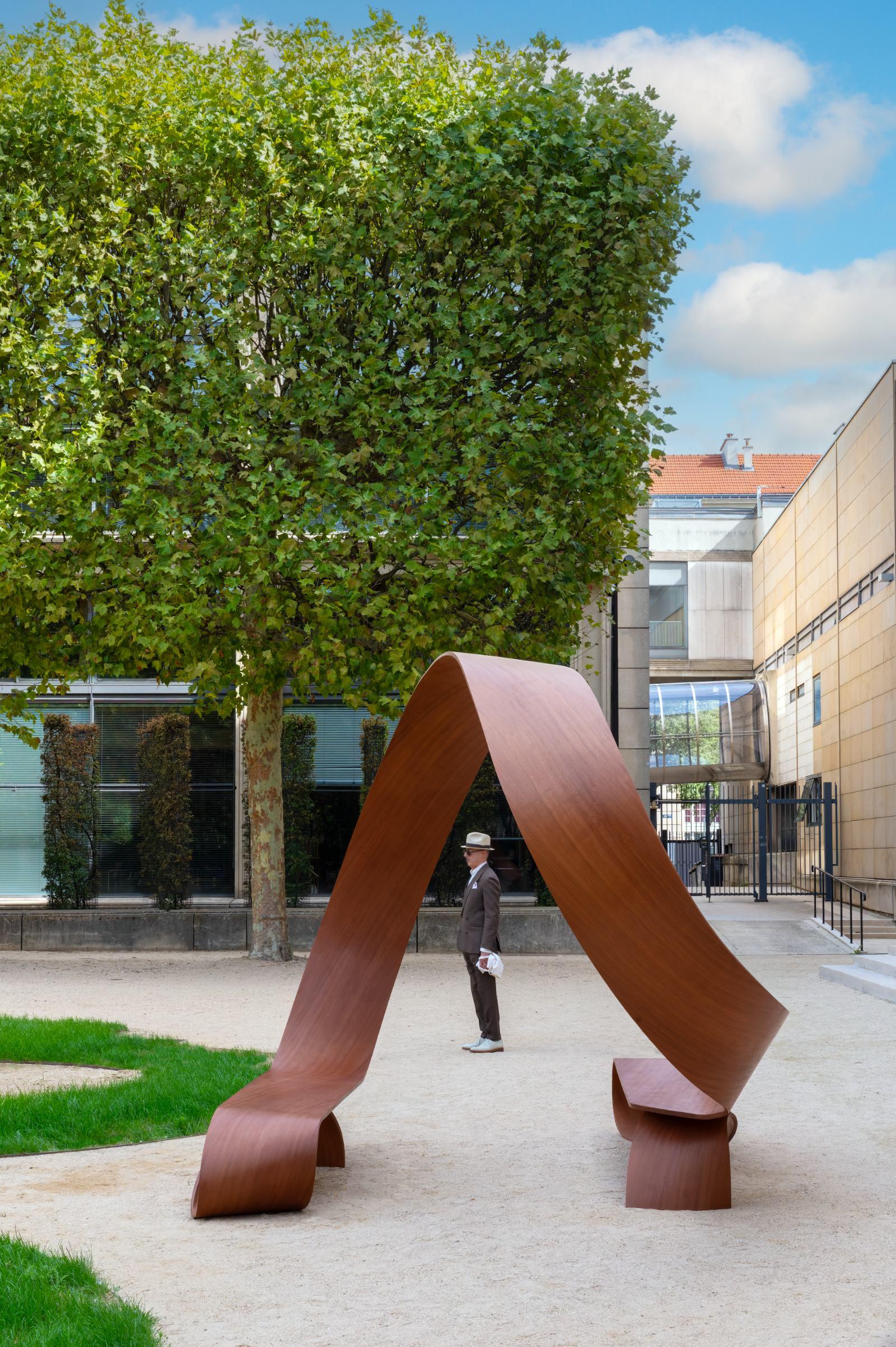
Pierre Renart, ‘Arabesque’, 2026
COURTESY: © The Artist & Maison Parisienne Galerie / PHOTOGRAPH: Benedicte Drummond
Also in the Marais, the Paris Design Week Factory – a laboratory for emerging talents – hosted designers across four sites. Two of the curators, Jean-Baptiste Durand and Simon Geringer, had made an open call for projects. “We were looking for edgy practices and a sincere interest in research,” Durand said. He cited Maud Rondot as an example. Formerly head of CMF (colour, material and finish) at Peugeot, she created totems with leftovers from prototypes that Durand praised as “total hybridity”.
Another innovative studio on display was Omnibite, founded by Eugenio Costa and Nicolò Tallone. The Milanese duo showed a newly invented, nifty three-axis joint system, inspired by the adjustment mechanisms of ski boots, which can be used to assemble pieces of wood and create furniture. “We wanted to build something that would make it easier for the user to assemble everything [they] want,” Costa said. The idea is to “shift the user’s attention to going outside into nature to find trees and create their own aesthetic”, he added.
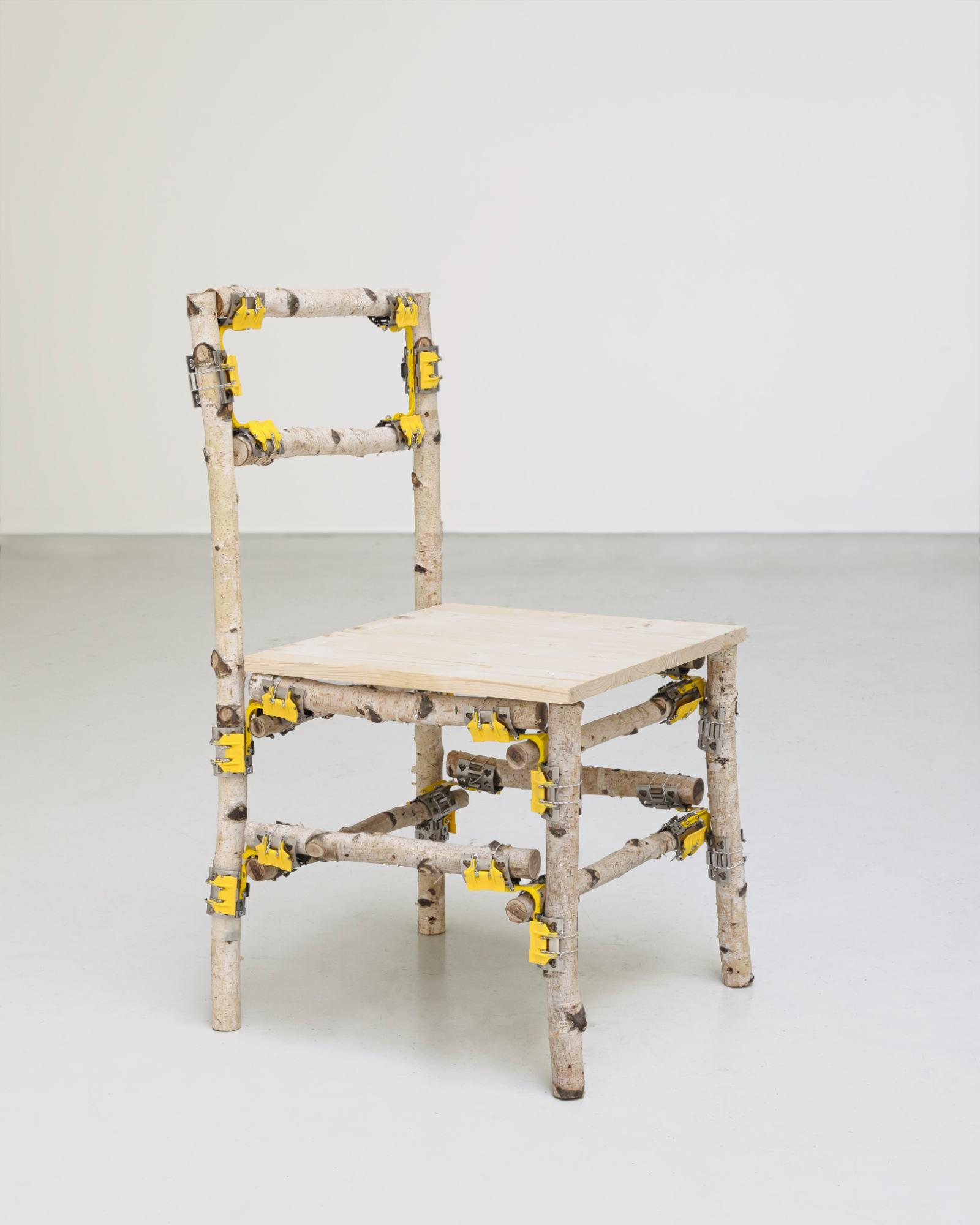
Eugenio Costa & Nicolò Tallone, ‘Omnibite’, 2026
COURTESY: © The Artists
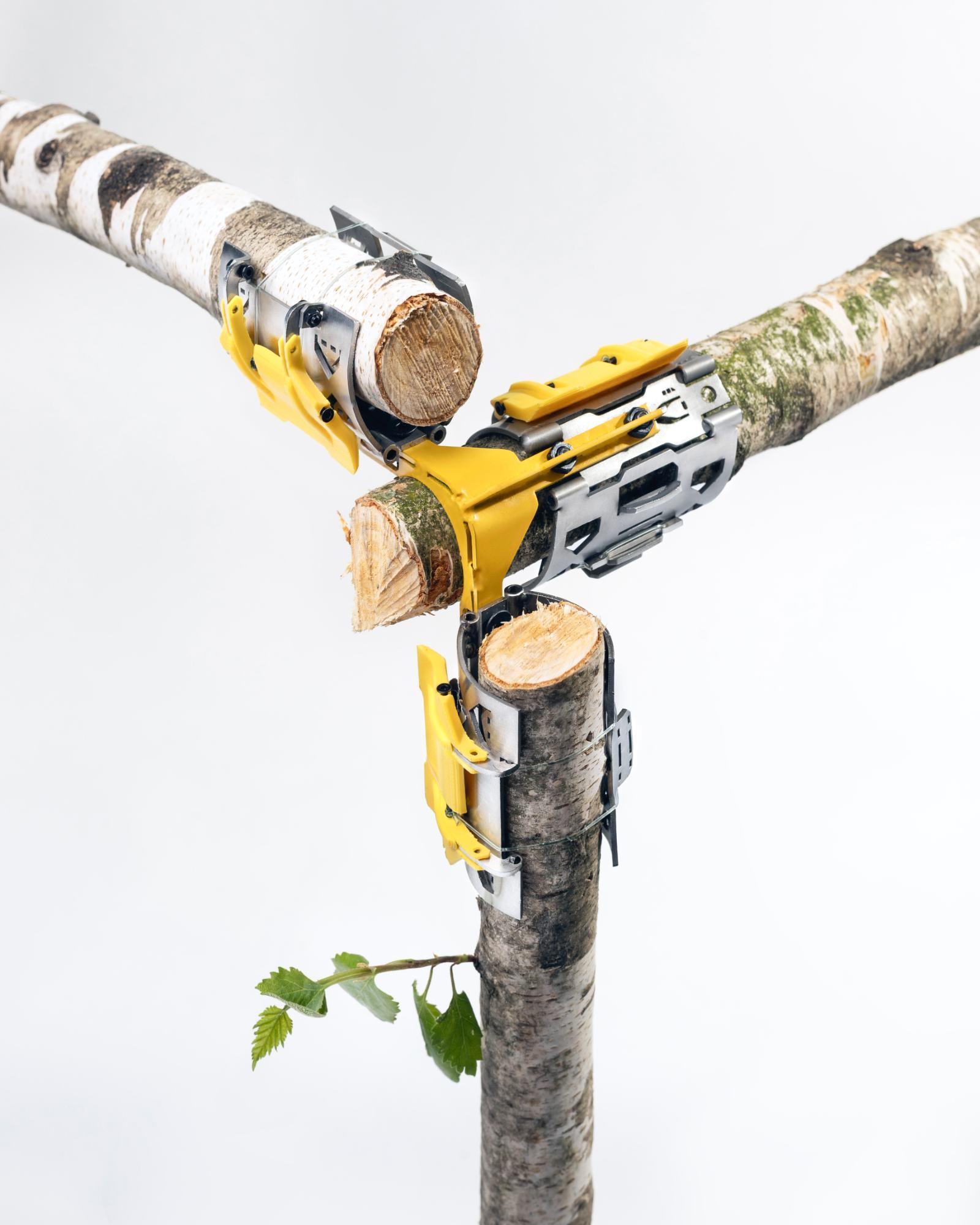
Eugenio Costa & Nicolò Tallone, ‘Omnibite’, 2026 (detail)
COURTESY: © The Artists
Other young makers and designers pushing the limits of materials included Paul Hardy, who has been exploring the technical characteristics of steel and natural reactions like oxidisation by heating and cutting it. His experiments have culminated in polished steel mirrors featuring irregular shapes in blues, browns and yellows produced by the heat. “It’s the material that dictates the pieces through an intuitive process,” he explains, indicating the tree lamp with plasma-cut holes.
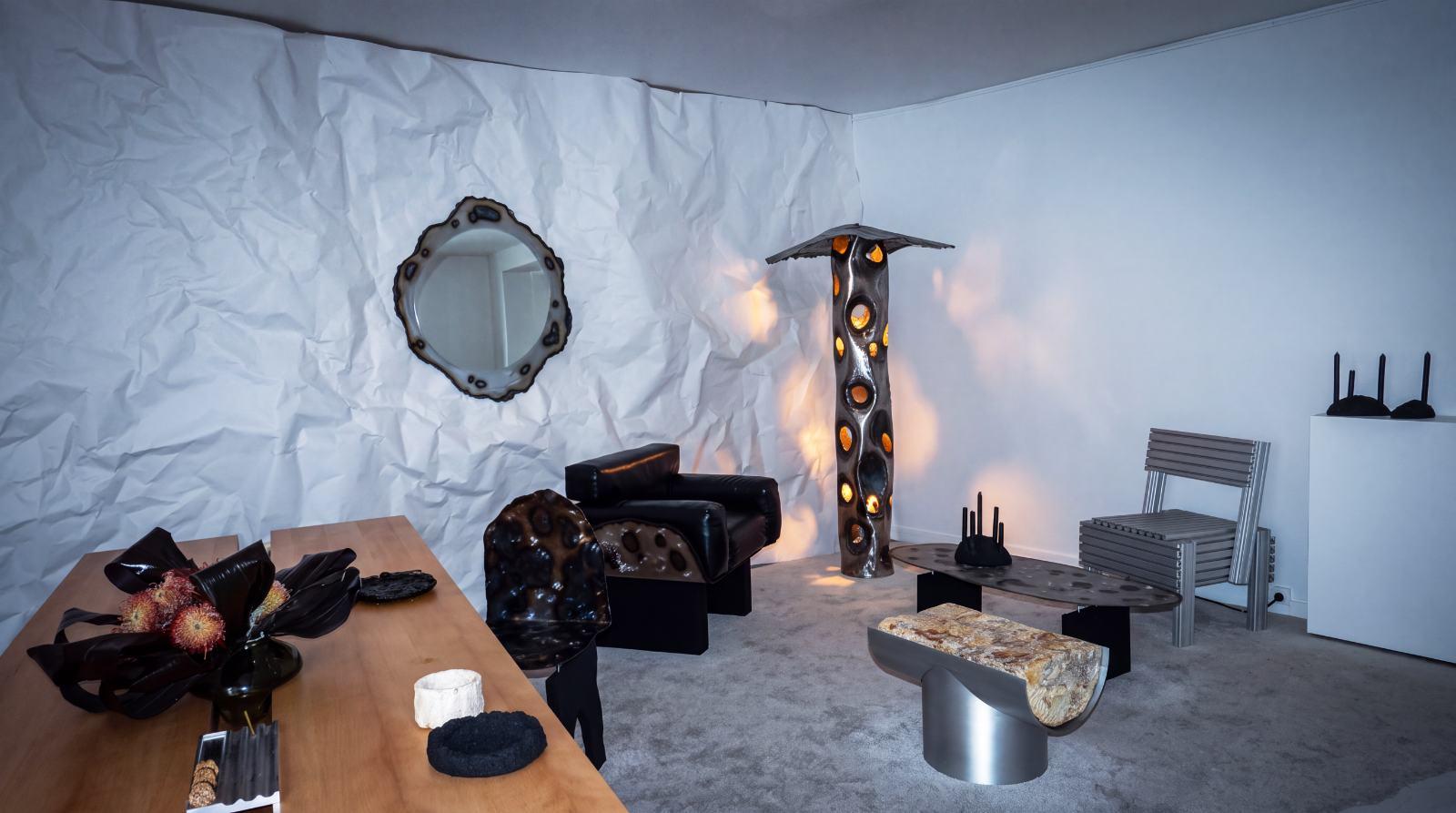
Exhibition view, Protoclub x Paul Hardy, 2026
COURTESY: © The Artists
Among numerous other ephemeral presentations, Āsār Studio, founded by Etienne Schmitt, composed an intimate interior of an imaginary collector entitled ‘one-of-a-room’. Meanwhile the curatorial platform DIG IN JAPAN set up shop in the chic rue Charlot, showing an eclectic selection of one of a kind objects, including Blandine Chabani’s black ceramic hand (the fingers are actually candle-holders), Vincent Capmartin’s lava stone vases, Luc Sciberras’s stool made from a horse’s skin and tail, and a rippling linen-fibre mural piece by textile artist Atjo.
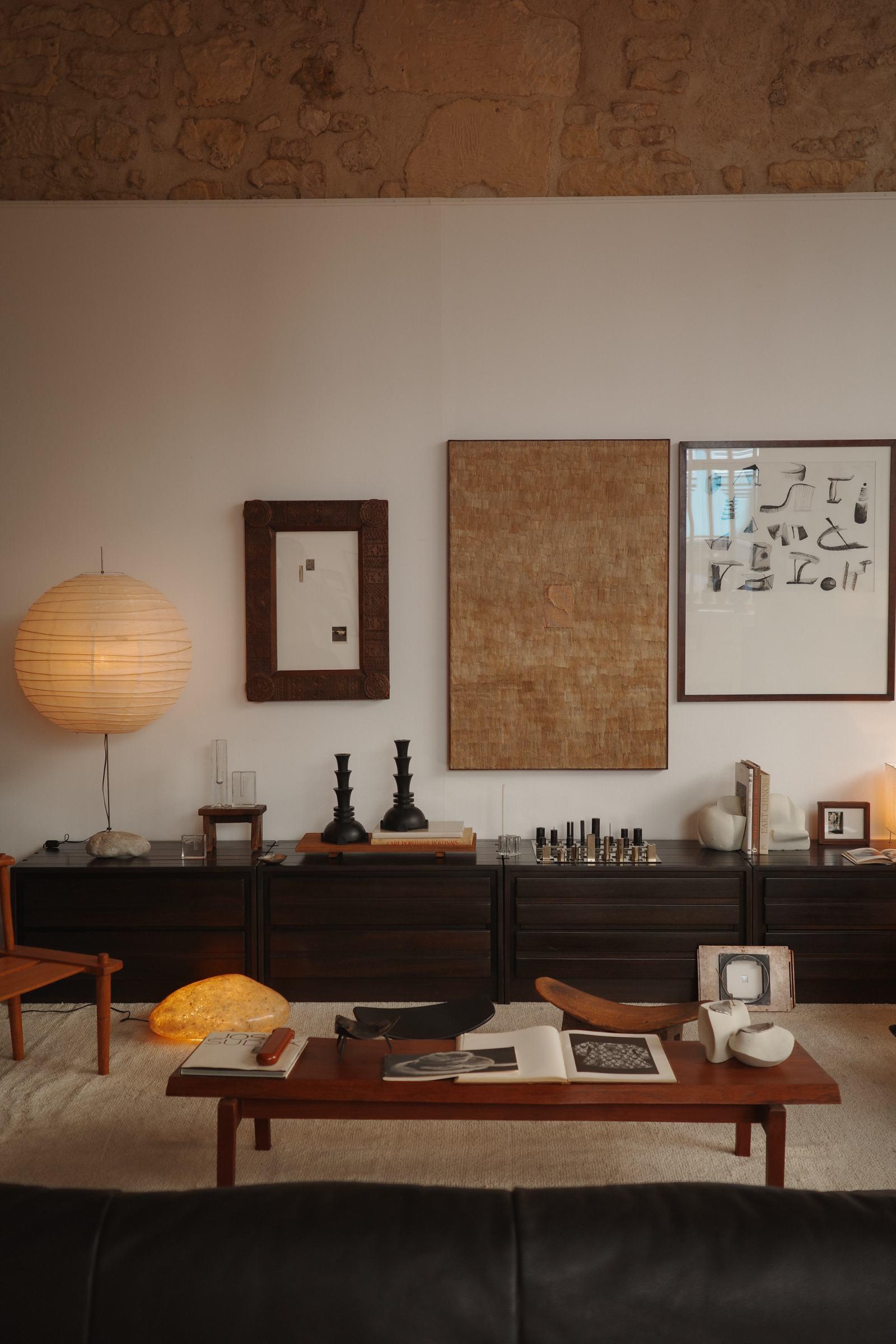
Exhibition view, Āsār Studio ‘one-of-a-room’, 2026
COURTESY: © The Artists
Around the corner was a presentation of Atelier Dupont, founded by Klaus Dupont who died last year, aged 83. His widow, Gundula Dupont, has put together an exhibition featuring some of the 100 pieces that he left behind. “He collected bronze objects, like lions and birds, that he found at flea markets and mounted them,” Gundula explained. Klaus would then add totems that he fashioned with pieces of Murano glass and other materials to create imaginative ornamental objects. It was an example of the multi-generational appeal of Paris Design Week.
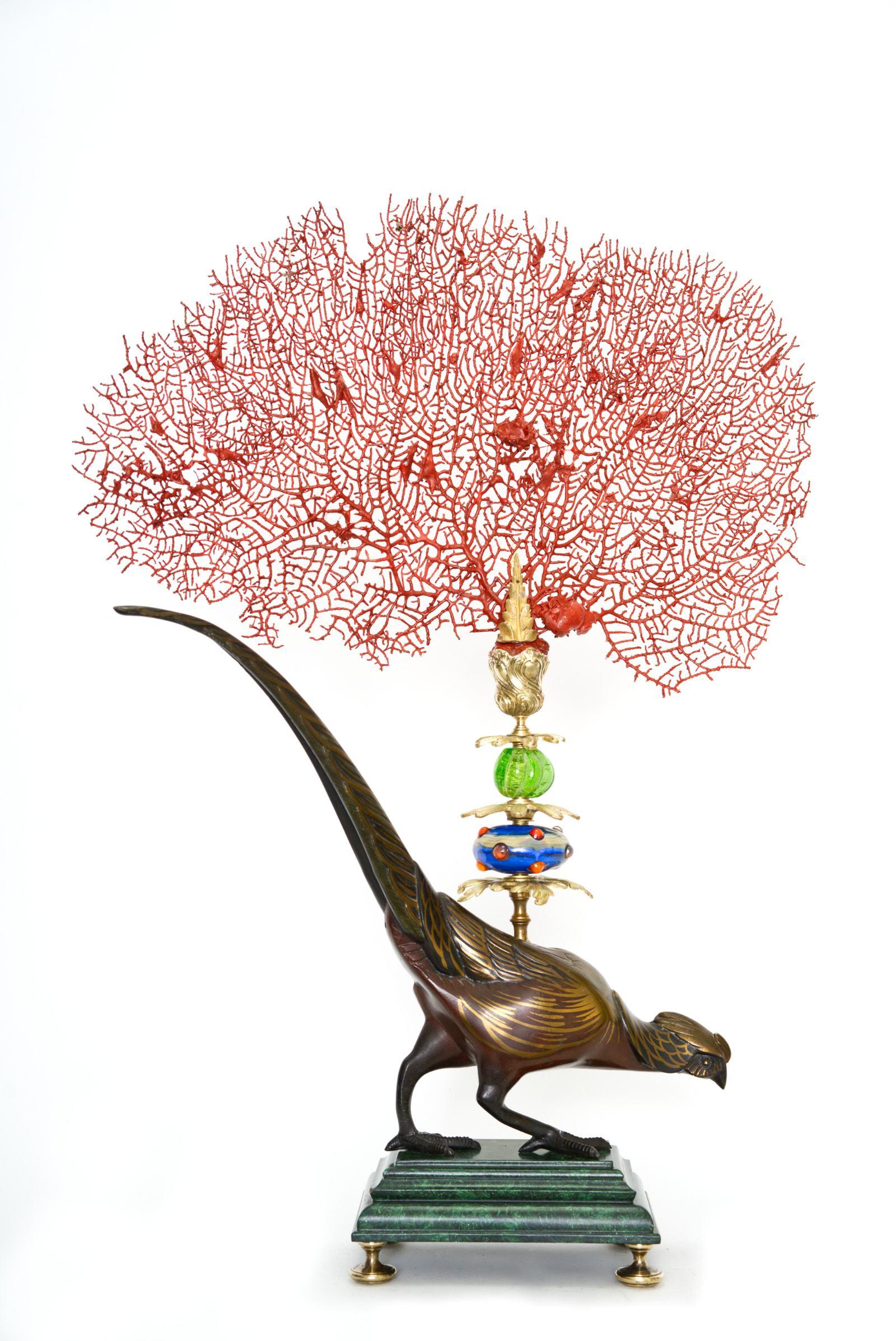
Klaus Dupont, ‘Pheasant with gorgonian’, circa 2000s
COURTESY: © The Artist

Anna Sansom is a British journalist, based in Paris, who writes about contemporary art, design and architecture.
View all articles by Anna Sansom