Collect 2026 / Richard McVetis
"From learning embroidery as a way of communicating – like a skill or a craft – I began to think about it as a way of thinking."
Collect 2026 at Somerset House, London
25th February – 1st March 2026
By Emma Crichton-Miller / 24th February 2026
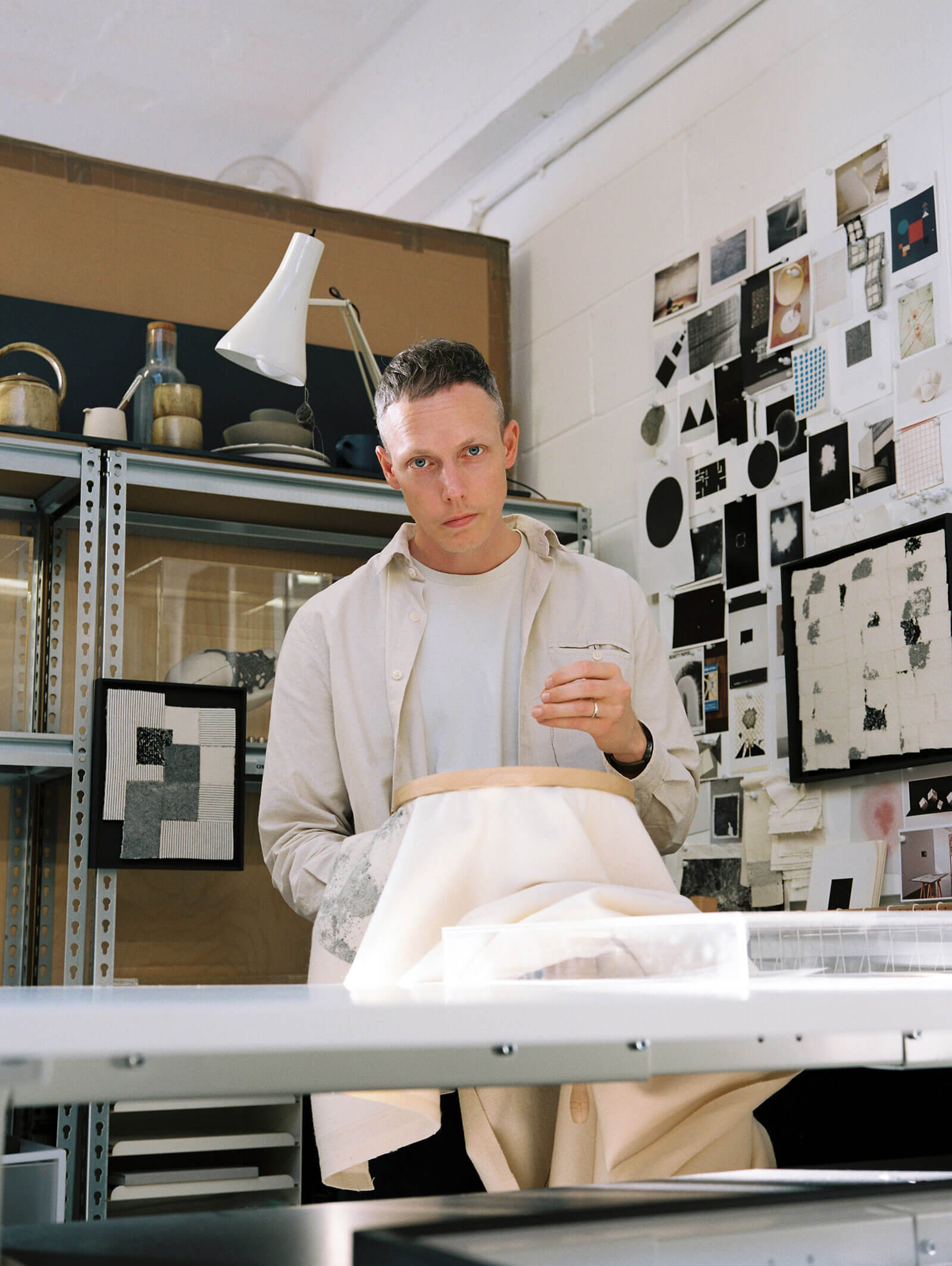
Richard McVetis
COURTESY: Richard McVetis / PHOTOGRAPH: © Yanis Angel
ON THE EVE of Collect Art Fair, TDE interviews the artist Richard McVetis. Currently interim Co-Head of the Textiles Department at the Royal College of Art, Richard has made embroidery a medium of formidable expressive power. In his hands, stitch becomes a marker of time and toil, as well as a means to probe his interests from outer space to microscopic details of the natural world. His beautiful, deceptively simple embroideries reward attention, opening out space for both thought and pleasure.
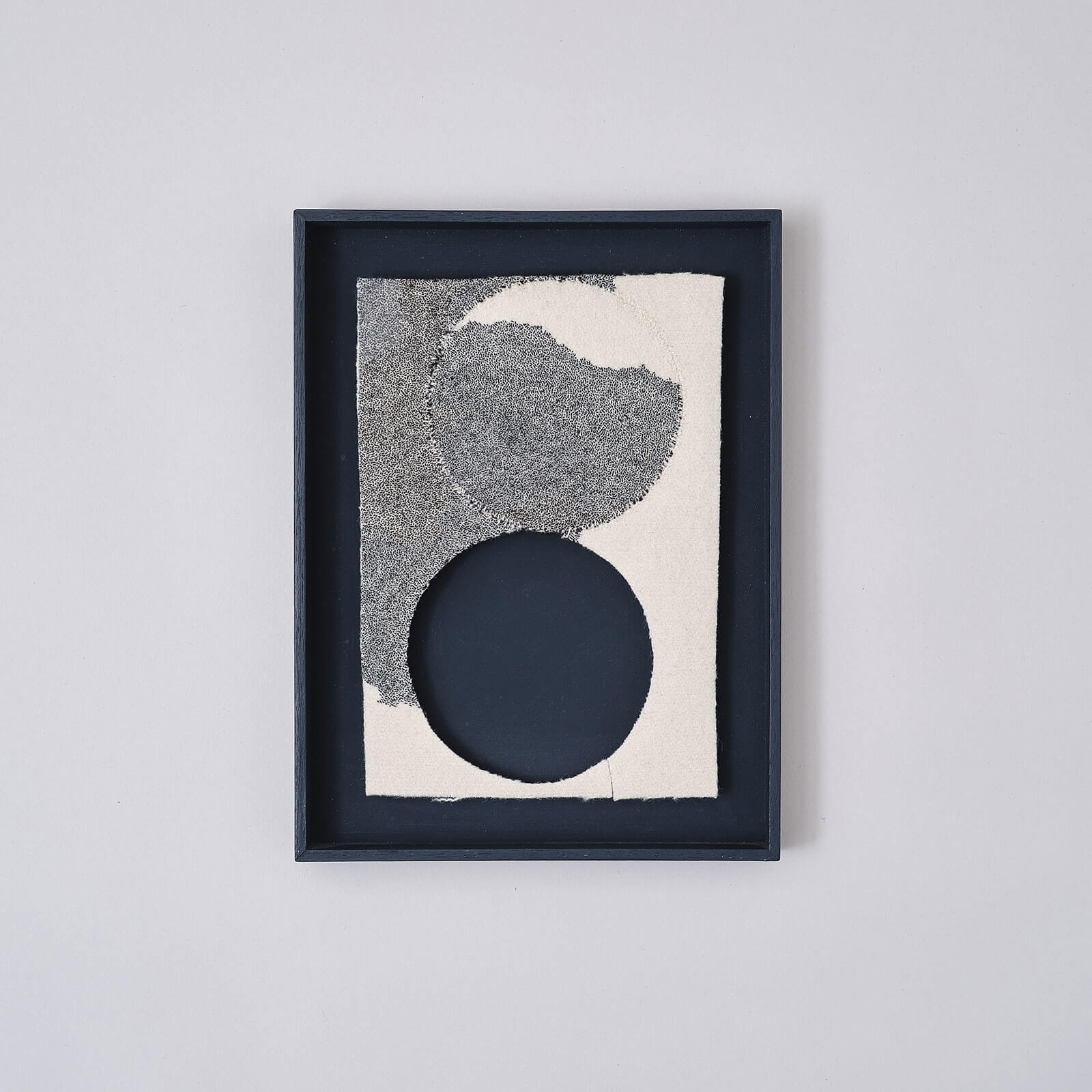
Richard McVetis, ‘Circle Offset’, 2021
COURTESY: Richard McVetis / PHOTOGRAPH: © Yeshen Venema
At Collect, he will show a new series titled ‘Shift’ with Cavaliero Finn. These pieces are created from collages made from Shoben tape, which generate patterns for larger constructions that are carefully cut, pieced and stitched together. Onto this surface, the artist then re-embroiders the same pattern by hand, but with a slight shift, so that the stitched pattern is intentionally misaligned from the original. The effect is one of controlled irregularity, the newly stitched areas mimicking surfaces worn down by time and use.
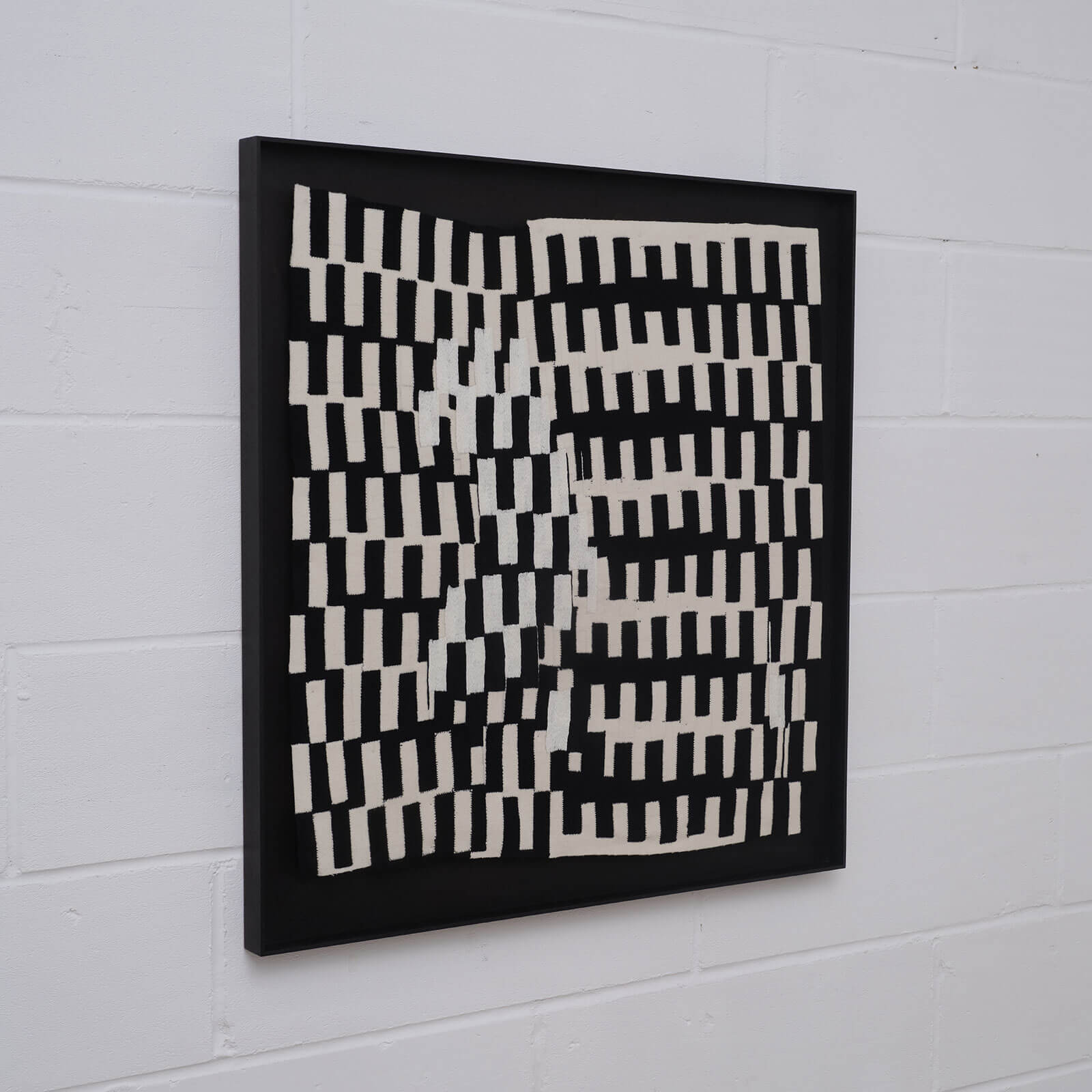
Richard McVetis, ‘Shift I’, 2026
COURTESY: Richard McVetis / PHOTOGRAPH: © Yeshen Venema
TDE: How did thread become your medium?
RMcV: Mainly because of the line. I grew up in South Africa, in a place just outside eMalahleni (Witbank), which is in the middle of nowhere. It’s one of South Africa’s biggest mining fields. My dad was a coal miner so we were there because of the coal mines in the 80s. I was born there and left when I was 10. In South Africa the education was focused very much on maths and science, but I was really good at drawing – so I was always drawing. That was my way of describing the world around me. Then, when I moved back to the UK, the high school that I went to was very arts focused. I was very good at art as well as design technology, so I love technical drawing – that’s where my aesthetic really comes from. But when I applied to the foundation course at Stafford College, the guy who interviewed me immediately said, you are a textile student. I always thought I wanted to be an architect, or to do sculpture or graphic design. But I think my work marries all of that together somehow in its aesthetic.
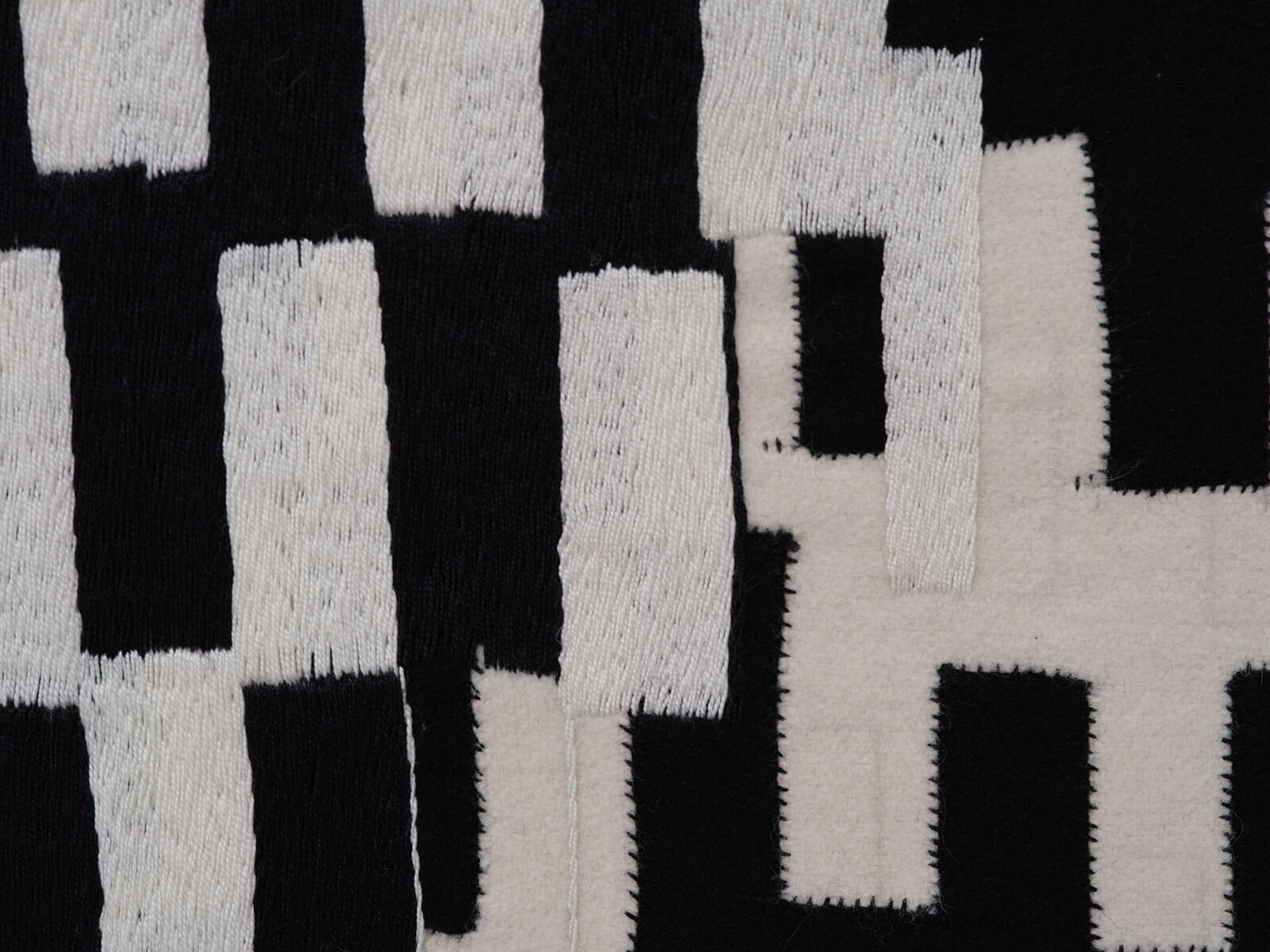
Richard McVetis, ‘Shift I’, 2026 (detail)
COURTESY: Richard McVetis / PHOTOGRAPH: © Yeshen Venema
TDE: Is there any making in your family background to inspire you?
RMcV: I don’t come from a family of crafters. My mum and dad were working all day. The last thing they wanted to do was come home and make stuff. But a tutor, Amanda Clayton, told me to take a look at a degree course at Manchester called embroidery. When I saw that degree show in Manchester, that really did transform my thinking about embroidering. It challenged the definition of what embroidery could be – and I loved how drawing-based it was.
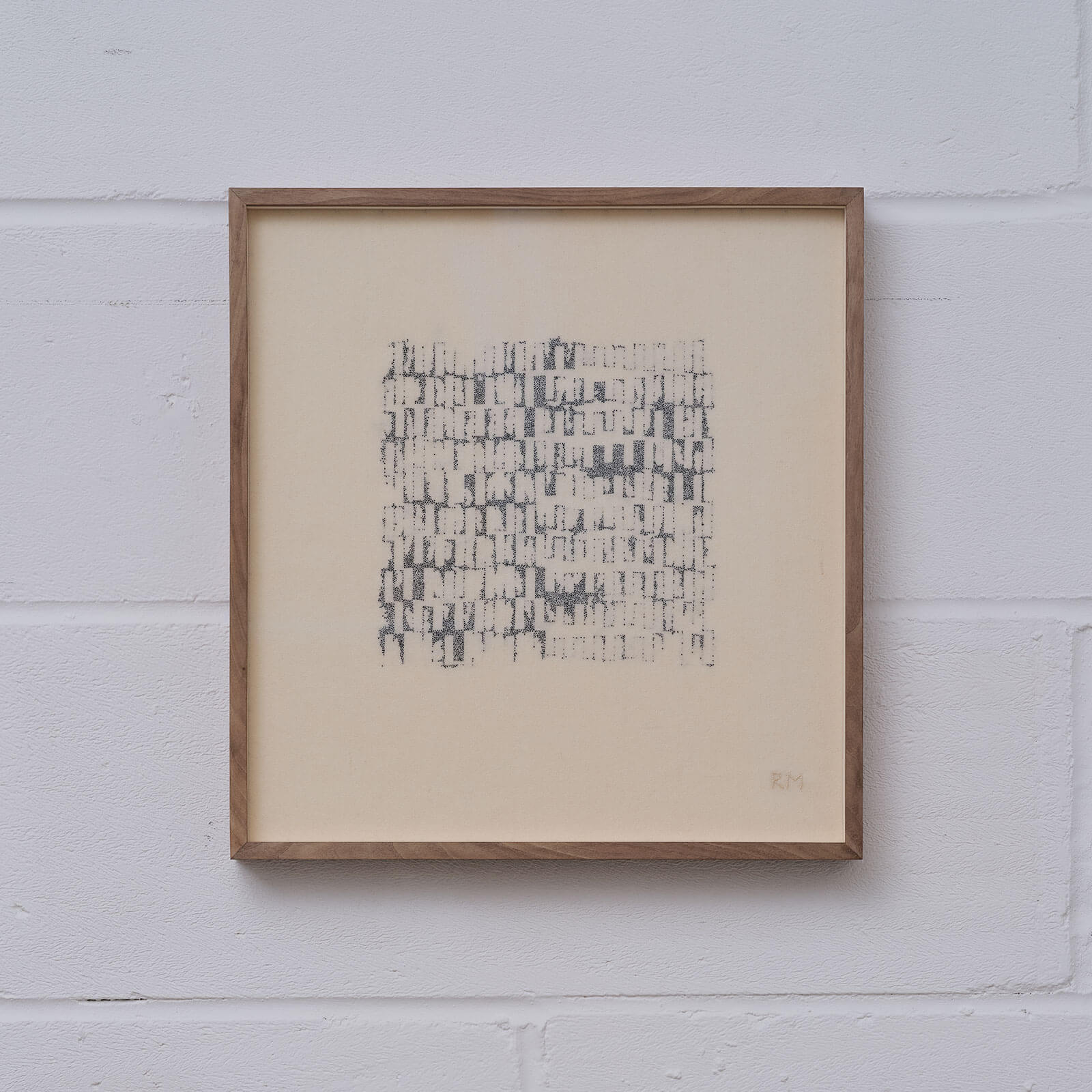
Richard McVetis, ‘Shift II’, 2026
COURTESY: Richard McVetis / PHOTOGRAPH: © Yeshen Venema
TDE: How did your practice evolve?
RMcV: There was a chance encounter at the V&A on a first year trip, in 2002, with a really beautiful piece of 16th century blackwork embroidery – black silk on white linen – that’s still in the British gallery now. And on this specific piece, there is this tiny stitch called speckle stitch and that was the connecting dot. I was able to see the potential of it. Then, I remember doing a project in the second year called the sample project. We had to take a very limited palette of things, of materials, of ideas and then just keep making and respond to the materials. I started off working in a very representational way, I was drawing fossils. But then the abstract started to take over and it became about formal qualities of lines, space and composition. So, from learning embroidery as a way of communicating – like a skill, a craft – by the end of my third year I was thinking about it as a way of thinking.
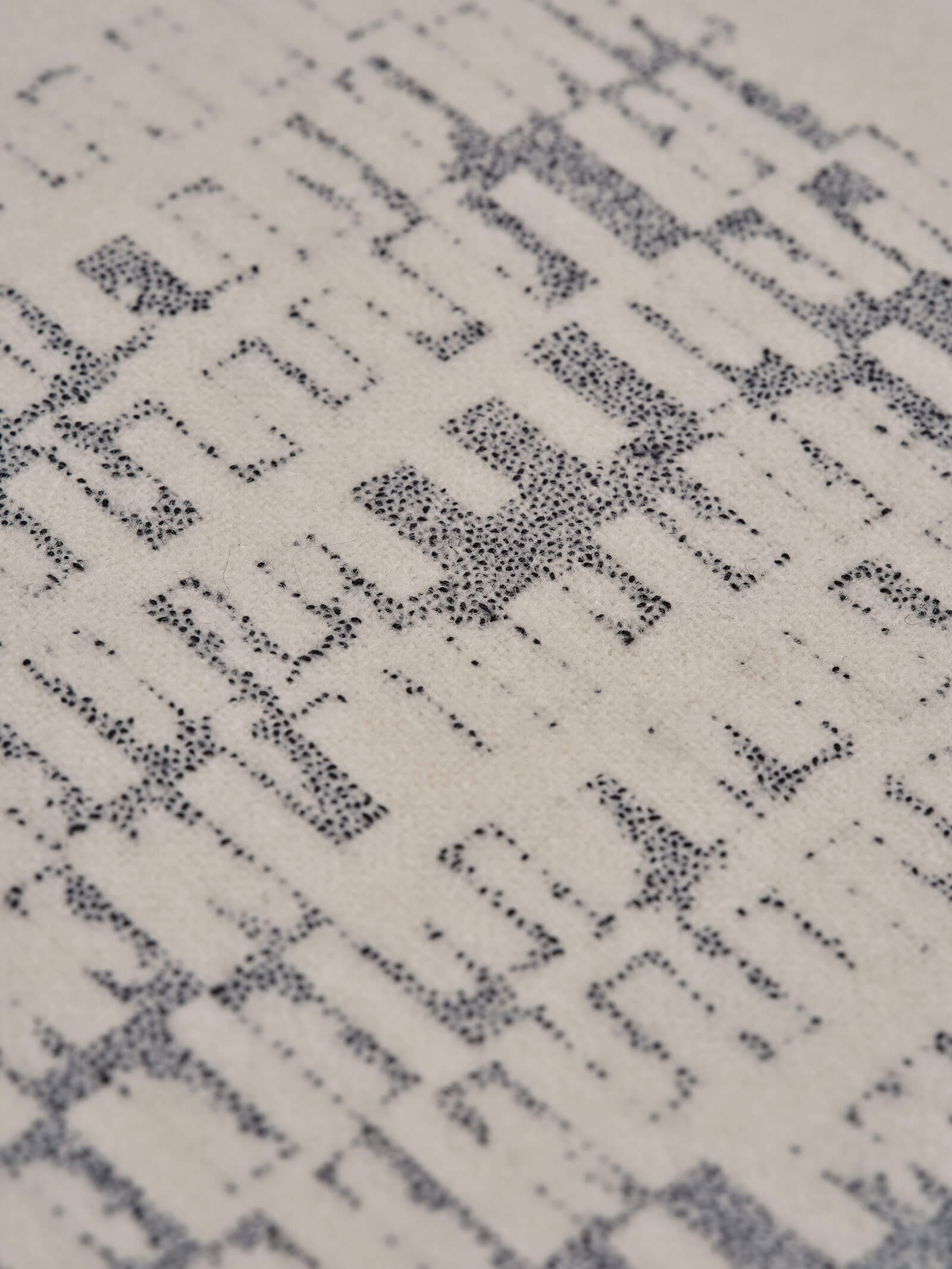
Richard McVetis, ‘Shift II’, 2026 (detail)
COURTESY: Richard McVetis / PHOTOGRAPH: © Yeshen Venema
For the last 20 years these dots have been arranging themselves in lots of different formations.
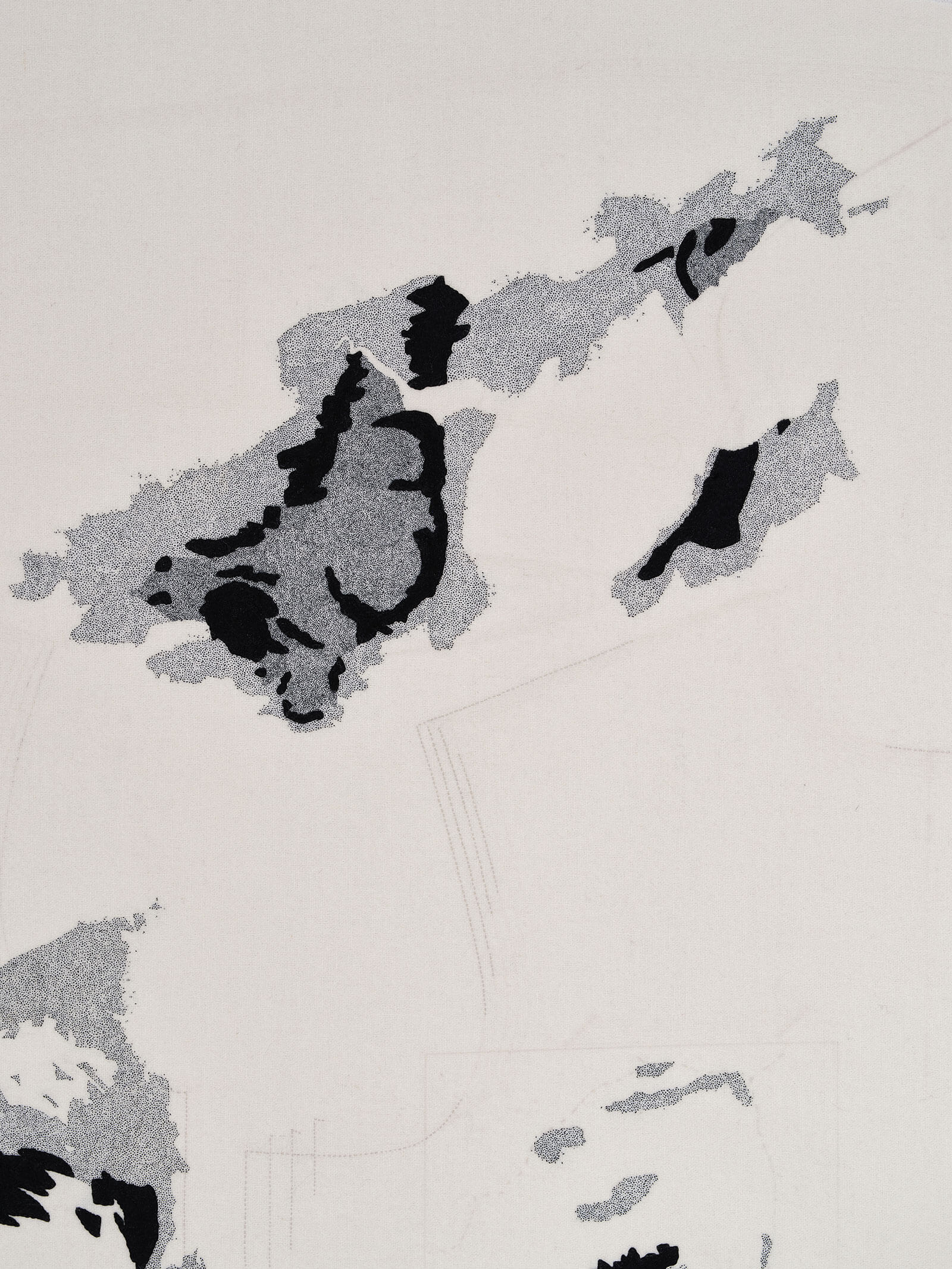
Richard McVetis, ‘Coal Seams’, 2021
COURTESY: Richard McVetis / PHOTOGRAPH: © Yeshen Venema
I’ve been looking at coal seams, I’ve been looking at moons. They’re all just different perspectives and different scales.
Richard McVetis
TDE: What materials were you using?
RMcV: I use a very basic cotton. I would say it’s not necessarily about material preciousness, but more about the preciousness of of labour. Coming from my background, we’re about labour, you know, because my mum and dad were manual labourers – they both left school at 15 or 16, so really all they had was their body – and here I am deciding to carry on working with my hands. It’s because I am interested in the idea of the majesty of the hand and what it can do.
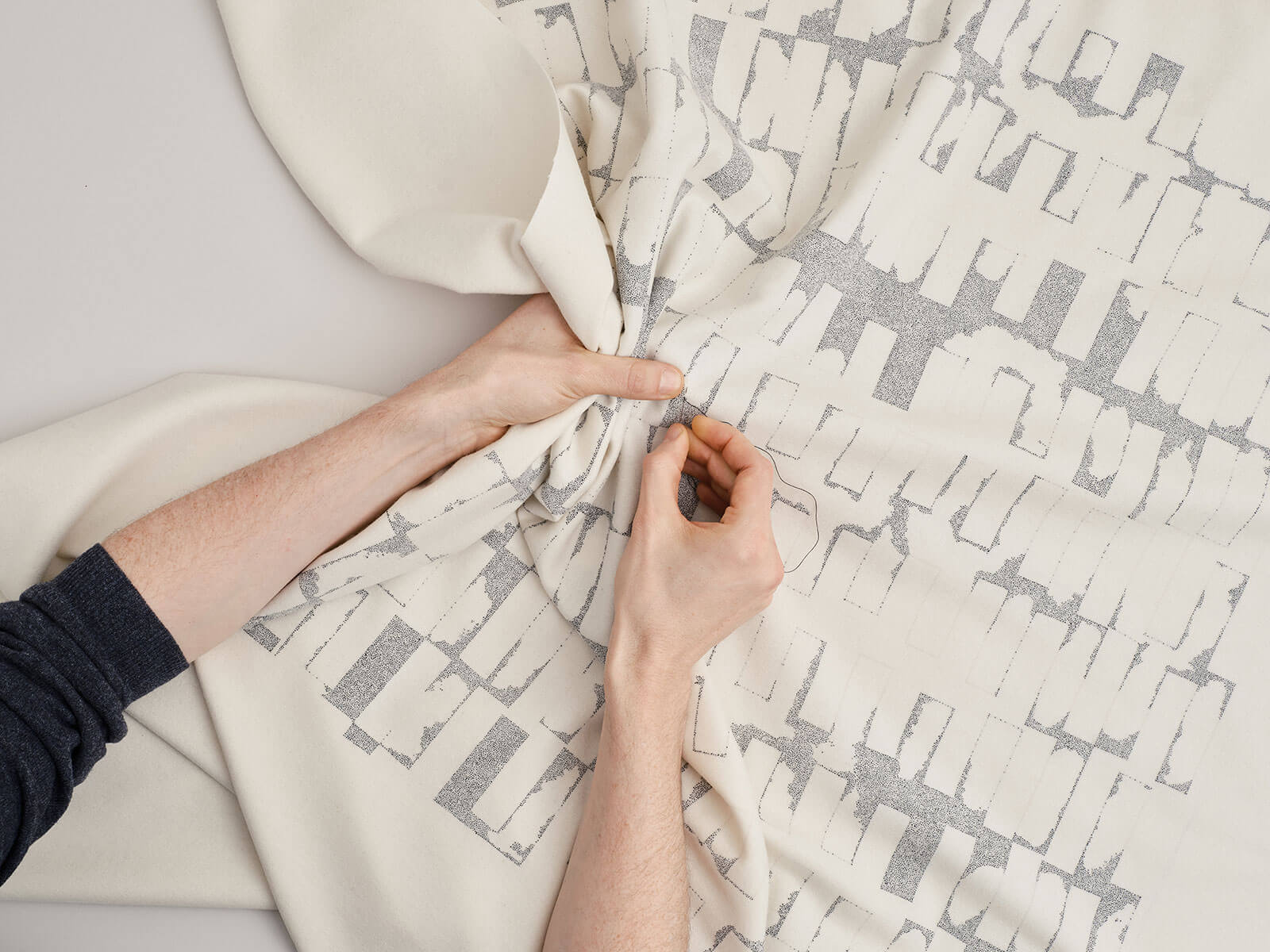
Richard McVetis making ‘The Edge of Forever’, 2025 (detail)
COURTESY: Richard McVetis / PHOTOGRAPH: © Yeshen Venema
TDE: And then in 2006 you went to the Royal College of Art, to study Constructed Textiles. What did you do after that?
RMcV: I just got a job … and I went home every single night and worked hard, until, in 2015, I was able to rent a studio. It was during that period that I started making the cubes. They were a response to the fact that I had no time and I wanted to make small pieces of work to satisfy that urge to make things. I could do that at night on the sofa – the sofa was my studio. So it’s been a slow build, which is fine because it’s suited the practice.
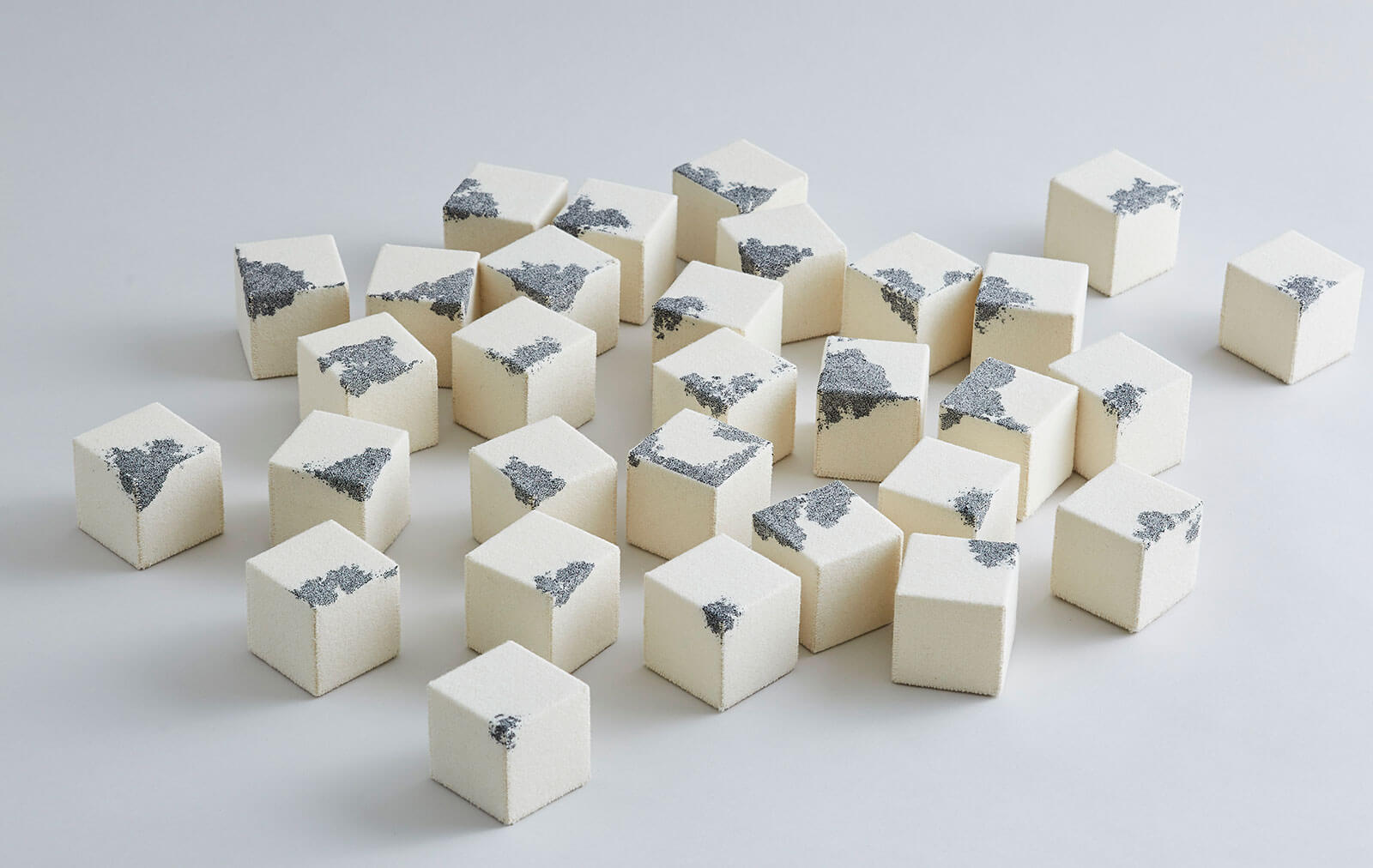
Richard McVetis, ‘Variations of A Stitched Cube’, 2017
COURTESY: Richard McVetis / PHOTOGRAPH: © Yeshen Venema
TDE: So what are your priorities now? At the London Art Fair your gallery Cavaliero Finn showed the ‘Orbit’ series.
RMcV: For a very long time I’ve been really interested in systems – I studied physics to A level and I love space and cosmology. A lot of my work is trying to articulate in some way, in some material form, the ideas that really interest me. But I also called that series for London Art Fair ‘Orbit’ because those works have orbited me. Some of them I started five years ago, some of them I started a year ago. And they exert a certain force on each other, but also on me.
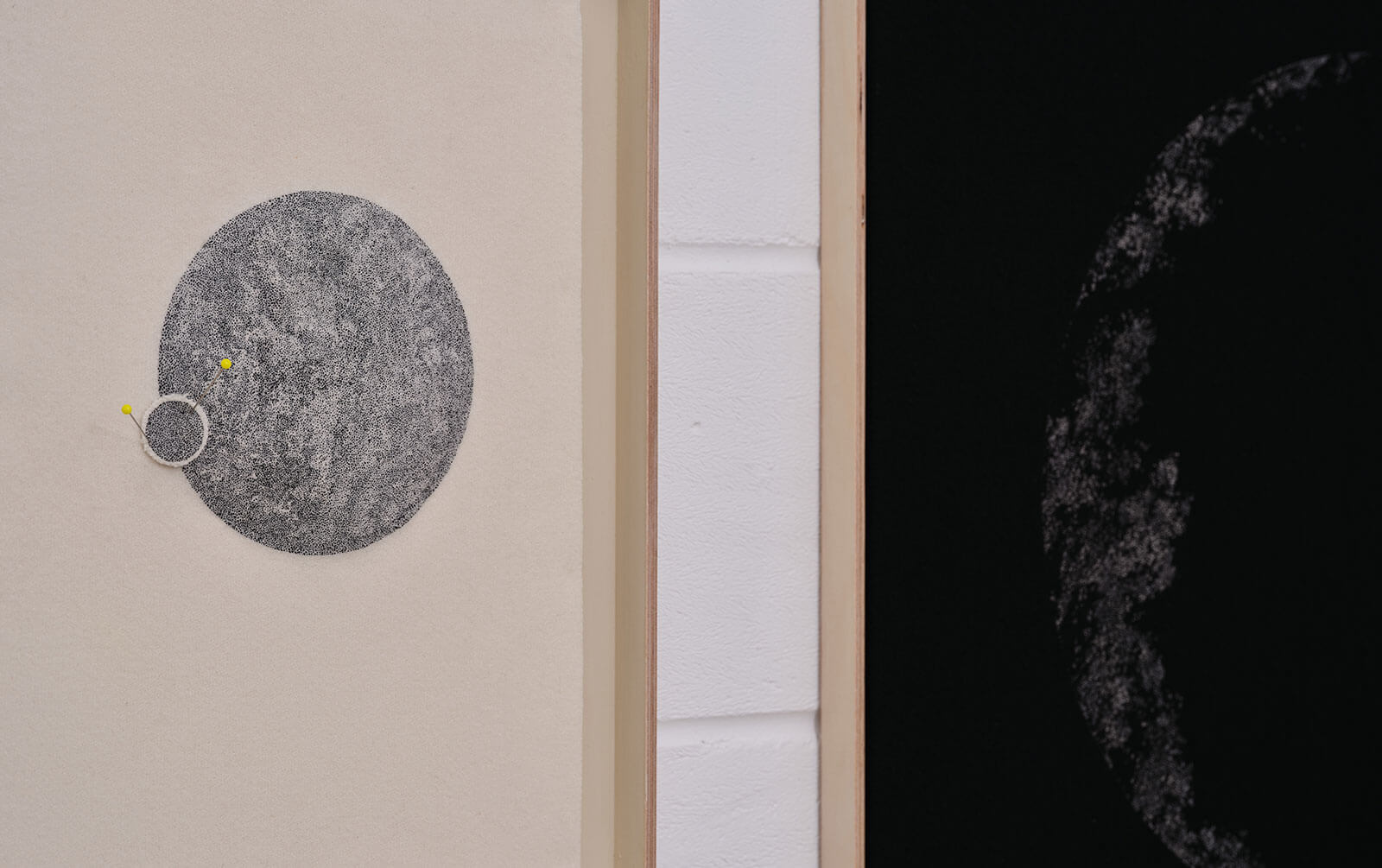
Richard McVetis, ‘Orbit’, 2025 and ‘ Waning’, 2025
COURTESY: Richard McVetis / PHOTOGRAPH: © Yeshen Venema
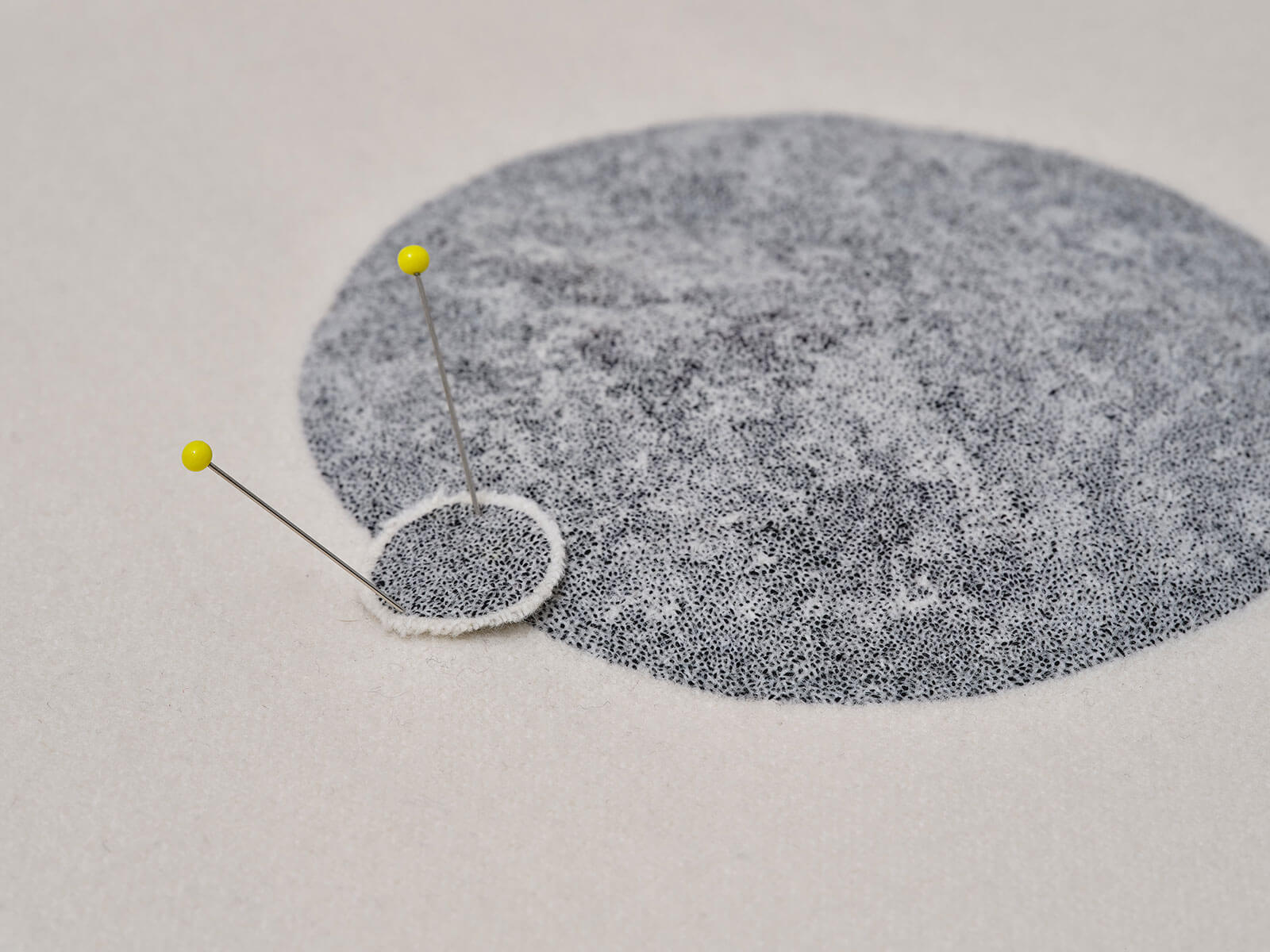
Richard McVetis, ‘Orbit’, 2025 (detail)
COURTESY: Richard McVetis / PHOTOGRAPH: © Yeshen Venema
TDE: What about the pieces you are making for Collect?
RMcV: The pieces that I’m making for Collect are also linked, because I’m really interested in perspective and scale, zooming in and zooming out, of this idea of the celestial and cellular. And so for me, even though they look very different in terms of the pattern, they are related. The ones I’m making for Collect are much more zoomed in. So I just called them ‘Shift’ because I like this idea of a shift in pattern and this idea of variation – that through process you get this subtle shift, or this subtle growing of something.
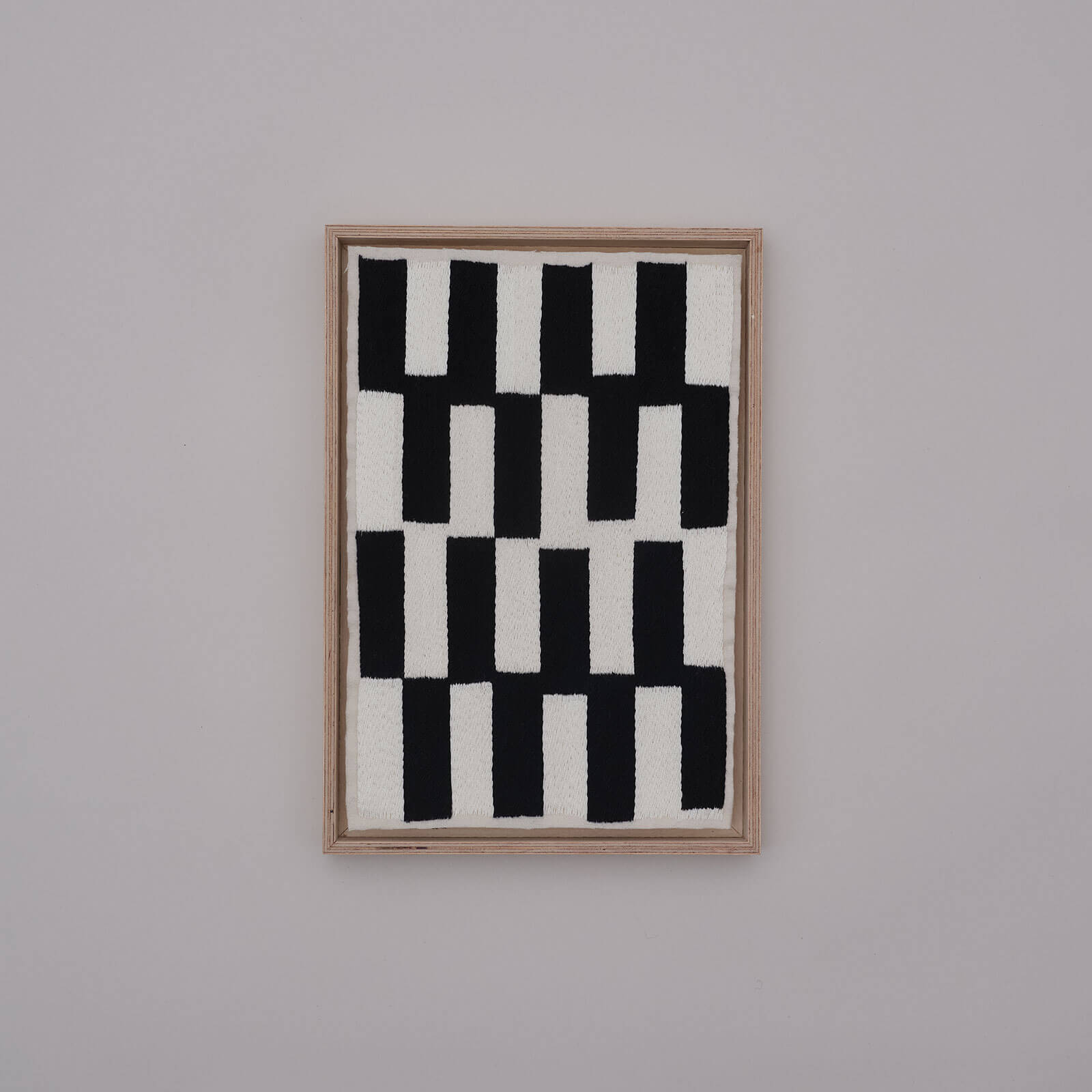
Richard McVetis, ‘Shift III’, 2026
COURTESY: Richard McVetis / PHOTOGRAPH: © Yeshen Venema
TDE: You don’t draw a design and then follow it?
RMcV: Obviously the ‘Orbit’ pieces, they are circles and some of them I filled in completely, but even in the filled circle you can see that there is a variation across it, shifts of light and tone. And that’s not intentional. I’m not programming that. I might be more tired that day, or I might be slightly more tense – we are constantly changing. It’s never the same stitch. It never has been the same mark. And I think that differentiates this idea of something being functional, so that it has to always look the same. It’s never been about that. It has just been about the authenticity of that mark at that present moment.
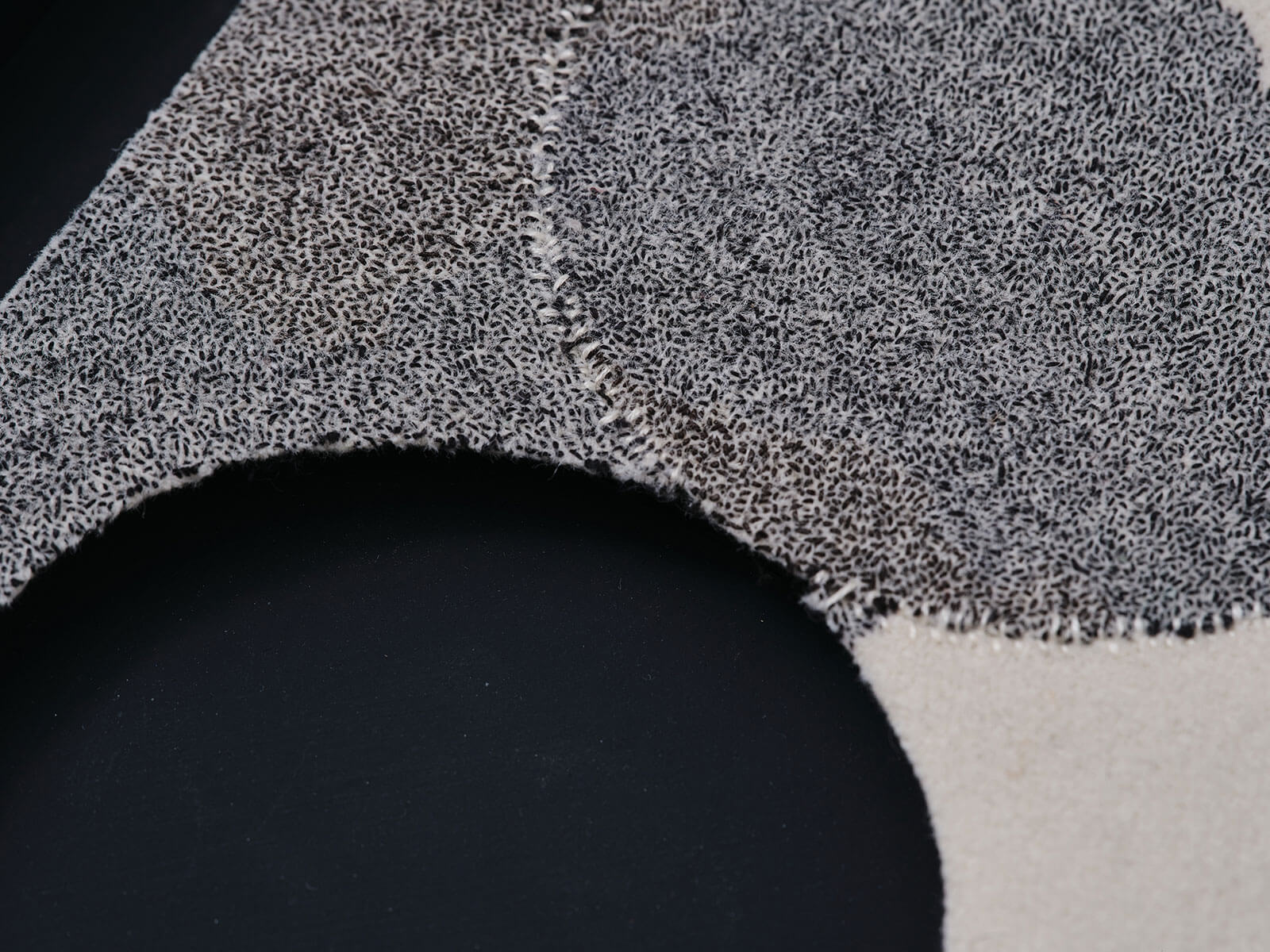
Richard McVetis, ‘Circle Offset’, 2021 (detail)
COURTESY: Richard McVetis / PHOTOGRAPH: © Yeshen Venema
TDE: Your work has a slightly dizzying sense of perspective – is this very far away, or is it very close? Are we looking into an enormous space, or is this flat?
RMcV: I love this idea of perspective and scale, and the ability to look up and look down is quite exciting – but also awe inspiring. So this idea of finding awe both in the theme of the work, but also in the labour of the work as well … that’s really exciting and I think they work together. I’ve always imagined these dots, or these same sequences [of stitches] as building blocks. For me, these dots have been arranging themselves for the last 20 years in lots of different formations. I’ve been looking at cities from above at night. I’ve been looking at coal seams, I’ve been looking at moons. They’re all just different perspectives and different scales. As you say, in a way everything can be reduced to the digital, is it a stitch or a space? It’s just about editing and reducing everything down to its most fundamental part and then actually that reveals something really beautiful.
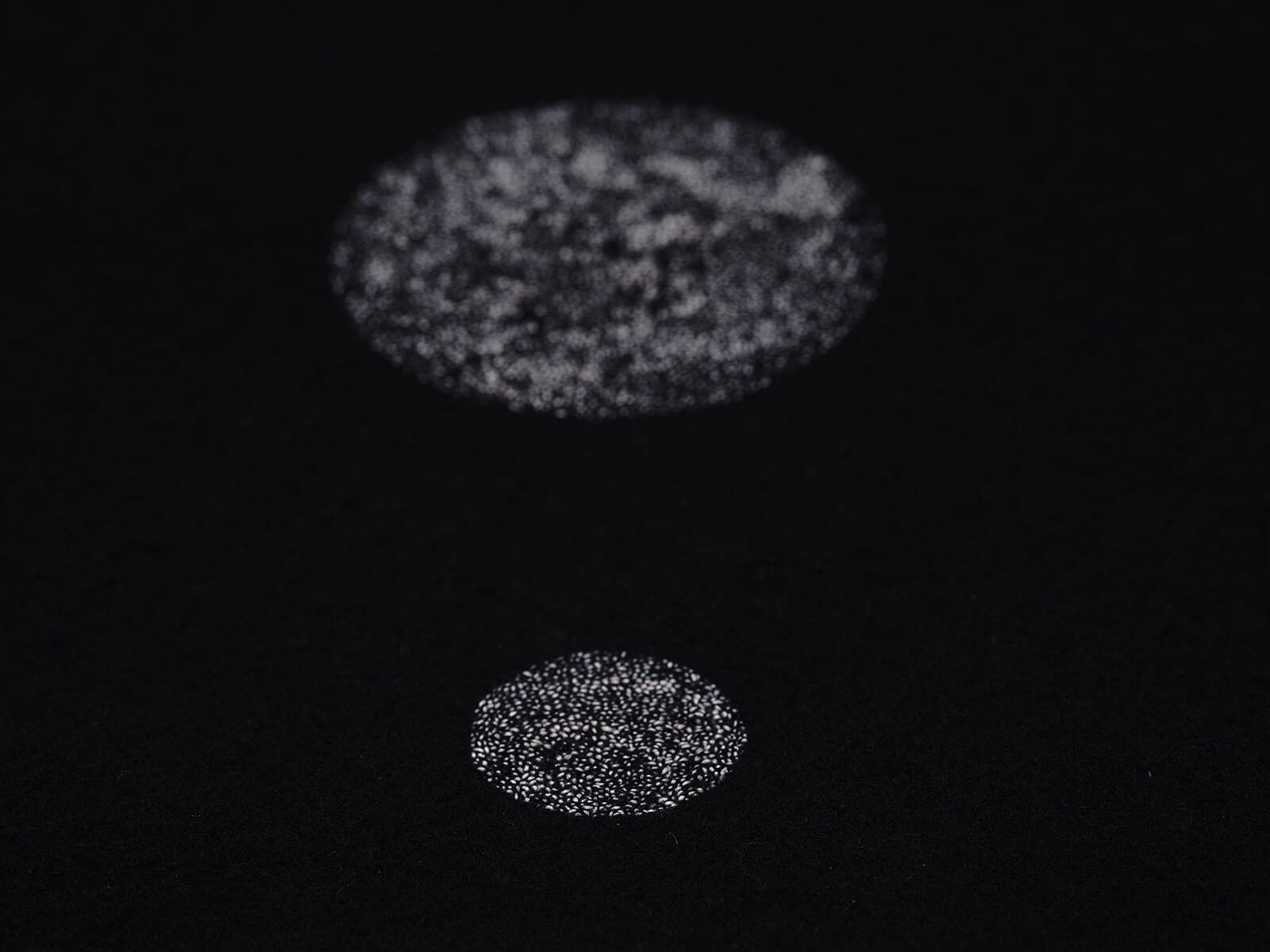
Richard McVetis, ‘White Circles on Black’, 2020 (detail)
COURTESY: Richard McVetis / PHOTOGRAPH: © Yeshen Venema
Richard McVetis is showing ‘Shift I’ at Collect 2026 with Cavaliero Finn.

Emma Crichton-Miller is Editor-in-Chief of The Design Edit.
View all articles by Emma Crichton-Miller