The Language of Glaze
A rare and sublime collection of Shimizu Uichi’s work is presented on his centenary.
The Language of Glaze: Shimizu Uichi at 100
Carpenters Workshop Gallery X De Biousse And West
Notting Hill, London
11th June – 11th September 2026
By Emma Crichton-Miller / 9th June 2026
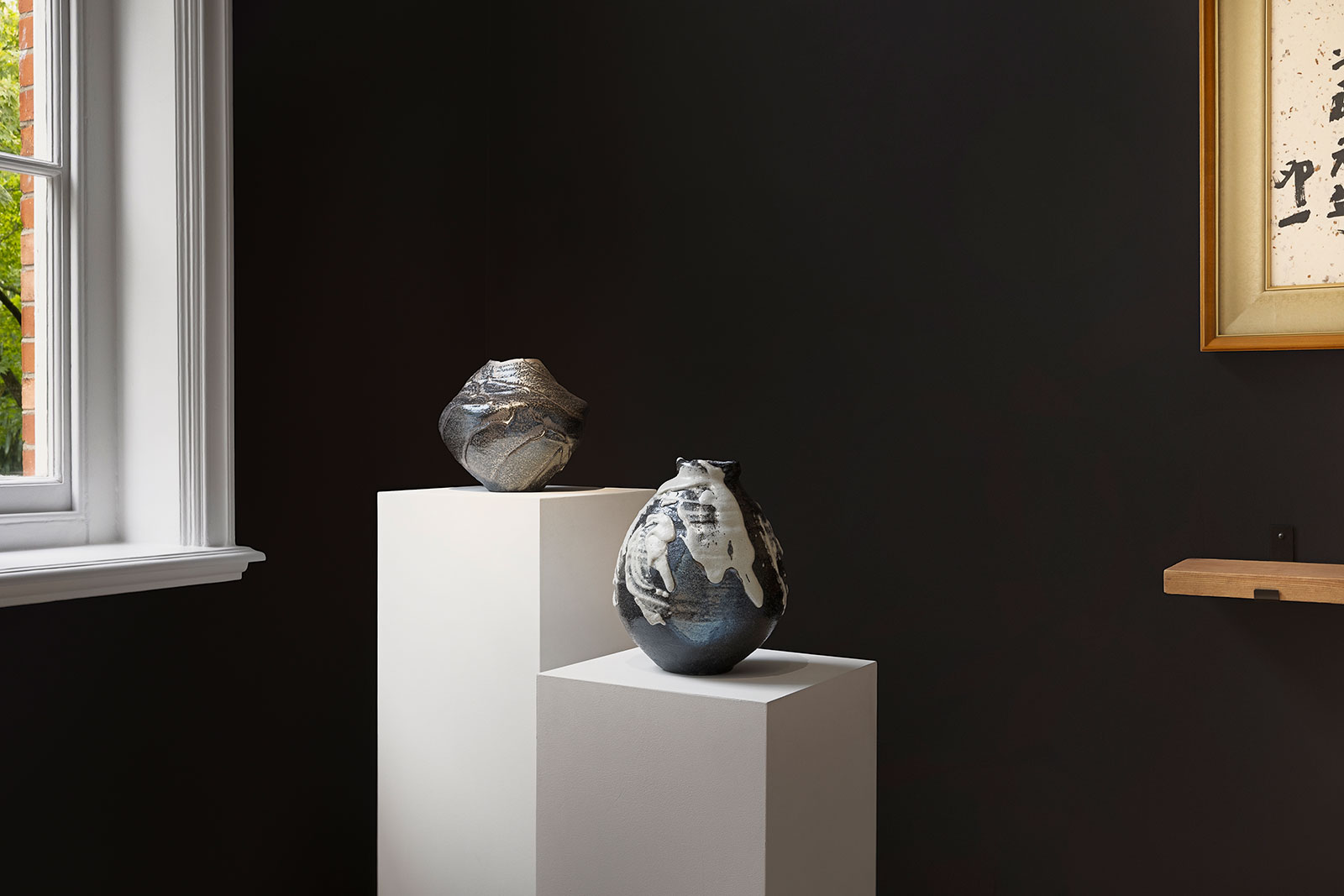
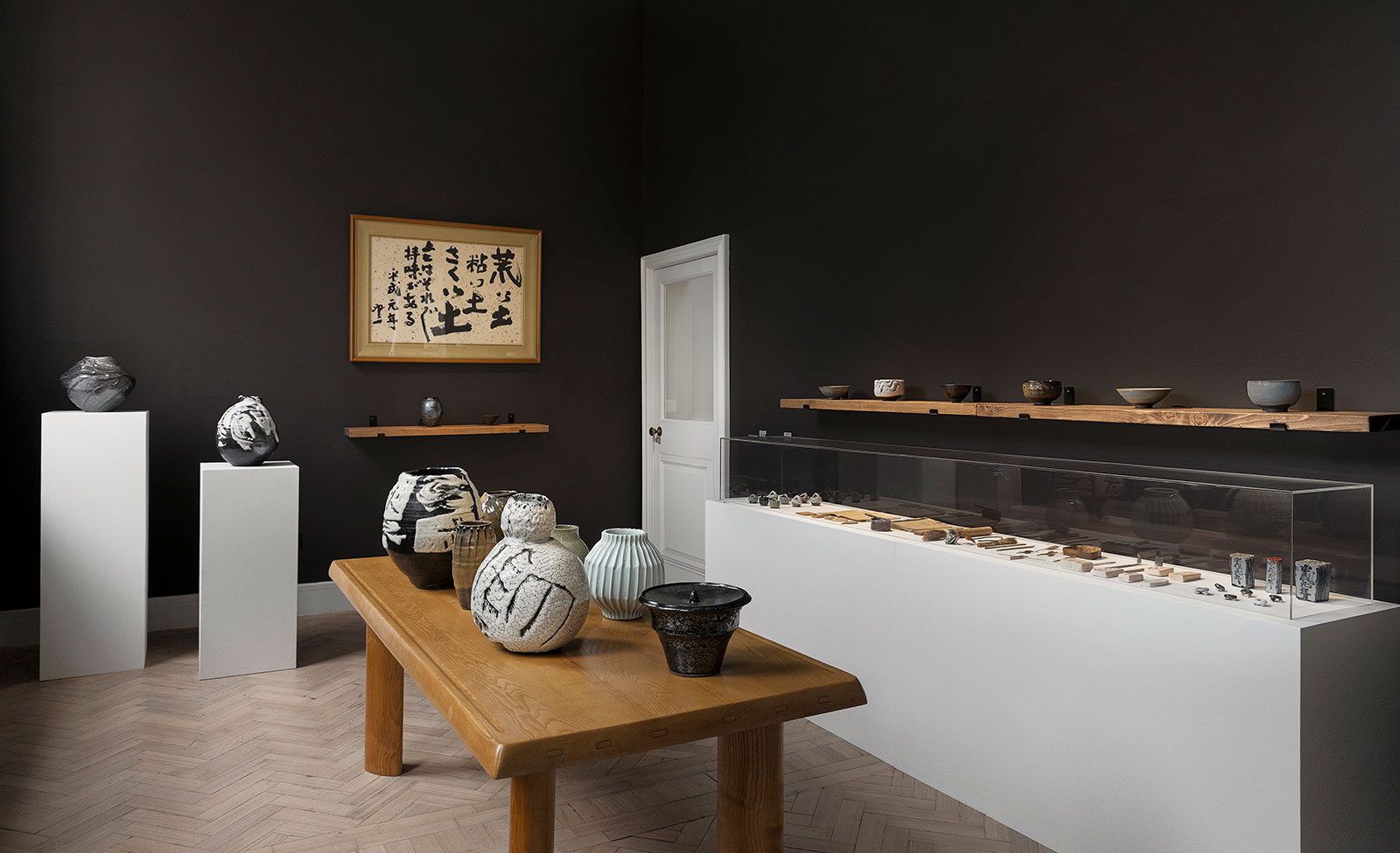
Exhibition view, ‘The Language of Glaze: Shimizu Uichi at 100’
COURTESY: The Artist & Carpenters Workshop Gallery / PHOTOGRAPH: Benjamin Baccarani
LAST WEEK IN London, Carpenters Workshop Gallery launched a collaboration with new gallery deBiousse&West, dedicated to Japanese ceramics. DeBiousse&West is an alliance between ceramic enthusiasts Haydn West – for many years a specialist dealer in Japanese ceramics, his passion inspired by working for Tim d’Offay of Postcard Teas – and former financier Rafaël Biosse Duplan. Their new enterprise, based in London, is committed to curation, research and education in the rich field of Japanese ceramics, highly valued in Japan but less comprehensively understood in Britain.
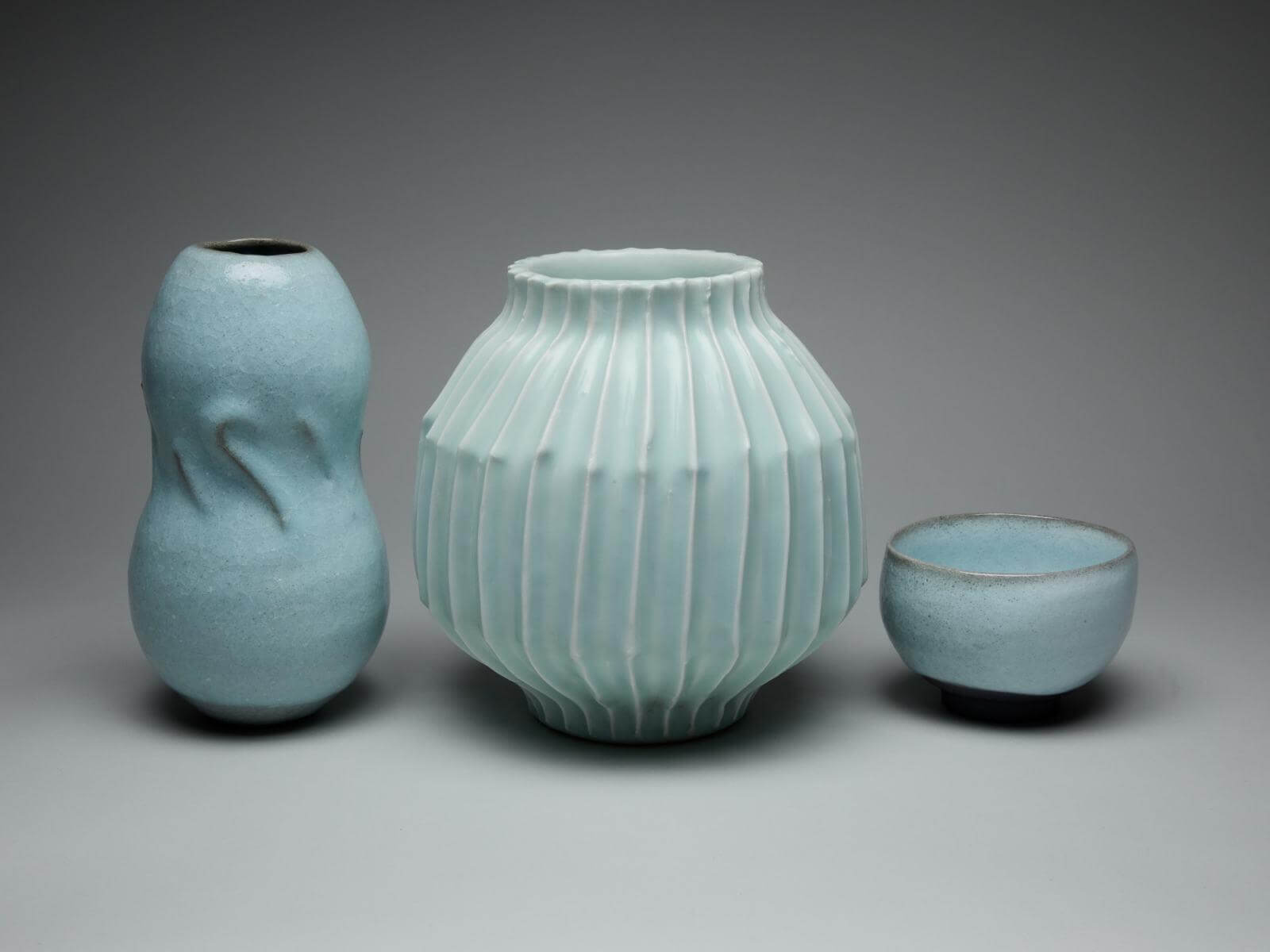
Shimizu Uichi, (left to right): ‘Pale Blue Glazed vase’, 1984; ‘Horai Sectioned Glazed Inscribed Jar’, 1980-1983; ‘Pale Blue Glazed Tea Bowl’, 1984
COURTESY: The Artist & Carpenters Workshop Gallery / PHOTOGRAPH: Callum Su
For their first show, deBiousse&West have brought to UK audiences a selection of hitherto unseen pots by the renowned ceramic artist Shimizu Uichi. Honoured in his lifetime with the title ‘Living National Treasure’, bestowed in 1985 for his mastery of tetsu-yū (iron glaze), this year marks the centenary of Shimizu’s birth. A chance meeting with Shimizu Uichi’s grandson Shiro, himself a potter, and now custodian of his grandfather’s home and studio, has allowed these works, kept back by the family, to find new admirers.
Exhibition view, ‘The Language of Glaze: Shimizu Uichi at 100’
COURTESY: The Artist & Carpenters Workshop Gallery / PHOTOGRAPH: Benjamin Baccarani
In the upstairs exhibition spaces of Ladbroke Hall, forty vessels are on view dating from 1963 to 2003, demonstrating the artist’s creative versatility across many different forms and glazes. Each one represents a unique active dialogue between material and process, and between the quiet eloquence of an inner space and its more vocal surface.
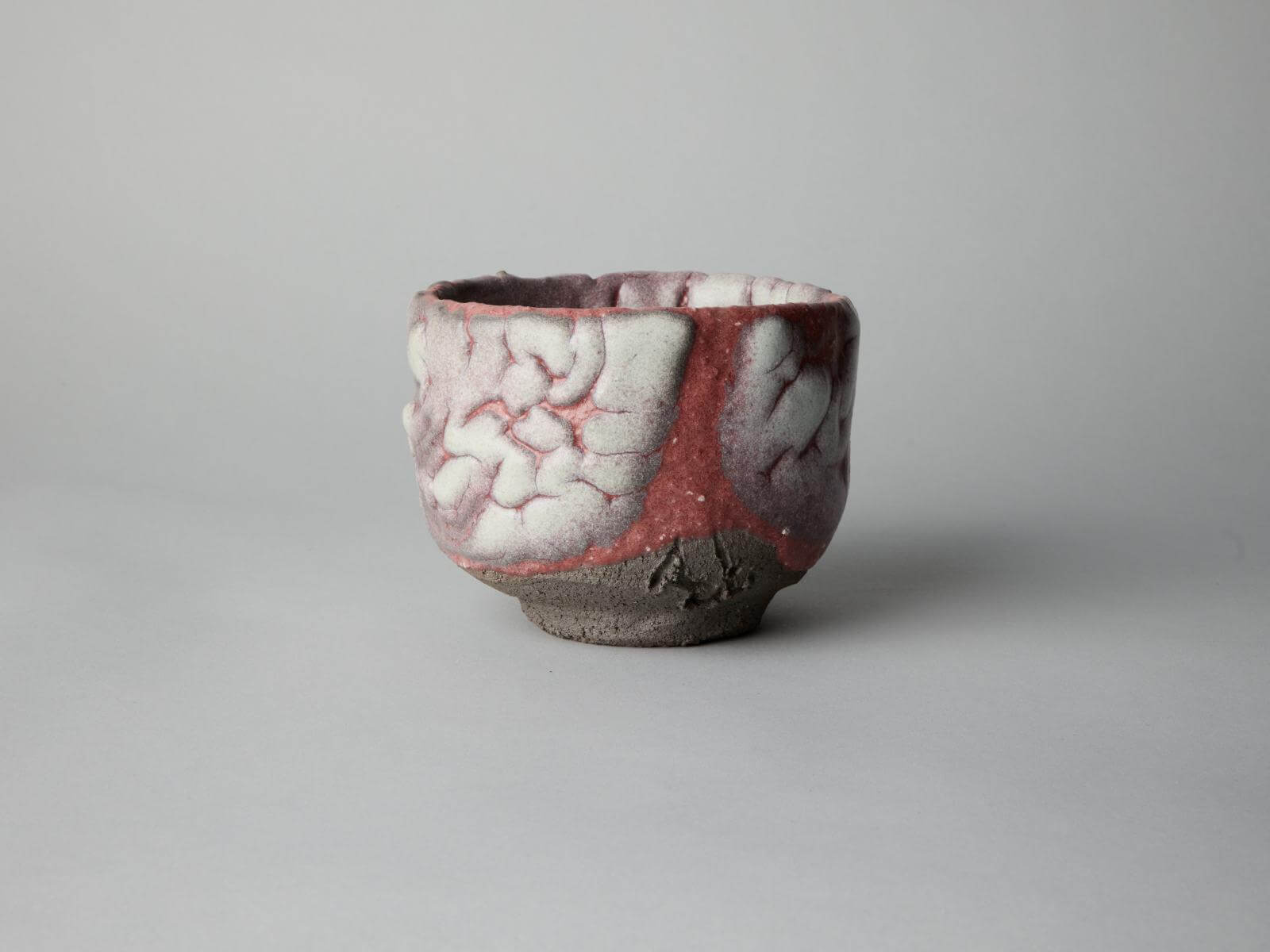
Shimizu Uichi, ‘Dawn-Red Floral Tea Bowl’, 2001
COURTESY: The Artist & Carpenters Workshop Gallery / PHOTOGRAPH: Callum Su
Shimizu is a supreme technician, but there is nothing dry or academic about his pots. They are sensuous, lustrous, alive, combining formal refinement, even restraint, with an absolute mastery of glaze techniques – from craquelure celadon (with its carefully controlled crackled pattern beneath a smooth glassy surface) to oil-spot tenmoku, as well as the icchin technique particularly associated with Kyoto. Here, some of the glazes are like thick cream poured over black rock, others iridesce like peacocks’ tails, while sometimes the mark of a finger through wet glaze sets a pot dancing with calligraphic vigour.
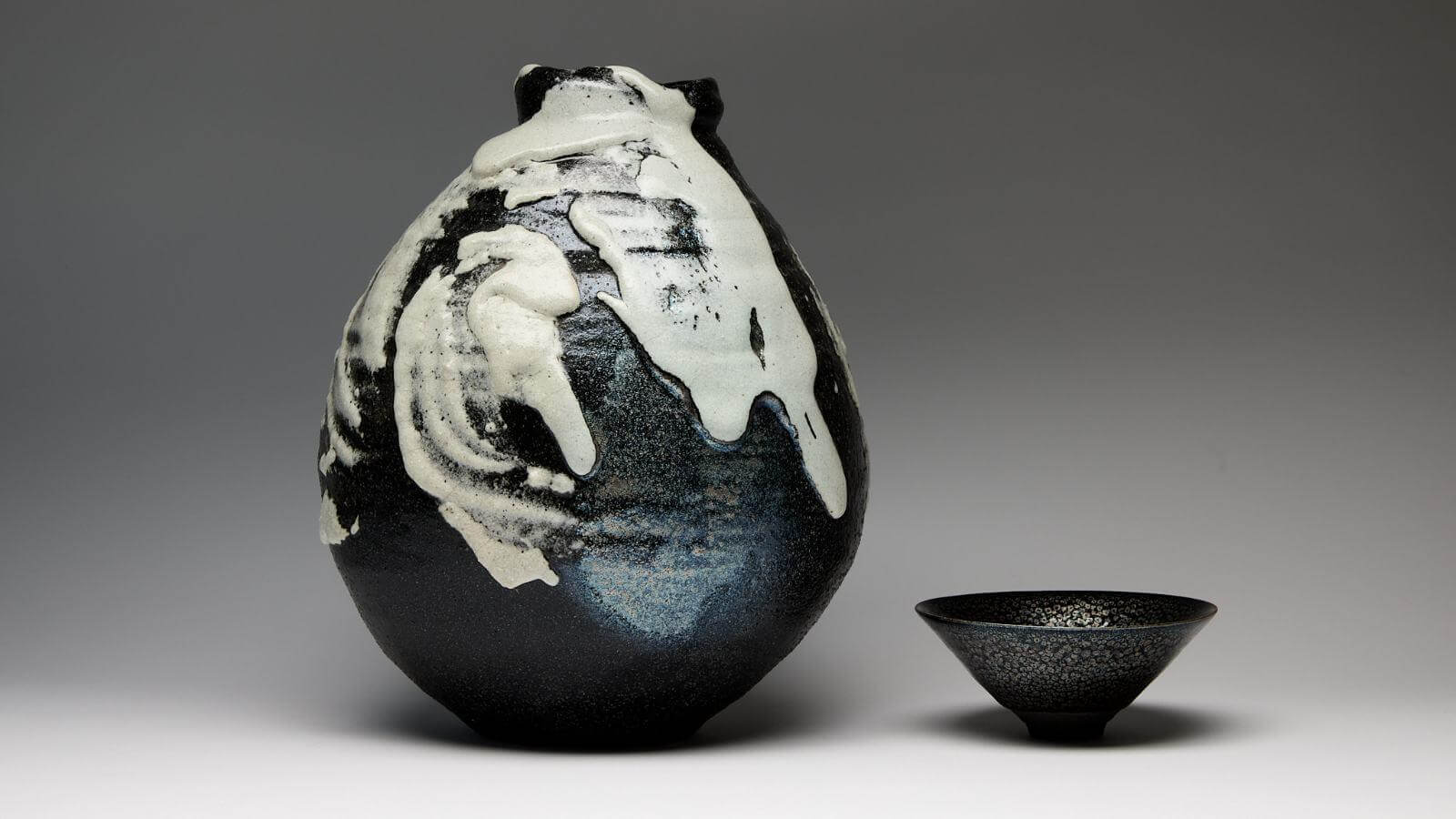
Shimizu Uichi, (left to right): ‘Iron-Glazed White-Flow Ash-Glazed jar’, 1993; ‘Iron-Glazed Oil-Spot Tenmoku Tea Bowl’, 1977
COURTESY: The Artist & Carpenters Workshop Gallery / PHOTOGRAPH: Callum Su
As the excellent catalogue explains, Shimizu was born in 1926 in Kyoto’s Gojōzaka area, a major centre of ceramic production in Japan. His father was a ceramics wholesaler, but rather than pursue commerce, in 1940, aged fourteen, the young Shimizu installed a potter’s wheel in the family home and apprenticed himself for six months to the master Ishiguro Munemaro. During the next five years he worked for ceramics research institutes before setting up on his own in Kyoto as the Second World War ended, in August 1945. Twenty-five years later he moved to rural Hōrai in Shiga prefecture, where he was able to build his own multi-chamber climbing kiln, called a noborigama.
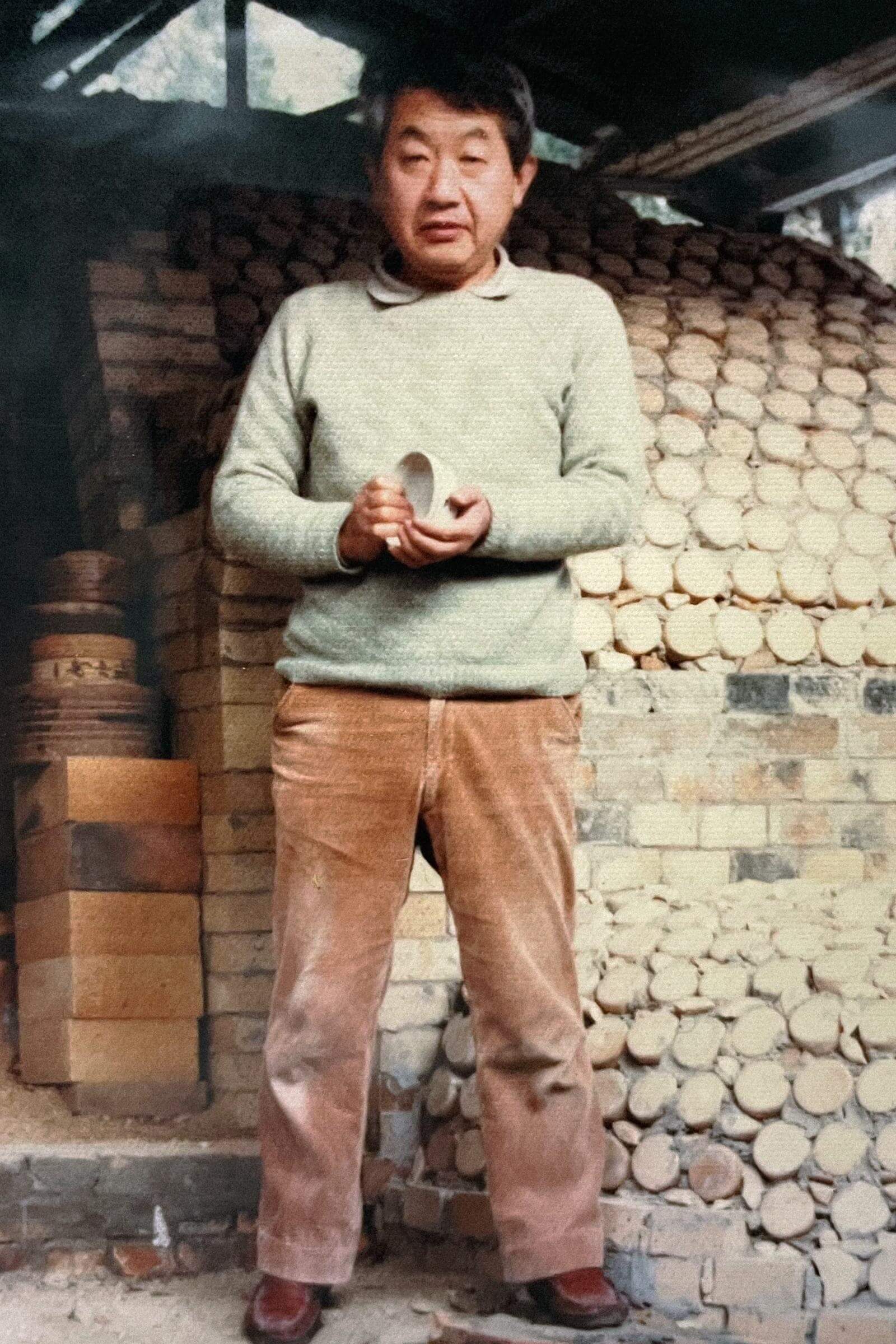
Shimizu Uichi
COURTESY: The Artist & Carpenters Workshop Gallery
His teacher, Ishiguro, had been a pioneer in Japan of the revival of the techniques of Song Dynasty and earlier Chinese ceramics, a fascination sparked by the arrival into Japan of many masterpieces of Chinese pottery after the fall of the Qing Dynasty, in 1912. When Japan instituted its ‘Living National Treasure’ system of honouring intangible cultural properties in the 1950s, Ishiguro was the first recipient of the title for his mastery of iron-glazed ceramics – the title that Shimizu was then awarded in his turn. But Ishiguro also encouraged creative independence, and in the postwar years Shimizu was a member of Shikōkai, an avant-garde group of young ceramic artists determined to explore the potential of their medium for new expression.
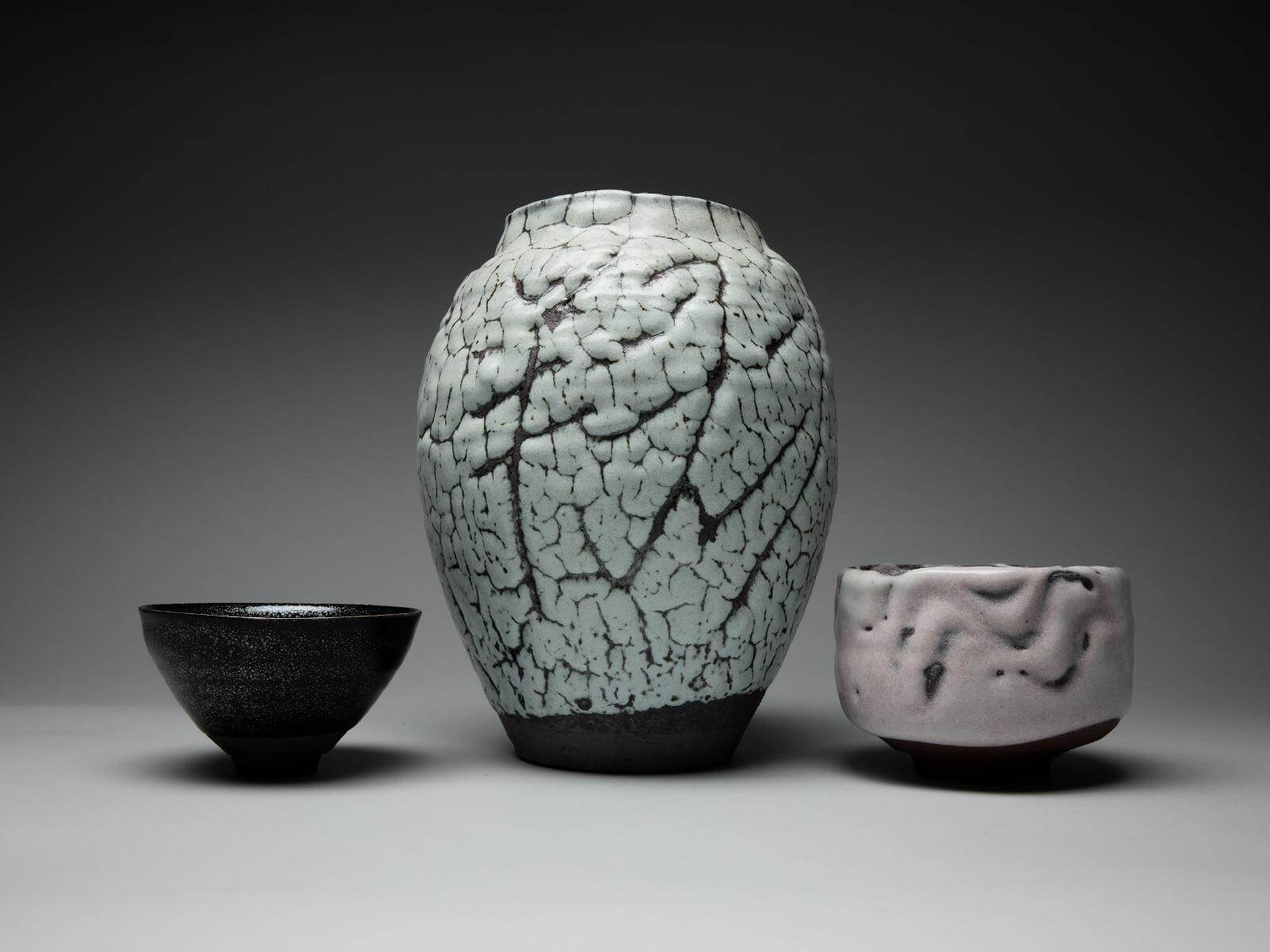
Shimizu Uichi, (left to right): ‘Iron-Glazed Oil-Spot Tenmoku Tea Bowl’, 1977; ‘Horai Craquelure-Glazed Inscribed Jar’, 1989-1991; ‘White-Flow Ash-Glazed Tea Bowl’, 1990-1996
COURTESY: The Artist & Carpenters Workshop Gallery / PHOTOGRAPH: Callum Su
Amidst the more unusual of Shimizu’s works in ‘The Language of Glaze’ are the pieces with bobbles of iron slip beneath the glaze, or long vertical strips of added clay, creating a textured, jewelled or decorated surface. Not all are immaculate. As Shimizu Shiro explains of his own revelation when sorting his grandfather’s work, “I feel there is a risk that the pursuit of perfection alone may narrow expression and diminish a work’s vitality. It can lose its sense of life and become less resonant …” One aspect of uncertainty was that Shimizu dug his own clay. Shimizu Shiro remembers, “Rather than beginning with an intention to make something specific, his approach seemed to be to ask what might emerge from the material itself.”
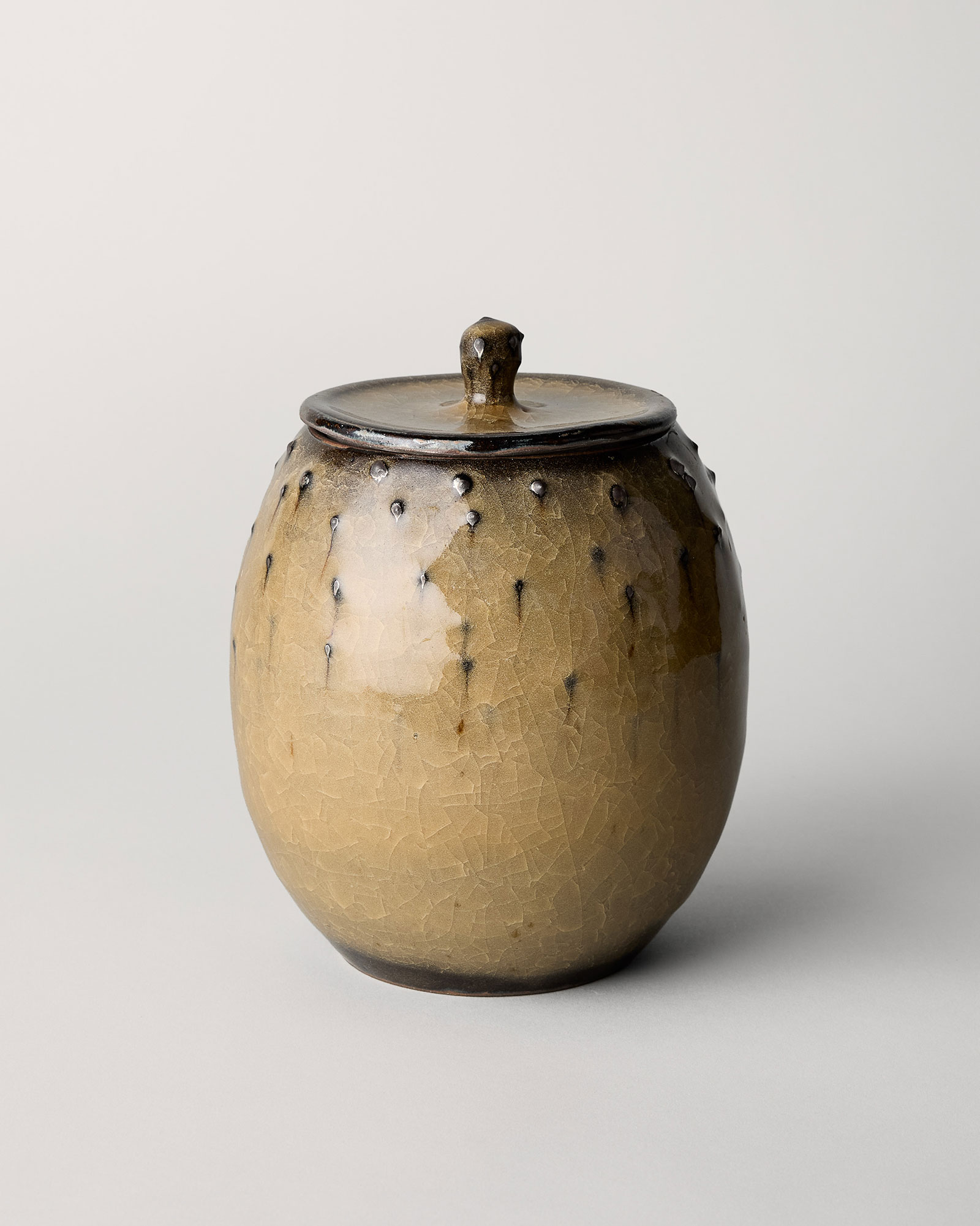
Shimizu Uichi, ‘Yellow Horai Celadon Raised-Dot Water Jar’, 1979
COURTESY: The Artist & Carpenters Workshop Gallery / PHOTOGRAPH: Callum Su
One serene celadon bowl represents a pinnacle of silent perfection; another, in a pale blue skin, seems to spin on the spot, holding its breath, while yet another iron-glazed flattened jar from 1994-6 evokes a landscape of terraces ridged and folded, lit by shafts of sunlight. A particularly impressive pot, a large ‘Iron-Glazed White Flow Ash Glazed’ vessel from 1993, seems caught in the moment of making, as if its form has heaved up from the sea with the spume still lashing, although the mind understands that this is a thoroughly considered process.
When Shiro, first moved to Hōrai five years ago, to take over his grandfather’s studio, he found all his tools, and the tiny baskets made from clay that he used for glaze tests, the curve of the basket handles allowing him to understand how the glaze would work at every angle. The team has decided to show these tools, in their beautiful simplicity, alongside the work, to underline that it is from such humble means that these sublime pieces emerge.
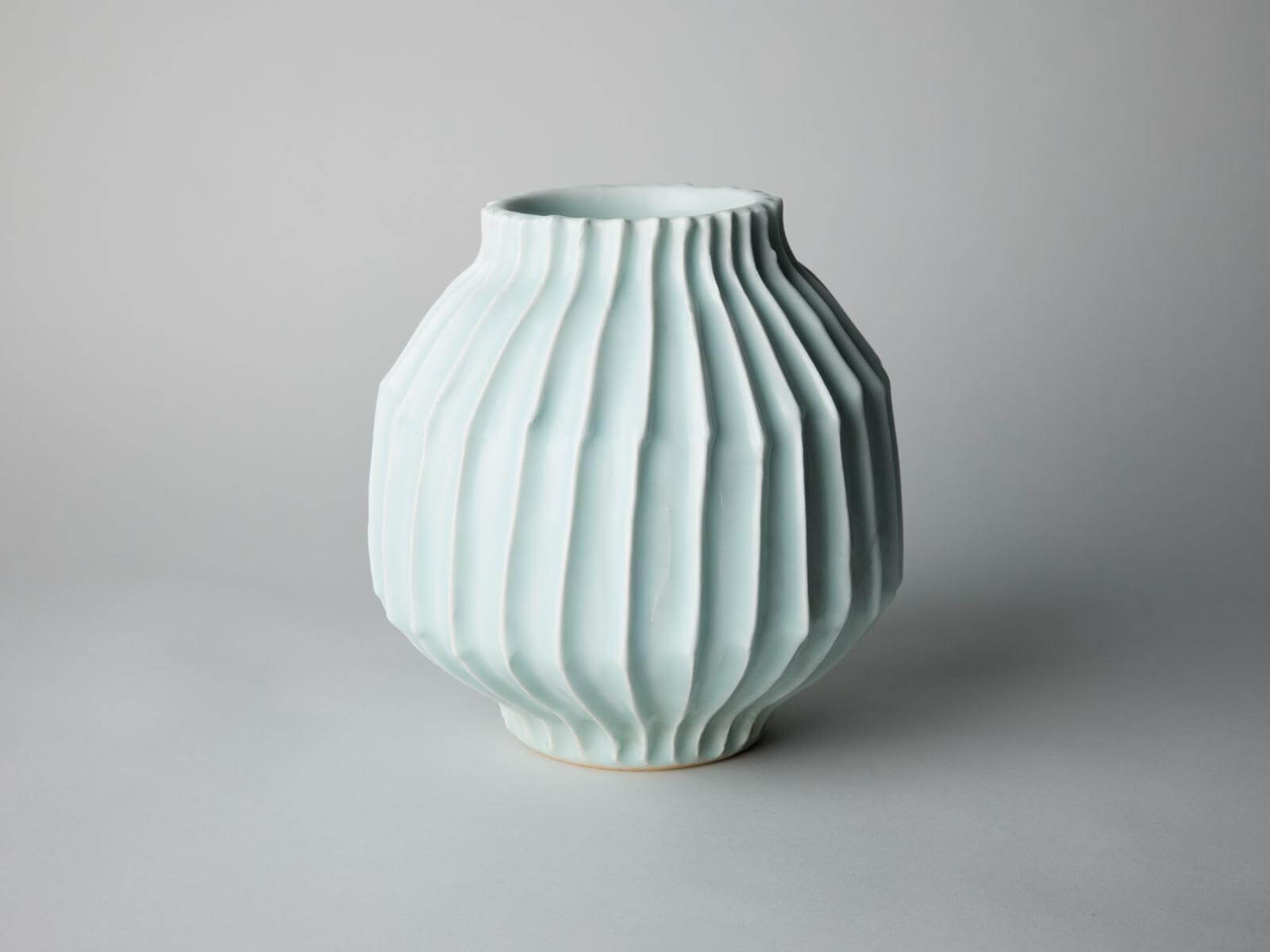
Shimizu Uichi, ‘Horai Sectioned Glazed Inscribed Jar’, 1980-1983
COURTESY: The Artist & Carpenters Workshop Gallery / PHOTOGRAPH: Callum Su

Emma Crichton-Miller is Editor-in-Chief of The Design Edit.
View all articles by Emma Crichton-Miller